An advance towards Damazin by forces aligned with Sudan’s TASIS alliance is putting pressure on the Port Sudan military authorities and threatening access to resources used to sustain their war effort, military sources told Erem News.
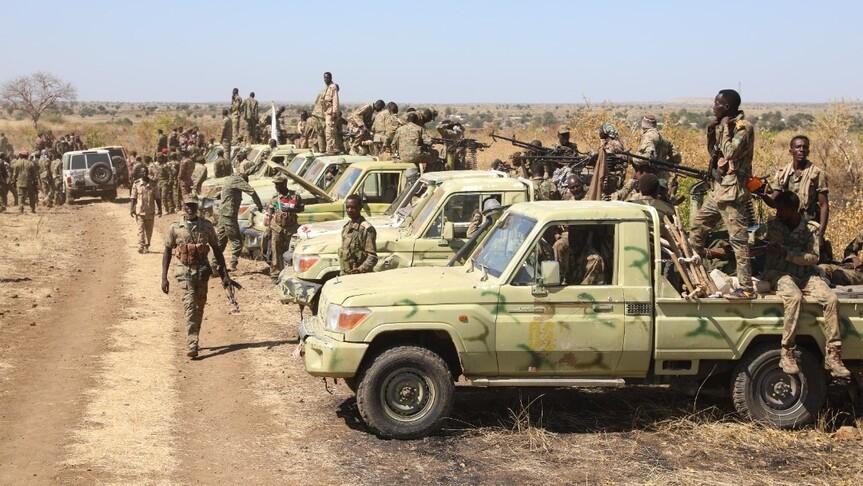
The sources said alliance forces had captured the Baraka military garrison and were advancing towards Damazin, the capital of Blue Nile region. They described the offensive as a challenge to both the army’s supply network and its hold over economically important territory.
According to their account, the army has transferred reinforcements from El Obeid and other parts of Kordofan to defend the Damazin front, underscoring concerns about losing access to the surrounding region’s mineral wealth and agricultural resources.
The battlefield claims and allegations concerning resource-backed arms deals were not independently verified in the report.
The sources placed Baraka garrison roughly 70 kilometres from Damazin, which houses the regional military division headquarters. They said TASIS forces had reached territory between Baraka and Sali and were applying pressure on Blue Nile from four directions.
The alliance’s objective, they said, was to sever supply routes and prevent the army from moving reinforcements and equipment into contested areas.
One source argued that the redeployment exposed competing demands on the army, which must defend Damazin while maintaining its positions around El Obeid and across Kordofan.
The sources also reported a substantial TASIS concentration near Jabra al-Sheikh, along the route known as the Export Road. They disputed reports of army advances and Rapid Support Forces withdrawals, although Erem News provided no independent confirmation of either account.
Beyond its military importance, the Damazin area represents a valuable economic asset for the Port Sudan authorities, the sources said.
They alleged that army chief Abdel Fattah al-Burhan uses access to mineral resources as leverage with foreign allies to obtain weapons and financing. One source cited gold, uranium and other mineral deposits, alongside extensive agricultural land, but the report supplied no documentation establishing specific deposits or resource-for-arms agreements.
The sources argued that losing Damazin could weaken the army’s ability to finance its operations while increasing pressure on Sennar, Gezira and Jebel Moya.
A separate military source told Erem News that the army had previously assembled substantial forces in El Obeid for operations intended to open routes towards Darfur and through Kordofan, including access to oilfields. The emerging threat around Damazin had complicated those plans, the source said.
That source also claimed that the RSF and its allies controlled extensive resource-rich territory, including areas in Kordofan and the border triangle region, leaving the Port Sudan authorities seeking to secure a greater share of Sudan’s economic assets.
Political science professor Yaqoub al-Nourain told Erem News that the advance towards Damazin was intensifying pressure on the army. He argued that further TASIS gains in Blue Nile, particularly those connecting territory along neighbouring borders, could significantly weaken its operational position.
Nourain said transferring troops between fronts would have limited effect if supply routes were severed. His assessment presented the battle for Damazin as a potentially consequential struggle over the army’s ability to reinforce its positions and sustain the war.