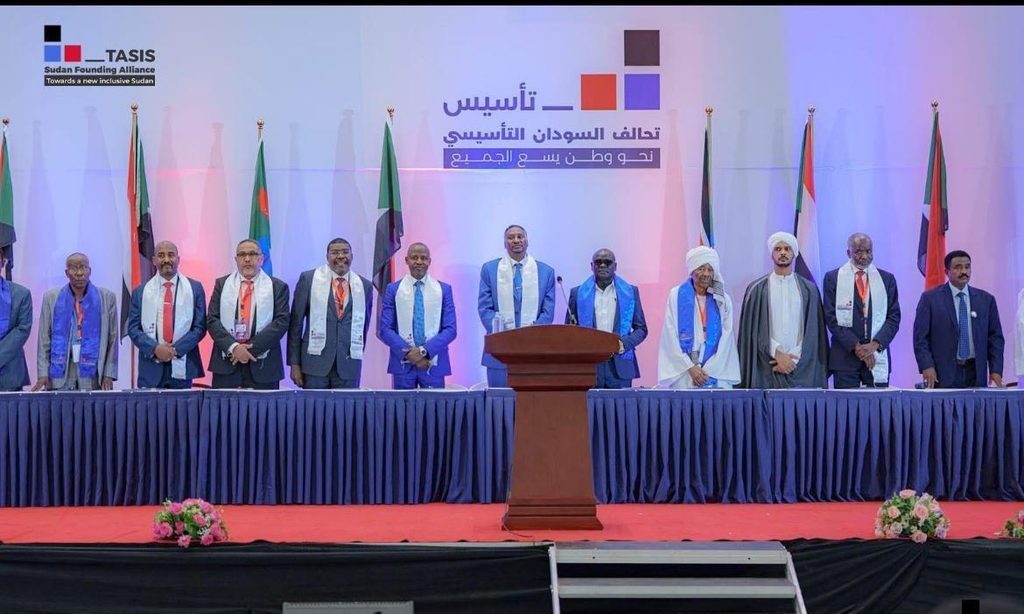
The Sudan Founding Alliance, known as TASIS, has rejected key conclusions of a United Nations fact-finding report on alleged violations committed during Sudan’s war, arguing that the investigation did not meet the standards required for a balanced and comprehensive inquiry.
In a statement issued on Tuesday, September 8, TASIS questioned the methodology used by the UN Fact-Finding Mission, particularly its reliance on remote interviews with victims and relatives rather than what the alliance described as sufficient direct inspections of locations where alleged abuses occurred.
The UN mission has accused the Rapid Support Forces (RSF) of committing war crimes and crimes against humanity during the conflict. It has also reported the existence of cross-border support networks allegedly linked to the RSF, including the recruitment of foreign fighters and the provision of weapons and logistical assistance.
TASIS disputed those findings, saying the investigation had not given adequate attention to alleged abuses committed by the Sudanese Armed Forces and allied forces.
The alliance pointed to incidents in Gezira, Sennar, Khartoum and other parts of Sudan, arguing that allegations involving army-aligned forces should be examined with the same level of scrutiny.
TASIS also rejected the report’s conclusions regarding external support networks linked to the RSF. It said the mission had failed to sufficiently investigate allegations of foreign assistance to the army and its allied groups, leaving what the alliance described as an incomplete picture of outside involvement in the conflict.
The alliance characterised the UN report in its current form as preliminary, arguing that its findings should be reviewed and expanded before being treated as a definitive account of violations or used as the basis for major judicial or international measures.
TASIS called for a broader internationally supervised field investigation involving direct evidence gathering and testimony from all sides to the conflict.
It said any final assessment of abuses committed during Sudan’s war should be based on a comprehensive process that investigates allegations against all parties under the same evidentiary standards.