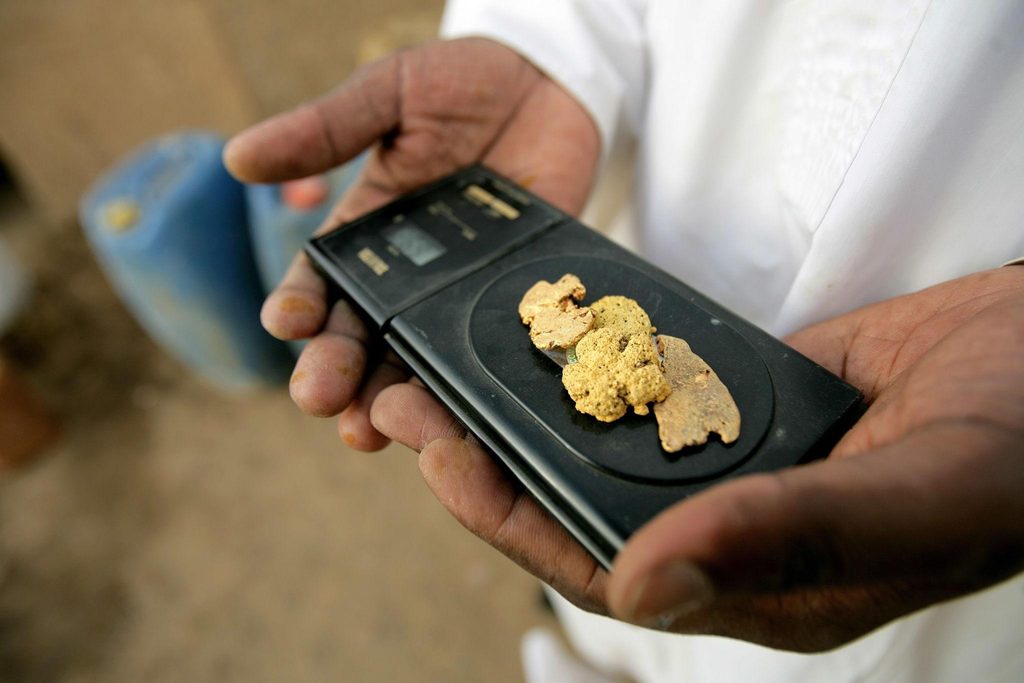
Switzerland has banned the purchase, import and transit of gold originating from Sudan as part of new sanctions aimed at cutting off revenue streams that help sustain the country’s war.
The measures, which took effect on Thursday, September 10, also prohibit the provision of financial assistance and other services linked to Sudanese gold transactions.
The Swiss Federal Council said it had also banned the sale and supply to Sudan of certain chemicals used in gold mining and extraction.
The move brings Switzerland into line with sanctions adopted by the European Union in July targeting Sudan’s war economy. The EU measures prohibit the purchase, import or transfer of Sudanese gold and restrict the export of mercury and cyanide to the country.
Switzerland said the restrictions were adopted amid deep concern over Sudan’s worsening humanitarian crisis and reports that gold has become an important source of revenue sustaining the conflict.
“Gold originating from Sudan” is now subject to restrictions on its purchase, import and transit through Switzerland, while companies are also barred from providing related services or financial assistance, according to the Federal Council.
The measures will be incorporated into Switzerland’s existing ordinance on Sudan, which has been used to implement United Nations sanctions since 2005 and additional European measures since 2023.
The ordinance already includes an arms embargo as well as financial sanctions and travel restrictions targeting 36 individuals, entities and companies.
Pressure mounts on Sudan’s gold trade
The Swiss decision follows an EU move on July 13 to impose new sectoral sanctions aimed specifically at Sudan’s gold industry.
The European measures ban the purchase, import or transfer of gold originating in Sudan and prohibit the sale, supply, transfer or export of mercury and cyanide, which are commonly used in mining and gold processing.
European officials said the restrictions were designed to reduce sources of financing for the conflict and increase pressure on those prolonging the war.
Gold has emerged as one of the most important sources of foreign currency in Sudan since fighting erupted in April 2023, as much of the country’s formal economy and productive sectors have been devastated.
Armed groups, military-linked businesses and commercial networks have been accused of benefiting from mines, gold-trading companies and cross-border smuggling networks.
Large quantities of Sudanese gold are also believed to leave the country through informal routes, complicating efforts to trace revenues and determine their ultimate beneficiaries.
Switzerland’s participation is particularly significant because of the country’s major role in the international gold refining and trading industry.
Swiss authorities already impose strict due-diligence requirements on imports of gold and other precious metals in an effort to prevent the trade in conflict-linked resources.
The new measures, however, go further by imposing a direct prohibition on Sudanese-origin gold rather than relying solely on checks into its provenance.
Smuggling remains a challenge
Enforcing the sanctions is likely to depend heavily on authorities’ ability to track Sudanese gold transported through third countries or re-exported after its declared origin has been altered.
International efforts to restrict Sudan’s war economy are therefore increasingly focused not only on officially declared exports but also on intermediaries, front companies and financial networks involved in moving or laundering proceeds from the gold trade.
Switzerland said its decision reflects growing international concern that revenues from Sudan’s natural resources are helping to prolong a conflict that has created one of the world’s most severe humanitarian crises.