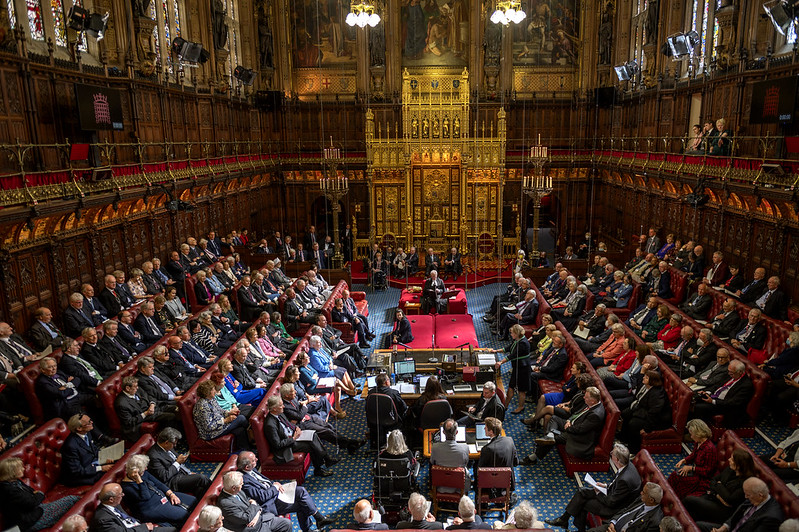
Pressure is mounting in Britain for tougher legal and financial measures against the Muslim Brotherhood, as members of the House of Lords seek greater scrutiny of the group and organisations allegedly linked to it.
The parliamentary initiative comes as the Home Office continues to assess organisations associated with extremism. The government has said it will intervene when an organisation’s activities meet the legal threshold for action.
A British source familiar with discussions in the House of Lords told Erem News that several peers were working during the current parliamentary session to push the Muslim Brotherhood file higher on the government’s agenda.
Supporters of tougher measures are reportedly compiling information on funding sources, institutional affiliations, overseas connections and the activities of charities and individuals identified in previous government reviews.
The material is expected to be submitted to the Home Office, the Charity Commission and agencies responsible for combating terrorist financing.
The proposed scrutiny includes donations and financial transfers from abroad, financial links between British-registered charities and individuals or institutions allegedly connected to Brotherhood networks in Europe and the Middle East, and the group’s purported presence in universities, centres and civil society organisations.
The effort draws partly on a British government review published in 2015, which concluded that membership of, association with or influence by the Muslim Brotherhood could be considered a possible indicator of extremism. It recommended continued monitoring of people and organisations linked to the movement in Britain.
Measures reportedly under consideration include reviewing the legal status of certain charities, restricting access to public funding and government programmes, strengthening oversight of foreign transfers and freezing assets where sufficient legal grounds exist.
Tighter visa restrictions could also be imposed on individuals whose activities are considered by British authorities to be connected to extremism or its financing.
Advocates of stronger action are also examining whether provisions of the Terrorism Act 2000 could apply to the Brotherhood or specific affiliated entities. Any such action would require evidence relating to financing, incitement, organisational links or other conduct that could support an enforceable legal case.
Under British law, an organisation may be proscribed when the home secretary reasonably believes it is involved in terrorism and concludes that a ban would be necessary and proportionate.
However, the Brotherhood’s decentralised structure could make it difficult to establish direct legal links between the wider movement and organisations operating under separate names.
Financial and regulatory measures could therefore give the government broader tools to restrict entities accused of functioning as Brotherhood affiliates while formally operating as independent civil society organisations.
British journalist Jonathan Lees said the pressure in the House of Lords indicated that the debate was shifting from questions about the Brotherhood’s ideology towards the practical measures available to the state.
He said the government would face growing pressure to turn years of security and regulatory assessments into concrete action, particularly amid concern over organised Islamist activity in universities and civil institutions.
A formal ban remains one option, but funding restrictions, regulatory investigations, visa measures and counter-extremism powers could be introduced first, gradually limiting the operations and public influence of organisations allegedly linked to the Brotherhood.