Saudi Arabia has temporarily shut its East-West oil pipeline after it came under aerial attack, threatening further disruption to global energy supplies as Houthi forces expand their control along Yemen’s Red Sea coast.
Baghdad and Riyadh said the drone attack originated from Iraq, where Iran-backed armed groups operate. Iraq dismissed a senior military commander responsible for operations in the southeastern province of Maysan following the strike.
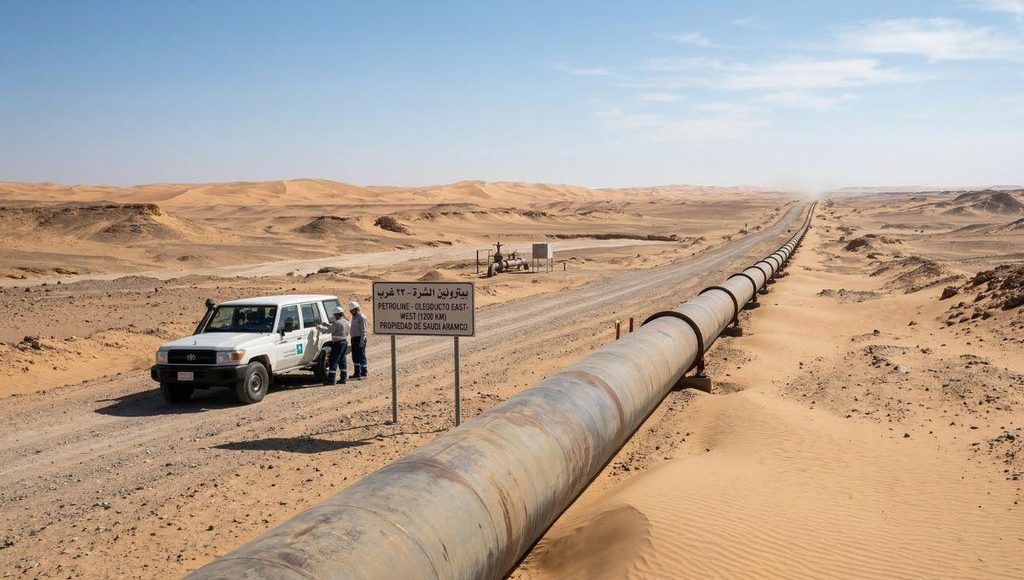
The 1,200-kilometre pipeline carries crude from eastern Saudi Arabia to the Red Sea, allowing the kingdom to bypass the Strait of Hormuz, where tanker traffic has slowed sharply during the six-month war between the United States and Iran.
Saudi Arabia’s Energy Ministry said the pipeline was closed as a precaution. It has recently transported between four million and five million barrels per day, equivalent to around 4% to 5% of global oil supplies.
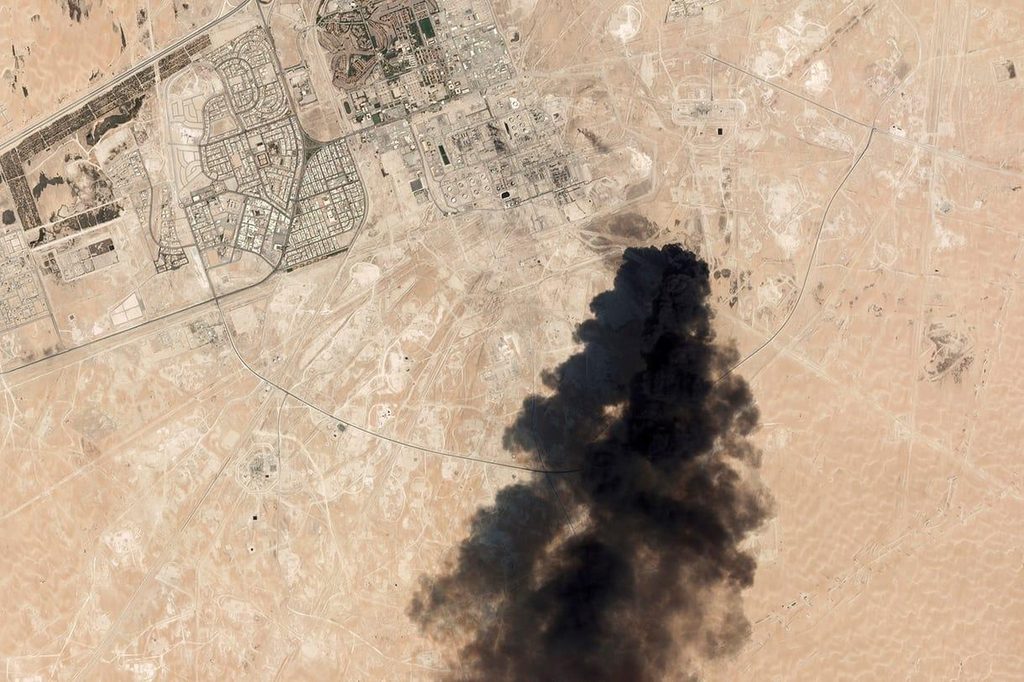
No group immediately claimed responsibility for the attack. Satellite images showed black smoke rising from an area south of Medina, while the Saudi Foreign Ministry reported injuries and damage without disclosing whether exports had been affected.
US President Donald Trump said Iran was probably responsible for the strike. Speaking during a visit to Ireland, Trump also predicted that the conflict would end shortly after November’s US midterm elections, causing oil prices to fall.
Oil prices have risen sharply over the past week amid attacks on tankers in the Gulf and mounting threats to Red Sea shipping. Diesel prices in the United States have also climbed above $6 a gallon for the first time.
Houthis seize strategic island
Four Yemeni government sources told Reuters that Houthi forces seized Perim Island on Friday. The island lies in the Bab el-Mandeb Strait at the southern entrance to the Red Sea, one of the world’s most important maritime trade routes.
The advance gives the Iran-aligned group greater influence over shipping between the Red Sea and the Gulf of Aden.
Saudi Crown Prince Mohammed bin Salman asked Washington for military assistance against the Houthis during a call with Trump last week, according to two sources. The United States reportedly declined to intervene directly but offered intelligence support.
Trump confirmed speaking to the crown prince and said the Houthis had also contacted his administration to urge Washington to stay out of the conflict.
The pipeline strike and the capture of Perim represent a significant escalation as diplomatic efforts to end the regional war remain stalled. Saudi oil transported through the pipeline has served as the principal alternative source of Middle Eastern crude while access through the Strait of Hormuz remains restricted.
Iran is demanding recognition of its authority over the strait, including the right to charge vessels for passage, a proposal rejected by Washington. Tehran said it would meet Gulf countries in Oman on Monday to discuss the waterway, although Oman has not publicly confirmed the talks.
Iraq launches investigation
The Iraqi commander dismissed on Saturday had overseen military operations in Maysan, a province bordering Iran where Tehran-backed Shia armed groups maintain considerable influence.
Saudi Arabia said it had refrained from retaliating following a request from Iraq’s prime minister but reserved the right to take any measures necessary to defend its interests. Baghdad condemned the attack and launched a large-scale operation to identify those responsible.
Iraq also closed the Shalamcheh border crossing with Iran as a precaution. The crossing is a major route for Iranian food and vegetable exports to Iraq.
Yemeni forces prepare counteroffensive
Saudi-backed Yemeni government forces said they would seek to recapture territory seized during the Houthis’ rapid advance along the Red Sea coast.
The International Energy Agency said Saudi crude supplies had already fallen to their lowest level in more than three decades, partly because of attacks on vessels passing through Bab el-Mandeb.
Reuters previously reported that Iran’s Revolutionary Guards directly advised the Houthi offensive. Two Iranian sources said Tehran had encouraged the group to intensify attacks against Saudi Arabia and promised additional funding, weapons and senior officers.
Iran describes the Houthis as an ally but denies directing their military operations.
Houthi military spokesperson Yahya Saree said maritime traffic remained safe for all vessels except Saudi ships, which are subject to a previously announced ban.