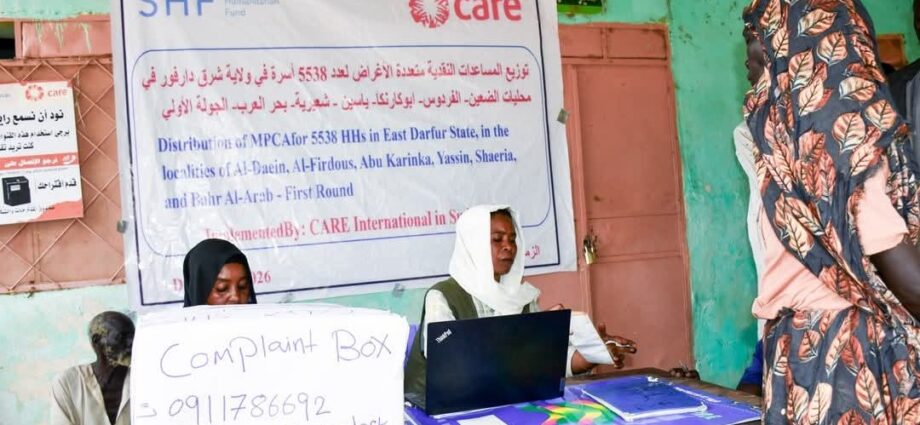
Families receiving humanitarian aid in Sudan’s East Darfur are losing up to 45 percent of their payments to fees for converting bank transfers into cash, as a worsening shortage of banknotes leaves vulnerable households struggling to buy essentials, local Sudanese media reported.
Halima Ibrahim, a displaced mother in El Daein, said she received 780,000 Sudanese pounds through a banking application but collected just 468,000 pounds after a money transfer centre deducted a 40 percent commission.
“I have no other choice. Shopkeepers in the market refuse electronic payments, and my orphaned children need food,” she said on Monday.
Conversion fees for transfers through the Bankak application have climbed to between 40 and 45 percent as humanitarian organisations began distributing financial assistance to vulnerable families across East Darfur this week.
Transfer operators blamed the cash shortage on a combination of trading activity, banking disruptions and growing demand for physical currency.
Suleiman Siddig, who owns a money transfer centre, said major traders had accumulated much of the cash available in local markets to buy US dollars from Rapid Support Forces personnel who had recently received salaries in foreign currency.
He said cash purchases of crops and livestock were also reducing the supply of banknotes and pushing conversion fees higher.
Hussein Zakaria, a money transfer worker at El Daein market, said repeated disruptions to banking applications had aggravated the problem and hampered trade.
He also described a practice known locally as “al-kasr”, in which some operators buy commodities such as sugar and flour at inflated prices, then sell them at losses of up to 30 percent to obtain cash.
The cash is subsequently offered to customers seeking to withdraw electronic balances at a 40 percent commission, allowing operators to profit from the difference, he said.
According to Zakaria, markets, grocery shops and health centres have reverted entirely to cash payments, leaving aid recipients with little choice but to accept steep deductions.
The shortage has deepened during the war between Sudan’s army and the RSF in areas controlled by the TASIS administration, turning access to cash into an added cost for families already dependent on assistance.
For recipients such as Halima, the choice is stark: surrender a substantial share of their aid or remain unable to pay for food and other necessities.