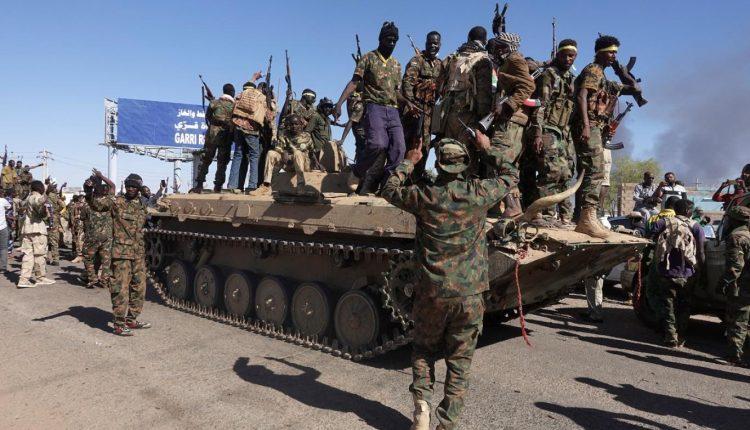
TASIS-aligned forces are tightening pressure on Damazin after advancing to within roughly 30 kilometres of the strategic Blue Nile capital, as a parallel drone campaign hits military positions and infrastructure across southeastern and eastern Sudan.
Forces belonging to the Sudan Founding Alliance, known as TASIS, have continued their advance through the Blue Nile region, capturing a string of positions south of Damazin and increasing pressure on one of the Port Sudan authorities’ most important military centres in southeastern Sudan.
Sudanese sources cited by regional media said TASIS forces had secured Madal Abiqo, Beli Bong and Kambarda, as well as Dokam, Karn Karn and Khor al-Hassan, bringing fighters to around 30 kilometres from Damazin.
The territorial gains follow the earlier capture of Kurmuk and Geissan and the seizure of the strategic Sarkam and Bakori military bases, consolidating TASIS control over key approaches from Sudan’s borders with Ethiopia and South Sudan.
Sudan Tribune separately reported that the RSF and allied Sudan People’s Liberation Movement-North forces had captured several of the same positions, while the Port Sudan-aligned army rushed reinforcements into Damazin. The alliance says its forces are continuing toward the regional capital.
The latest advance marks a significant shift in the Blue Nile campaign. Fighting that had previously been concentrated around border districts is increasingly moving toward Damazin, the administrative and military centre of the region.
Sources close to TASIS told Erem News that the pressure on Damazin was forcing Port Sudan forces to divert troops and supplies from other fronts, stretching an already dispersed military deployment across Blue Nile, Kordofan and other contested areas.
They described the offensive as more than a tactical push, arguing that the capture of territory south of Damazin had transformed the Blue Nile front into a direct threat to the army’s command structure in the region.
The army has reinforced Damazin with additional forces, including fighters from allied Darfur armed groups, according to Sudan Tribune. Earlier reporting showed reinforcements arriving after TASIS forces captured Bakori and Sarkam, with SPLM-N commander Joseph Touka saying the gains had left Damazin exposed to further advances.
Drone strikes pound Damazin
The ground advance has been accompanied by repeated drone attacks on military positions inside Damazin.
Residents told Sudanese newspaper Al-Sayha that drones were heard over the city for a second consecutive day on Tuesday, followed by powerful explosions around army installations.
Witnesses cited by the newspaper said military vehicles carrying troops were seen leaving targeted areas and moving through crowded streets as the attacks continued.
Al-Sayha said the strikes targeted army positions as well as locations associated with the Al-Baraa Ibn Malik Corps and other armed groups allied with the Port Sudan authorities.
Independent reporting confirms that Damazin has been subjected to a sustained drone campaign.
Sudan Tribune reported that at least 11 explosions were heard during one wave of drone attacks, with strikes reported near Damazin airport, a military hospital and a fuel station. Army air defences opened fire in an attempt to intercept the drones.
Four people were killed and several others wounded in drone strikes on Damazin on Sunday and Monday nights, according to military sources cited by Sudan Tribune. Damage was also reported at fuel facilities and other infrastructure.
The RSF has increasingly used long-range drones to hit army-controlled military, energy and logistical facilities across Sudan, forcing the Port Sudan authorities to defend targets far behind conventional front lines.
Pressure spreads beyond Blue Nile
The expanding drone campaign is no longer confined to Damazin.
On Tuesday, drones were also reported near the Upper Atbara and Setit dam complex in Gedaref state and the Khashm al-Girba dam in Kassala.
The army said its air defences intercepted the drones before they reached the installations and that no casualties or structural damage were recorded. The RSF had not publicly claimed responsibility for those attempted strikes at the time of reporting.
The attacks nevertheless underline the widening geographical pressure on Port Sudan-controlled territory as the war increasingly combines ground offensives with long-range drone operations against military and logistical infrastructure.
Sources cited by Erem News also said recent strikes had hit military sites in Khartoum and Omdurman, including areas around Wadi Saydna airbase and strategic drone units.
They claimed a separate attack had forced Khartoum airport out of service, though that claim could not be independently confirmed.
Analysts sympathetic to TASIS say the strategy is aimed at forcing Port Sudan forces to disperse air defences, troops and logistical resources across several distant fronts rather than concentrating them against the alliance in any single theatre.
Damazin becomes central battlefield
Damazin carries far greater importance than its role as the administrative capital of Blue Nile.
The city hosts the army’s 4th Infantry Division and sits close to the Roseires Dam, Sudan’s second-largest hydroelectric power-generating facility. Its location also links central Sudan with routes toward Ethiopia and South Sudan.
That makes control of the approaches to Damazin strategically important for both sides.
The capture of Kurmuk and Geissan gave TASIS-aligned forces control over important frontier territory, while the subsequent seizure of military bases and settlements further north has shortened the distance between the alliance and Damazin.
Sudan Tribune reported earlier this month that the RSF-SPLM-N alliance viewed the capture of Kurmuk, Geissan, Sarkam and Bakori as giving it a strategic advantage on the Damazin axis.
TASIS-linked sources now claim the city is effectively surrounded from several directions and that its capture has become increasingly possible.
Those claims remain contested. The army continues to hold Damazin and says its troops are prepared to repel further advances.
But the movement of additional forces into the city, repeated drone strikes and the steady northward movement of TASIS-aligned troops point to mounting pressure on the Port Sudan authorities’ position in Blue Nile.
Civilian pressure mounts
The intensifying military campaign is also worsening an already severe humanitarian crisis.
More than 175,000 people have been displaced across Blue Nile by months of fighting, according to a local civil society coalition, with tens of thousands fleeing toward Damazin and Roseires.
Damazin itself has consequently become both a refuge for people fleeing fighting farther south and an increasingly active military target.
More than 20,000 displaced families were reported to have sought shelter in the city before the latest series of drone strikes, raising concerns that further escalation around the regional capital could trigger another wave of displacement.
The latest developments therefore represent one of the most significant tests yet for Port Sudan forces in southeastern Sudan.
Rather than remaining contained along Sudan’s borderlands, the TASIS campaign is increasingly shifting toward a major regional capital while drone operations extend pressure against military and strategic infrastructure well beyond the immediate battlefield.