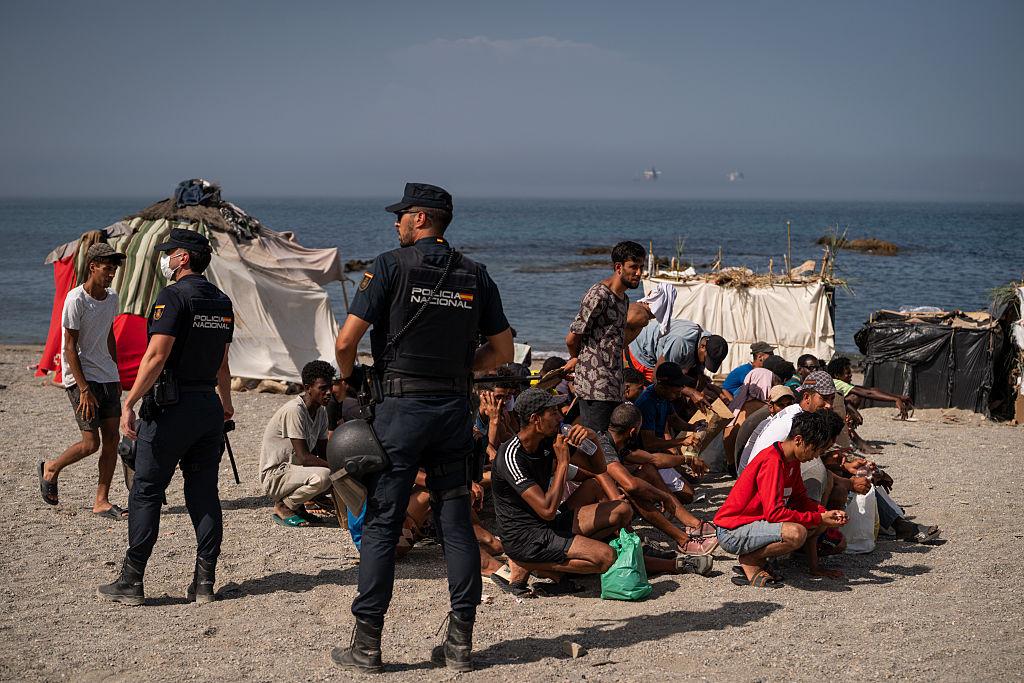
Spanish police began clearing thousands of migrants from beaches in the North African enclave of Ceuta on Friday, using rubber bullets and batons during clashes as authorities moved some people into newly built temporary accommodation.
Spain estimates around 10,000 migrants remain in Ceuta after more than 72,000 people crossed from Morocco during an unprecedented surge at the end of July. Most later left the territory.
Authorities have constructed temporary accommodation inside Ceuta’s port with capacity for about 1,700 people, but aid groups say thousands are still sleeping outdoors in makeshift camps.
The operation began shortly before 7 a.m. local time and involved riot police as well as members of the Spanish military.
Migrants who had spent the night on the beach hoping to secure a place in temporary shelter initially applauded as the relocation began. Tensions later rose as people crowded around the designated route and competed for the limited spaces available.
Footage broadcast by Spain’s TVE showed police firing rubber bullets into the air and using batons against several migrants as officers tried to control the crowd. The situation later calmed and the transfer resumed.
Most of those moved were adult men carrying their belongings under police escort along a route of just over one kilometre from El Trampolin beach to the port.
The majority of migrants in Ceuta are men and boys. The newly built accommodation is intended only for adult men, while minors are being separated and housed in other facilities.
Three NGO leaders told Reuters that Spanish authorities had been too slow to provide the minimum shelter required under the European Union’s migration rules, arguing that existing reception centres remain far below the capacity needed.
One aid organisation estimated that around 4,000 migrants were still sleeping on beaches and pavements across Ceuta, meaning the new centre would not be enough to eliminate makeshift camps.
Two NGO representatives said authorities appeared to be counting on many migrants eventually returning voluntarily to Morocco.