A Russian naval corvette was reportedly severely damaged in Benghazi before explosive-laden drone boats targeted a commercial ship offshore, raising fears that the Russia-Ukraine war is spilling into North Africa.
A series of suspected Ukrainian naval drone attacks struck the eastern Libyan port city of Benghazi on Sunday, severely damaging a Russian warship and reportedly targeting a commercial vessel offshore, in an escalation that has raised concerns over the expansion of the Russia-Ukraine conflict into the Mediterranean.
Libya’s eastern-based administration confirmed that a Russian vessel docked at the Benghazi naval base had been hit in a suspected drone attack before dawn on November 22, triggering an explosion and fire at the military facility.
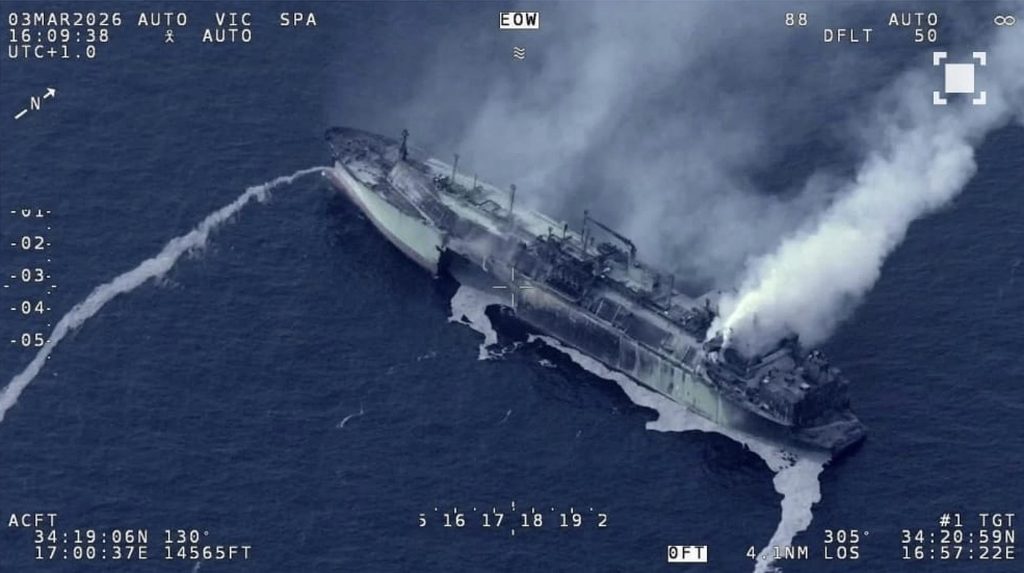
Hours later, Libyan broadcasters Al-Masar and Libya Al-Hadath reported that explosive-laden, remotely operated boats had approached the city’s coastline and targeted a commercial vessel outside the port.
The broadcasters, which are affiliated with military forces controlling eastern Libya, attributed the maritime operation to Ukraine and circulated footage purportedly showing unmanned boats approaching the coastline, naval personnel responding to the threat and divers heading offshore to rescue those aboard the targeted vessel.
Reuters separately reported, citing two Libyan military sources, that a Maltese-flagged commercial ship had been targeted by a drone boat off Benghazi. Reuters+1
The reports suggest that the Russian warship was not the only vessel threatened during Sunday’s incidents, although the origin of the drone boats and the extent of damage to the commercial vessel have not been independently established.
Neither Russia nor Ukraine had immediately commented on the reported attacks.
Russian warship severely damaged
The initial explosion occurred aboard a Russian naval vessel docked at Benghazi’s military port, where the ship had stopped to refuel and replenish supplies before returning to Russia.
According to Libya’s eastern-based government, preliminary investigations indicated that the explosion was caused by an attack involving drones.
Two Libyan military officials, speaking to the Associated Press, identified the targeted warship as the Merkury, a Russian Navy corvette, and said the strike had inflicted severe damage on the vessel while igniting a fire at the naval base.
The reported damage represents a potentially significant blow to Russian naval operations in the Mediterranean, where Moscow has sought to preserve its military reach despite growing pressure associated with the war in Ukraine.
Libyan emergency services initially reported an explosion at an ammunition storage facility inside the naval base, prompting firefighters and security personnel to respond.
The Benghazi Civil Defense subsequently announced that the blaze had been brought under control.
However, officials did not establish whether the ammunition depot explosion and the blast aboard the Russian ship were separate incidents or part of the same attack.
The eastern administration maintained that surrounding port infrastructure, storage areas and naval facilities had escaped damage and that normal operations had resumed following the fire.
Second attack targets commercial shipping
The situation developed further on Sunday when eastern Libyan broadcasters reported a separate maritime drone operation targeting a commercial vessel near Benghazi.
Al-Masar and Libya Al-Hadath said remotely controlled explosive boats had approached the port area and operated along the city’s coastline before striking or attempting to strike the ship offshore.
Footage released by the broadcasters purportedly showed the unmanned craft involved in the operation, alongside Libyan naval divers heading towards the affected vessel to assist those aboard.
Other footage reportedly showed Libyan air and naval units engaging drone boats approaching the Benghazi naval base, suggesting that security forces were attempting to intercept additional maritime threats.
The videos could not be independently authenticated, and the broadcasters did not provide conclusive evidence establishing Ukrainian responsibility.
The number of people aboard the commercial vessel, their condition and the extent of any damage were not immediately clear.
The reported attack has widened concerns beyond the presence of Russian military vessels in Libya, raising questions about the security of commercial shipping operating near ports used by foreign armed forces.
Unlike the Russian warship, the commercial vessel’s reported role in any military activity has not been established.
Libya demands joint investigation with Russia
Libya’s eastern-based government, led by Osama Hammad, strongly condemned the attack on the Russian vessel and called for an extensive investigation in coordination with Moscow.
The administration described the targeting of a foreign ship inside a Libyan port as a serious violation of national sovereignty and maritime security.
It instructed security and military authorities to determine how the suspected drones reached the naval installation, identify those responsible and establish whether the operation had been organised from outside Libya.
The government also warned that those found responsible could face legal and diplomatic consequences.
In its statement, the administration emphasised that Libya was not participating in the Russia-Ukraine war and should not become a location where international rivalries are fought.
It insisted that Libya’s ports, territorial waters and military installations must not be transformed into operational theatres for conflicts involving foreign powers.
The position reflects growing concerns that military cooperation agreements between Libyan factions and external governments could expose the country to attacks associated with conflicts in which Libya has no direct involvement.
Tripoli warns against foreign military entanglements
Libya’s rival, internationally recognised Government of National Unity in Tripoli also expressed serious concern over the Benghazi incident, although its response focused heavily on the presence of foreign military forces and unauthorised security arrangements.
The administration, headed by Prime Minister Abdul Hamid Dbeibah, warned that allowing foreign forces to use Libyan territory, ports and military facilities without unified national authorisation could expose the country to dangerous international confrontations.
It rejected the use of Libya as a battleground for rival foreign powers and argued that military cooperation conducted outside established state institutions threatens national sovereignty.
Tripoli also called for the unification of Libya’s military establishment under a single national command, arguing that competing security structures have enabled foreign governments to negotiate separate arrangements with rival political authorities.
The response highlighted the continuing political divide between the internationally recognised government in western Libya and the Benghazi-based administration, which maintains control over eastern Libya and large areas of the south.
Russia’s expanding military footprint in North Africa
The Benghazi incidents have drawn renewed attention to Russia’s military relationships in eastern Libya and its broader strategic ambitions across North Africa.
Moscow has maintained close ties with military commander Khalifa Haftar and the eastern Libyan military establishment, cultivating security relationships that provide Russia with influence along the Mediterranean’s southern coastline.
Libya’s geographical position offers significant strategic advantages, connecting the Mediterranean with the Sahel and other parts of Africa where Russia has expanded its political and military involvement.
The presence of a Russian naval vessel at Benghazi underscores the importance of those relationships, particularly as Moscow seeks to maintain access to military facilities and logistical networks outside its own territory.
Ukraine, meanwhile, has repeatedly employed explosive-laden unmanned boats against Russian naval assets in the Black Sea, demonstrating the potential of relatively inexpensive maritime weapons to threaten larger warships.
If Ukrainian responsibility for the Benghazi incidents is confirmed, the attacks would indicate that the maritime confrontation between Moscow and Kyiv has extended into another strategically important region.
However, the reports from eastern Libyan broadcasters do not, by themselves, establish who carried out the operation, and no official Ukrainian acknowledgement had emerged at the time of reporting.
New security challenge for divided Libya
The reported targeting of both a Russian naval vessel and a commercial ship presents an additional security challenge for Libya, which remains politically divided more than 15 years after the overthrow of Muammar Gaddafi.
The country continues to operate under competing political administrations, with separate military institutions and overlapping foreign security relationships.
The Tripoli-based Government of National Unity administers much of western Libya, while the parliament-appointed government of Osama Hammad operates from Benghazi and controls eastern Libya and large parts of the south.
Efforts led by the United Nations to unify Libya’s executive institutions, establish a consolidated military structure and organise national elections have repeatedly encountered political and security obstacles.
Sunday’s developments demonstrate the risks created when foreign military forces operate within a country whose competing authorities disagree over control of ports, military installations and international security partnerships.
The reported attack on commercial shipping also raises concerns that civilian maritime activity could become vulnerable to operations directed at foreign military assets.
Investigators are now expected to examine the circumstances surrounding the explosion aboard the Russian warship, the reported movements of explosive-laden drone boats near Benghazi and the separate incident involving the commercial vessel.