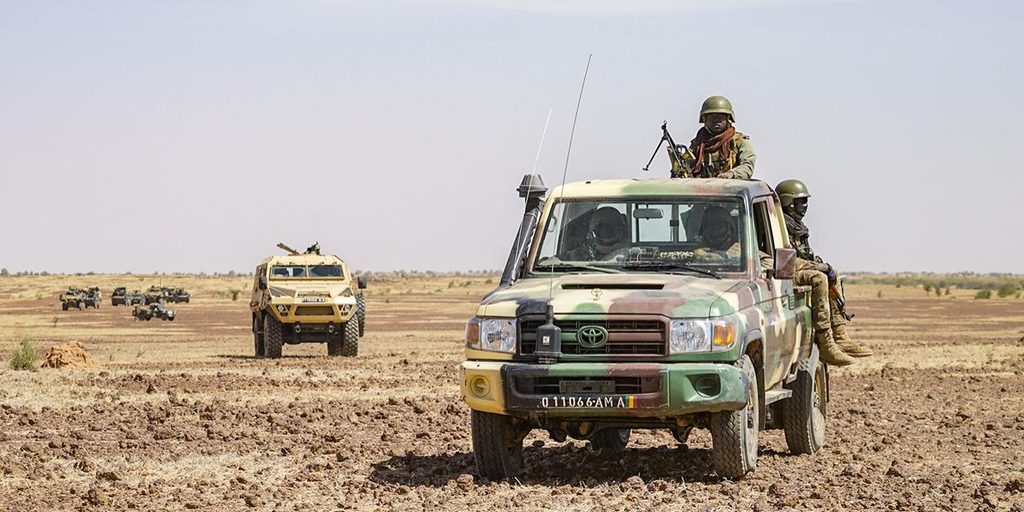
The International Crisis Group (ICG) has called on the military governments of Mali, Niger and Burkina Faso to consider political negotiations with Jama’at Nusrat al-Islam wal-Muslimin (JNIM), an al-Qaeda-affiliated armed group, warning that more than a decade of military operations has failed to bring the conflict in the Sahel under control.
In a report published on Friday, November 20, the Brussels-based conflict prevention organisation argued that a negotiated settlement could offer a less destructive alternative to an increasingly costly war that has devastated communities, displaced populations and weakened state institutions across the region.
The report, titled Handling JNIM’s Threat to the Sahel’s Urban Heartlands, examines the group’s expanding military operations and growing political ambitions, particularly its efforts to challenge the military administrations governing the three countries under the Alliance of Sahel States (AES).
ICG warned that the armed group’s shift from rural insurgency to increasingly coordinated attacks against major urban centres has raised the possibility of a wider political and security crisis.
The organisation said the prospect of JNIM establishing control over major cities, including regional capitals and potentially national capitals, could no longer be dismissed.
Coordinated attacks expose military vulnerabilities
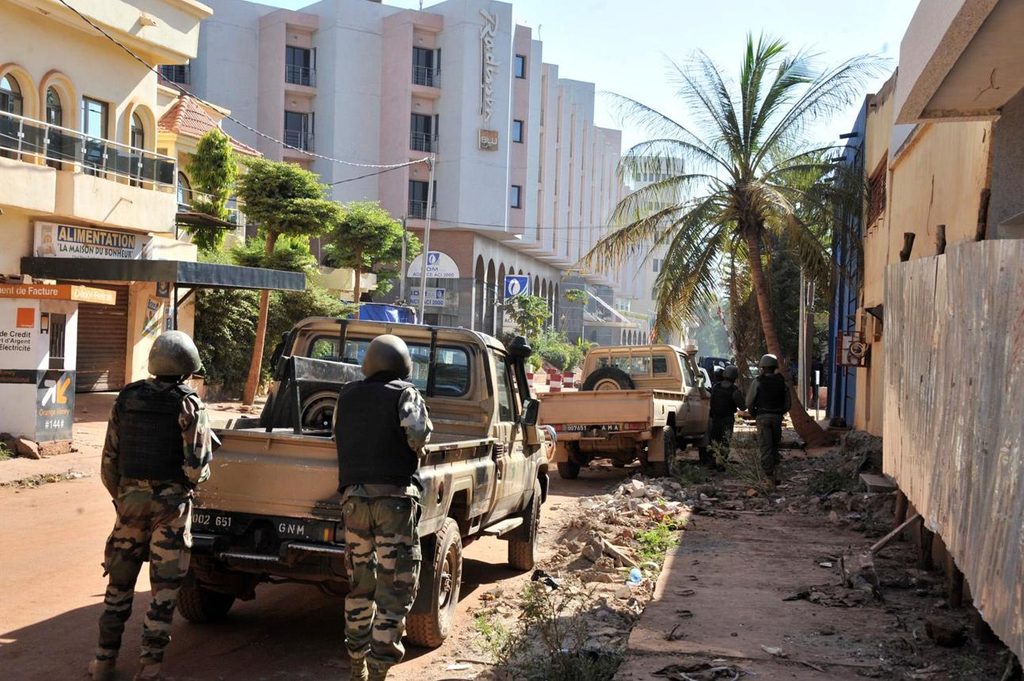
The report highlighted a series of coordinated attacks launched across Mali on April 25, 2026, as a major turning point in the conflict.
The offensive targeted several strategic urban centres and military installations, exposing vulnerabilities in the country’s security apparatus and dealing a significant blow to the military leadership.
Among those killed was Mali’s defence minister, General Sadio Camara, who died following an attack on his residence in Kati, near the capital Bamako.
The Malian government subsequently confirmed his death, while the offensive also involved cooperation between JNIM fighters and Tuareg separatists from the Azawad Liberation Front.
The scale and coordination of the attacks placed Mali’s transitional authorities under severe pressure and demonstrated the insurgents’ ability to strike well beyond their traditional rural strongholds.
The developments also underscored the expanding political ambitions of JNIM, which has increasingly presented its campaign as a struggle to remove the military governments currently ruling Mali, Burkina Faso and Niger.
According to ICG, the group’s messaging has evolved beyond its longstanding objective of imposing a strict interpretation of Islamic law.
It has begun openly advocating the overthrow of the region’s military administrations while seeking to appeal to political opponents, intellectuals and exiled figures dissatisfied with military rule.
The organisation warned that the group’s ambitions to reshape the Sahel’s political order have become increasingly apparent as it gains influence over territory and challenges government control.
Governments continue military resistance
Despite the growing insurgent threat, ICG stressed that the military governments of the Sahel remain capable of resisting further advances.
Government forces have prioritised the defence of major population centres, the reopening of strategic transport corridors and the protection of supply convoys.
In Mali, securing fuel deliveries has become particularly important following JNIM attacks and restrictions on transport routes that contributed to shortages and economic disruption.
The insurgents have repeatedly targeted supply networks in an effort to weaken government authority, disrupt economic activity and increase pressure on urban populations.
Security forces have responded by escorting fuel convoys and reinforcing military deployments along major highways, although such operations place additional demands on already stretched resources.
The report acknowledged that government counteroffensives have succeeded in limiting some insurgent advances and recovering strategically important locations.
However, it questioned whether these operations could deliver a lasting military victory without a broader political strategy.
After more than a decade of conflict, ICG argued that continuing to pursue a decisive battlefield victory could prolong instability while exposing civilians to further violence and displacement.
The organisation warned that an extended war of attrition could deepen humanitarian suffering without fundamentally changing the balance of power.
Negotiations alongside continued military pressure
Rather than abandoning military operations, ICG recommended that the governments of Mali, Niger and Burkina Faso explore political dialogue while maintaining sufficient military pressure to strengthen their negotiating positions.
The proposed approach would combine security operations with efforts to address the political, religious and institutional disputes contributing to the conflict.
The organisation encouraged the three governments to coordinate their strategies, arguing that a common negotiating position could improve their prospects of securing meaningful concessions from JNIM.
It also urged military leaders to seek reconciliation with civilian political opponents, including exiled politicians, as part of a wider effort to reduce political divisions.
According to the report, restoring channels of communication between governments and opposition groups could help prevent insurgents from exploiting widespread frustration with military rule.
ICG further recommended a broad public debate on the role of Islam in political and social institutions.
The organisation suggested that governments could consider accommodating certain Islamic principles within judicial and educational systems where such arrangements are practical and enjoy public acceptance.
It pointed to experiences in Mauritania and northern Nigeria, where religious norms have been incorporated into aspects of state institutions, as potential examples for policymakers.
However, the report emphasised that any such compromises would require careful consideration of local circumstances, public opinion and the rights of minority communities.
JNIM urged to sever ties with al-Qaeda
ICG also placed responsibility on JNIM to demonstrate a willingness to reach a political settlement.
The organisation urged the group to abandon its ambition of forcibly removing the military administrations and instead pursue some of its political objectives through negotiations.
A central condition proposed by ICG would require JNIM to break its organisational ties with the international al-Qaeda network.
The report also called on the group to accept the continued existence of republican state institutions and demonstrate flexibility over future political arrangements.
Such concessions, ICG argued, could help establish the foundations for negotiations and reduce the risk of further escalation.
Nevertheless, the organisation acknowledged that JNIM’s recent military gains could make its leadership less willing to compromise.
The group has increasingly portrayed the military governments as vulnerable and has previously linked prospects for negotiations to political changes within those administrations.
ICG cautioned that neither side could be certain of achieving its objectives through continued warfare.
It also noted that sustained attacks against densely populated urban centres could undermine JNIM’s attempts to build political support, while stretching its military capabilities and exposing its rural positions to rival armed organisations.
Regional powers urged to support peace efforts
The report called on neighbouring countries and international partners to take a more active role in encouraging negotiations.
ICG identified Mauritania and Algeria as potentially important diplomatic actors because of their experience in responding to armed Islamist movements and their relationships with countries across the Sahel.
It also urged coastal West African states to encourage the military governments to reconsider strategies based predominantly on military force.
Countries including Benin and Togo have faced growing security threats in their northern regions as armed groups expand operations beyond the central Sahel.
The organisation warned that further deterioration in Mali, Niger and Burkina Faso could deepen instability across West Africa, threatening trade, border security and regional cooperation.
Although ICG acknowledged that negotiations would face significant political and security obstacles, it argued that refusing to explore alternatives could condemn the region to an increasingly destructive conflict.
The report concluded that a political settlement, supported by continued security pressure, regional diplomacy and compromises from both sides, could offer a route out of the prolonged violence.
For millions of people living in conflict-affected communities, the organisation warned, the consequences of continued confrontation would be severe regardless of which side ultimately prevailed.