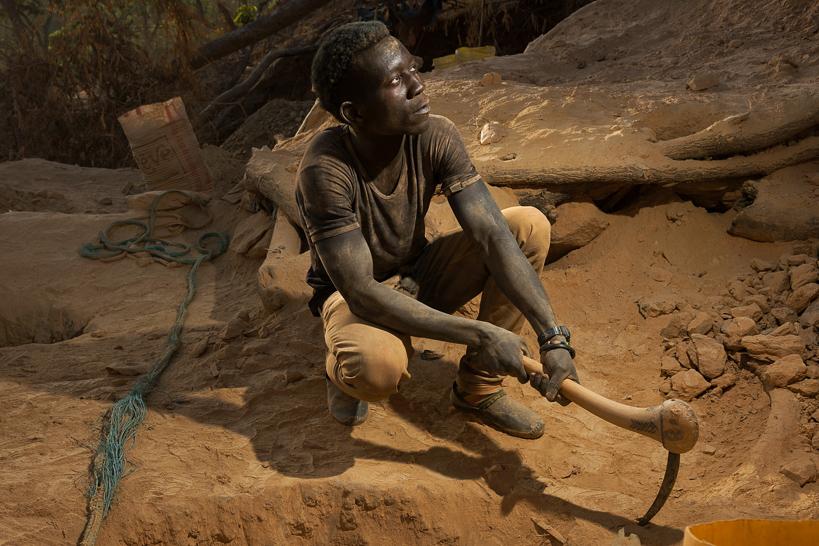
Hundreds of Togolese gold miners have been left stranded in Mali’s capital, Bamako, after being expelled from mining sites in neighbouring Guinea, with many facing homelessness, financial hardship and an uncertain return home.
Around 600 Togolese nationals were forced to leave Guinea in late October following a government crackdown on artisanal gold mining in the Siguiri region, according to a report by French magazine Jeune Afrique.
The expulsions followed an order issued by Siguiri’s acting regional governor, Colonel Mara Fagimba, suspending artisanal gold mining operations. Security forces subsequently launched raids across mining areas, forcing foreign workers to abandon their jobs and belongings.
Several miners alleged that Guinean soldiers assaulted them and confiscated their money and mobile phones as they crossed into Mali.
Promises of wealth turn into exploitation
Many of those affected had travelled to Guinea hoping to earn enough money to support their families, only to find themselves trapped in harsh working conditions.
Among them were Nasigo Bassouki and his friend Mawinyon, who left southern Togo in August after receiving job offers from a Burkinabe mining operator.
The men were promised monthly salaries of 100,000 CFA francs to operate mining machinery. Instead, they said they were forced to dig for gold manually under difficult conditions, with little opportunity to leave.
Their situation deteriorated in early November when Guinean troops entered the mining sites as part of the government’s enforcement campaign.
According to testimonies collected by Jeune Afrique, several mining operators fled before the soldiers arrived, abandoning workers without wages or transportation.
Other miners, including Kao Aboubakar and Aklissou Akaya, alleged that their business partners disappeared with gold extracted shortly before the security operations.
The sudden closures forced dozens of workers to travel long distances on foot towards the Malian border, often without sufficient food, water or money.
Allegations of violence and confiscation
Several expelled miners described mistreatment by security personnel during their departure from Guinea.
Zoubirou Karka and Kader Barry told Jeune Afrique that they had worked for more than ten months with little financial reward.
When the expulsion order was issued, their employer allegedly gave them the equivalent of just five euros to cover their journey.
The two men said their difficulties intensified at the Guinea-Mali border, where Guinean soldiers allegedly beat them and other workers, leaving several injured.
They also accused security personnel of confiscating their remaining cash and mobile phones, leaving them without the means to contact relatives or arrange transportation.
The miners eventually reached Bamako aboard buses provided by Malian authorities.
The allegations of abuse could not be independently verified, and the report did not include a response from Guinean officials to the specific accusations.
Displaced miners seek shelter in Bamako
In the Kanadjiguila neighbourhood southwest of Bamako, dozens of displaced Togolese miners have established temporary shelters in the courtyard of a church.
Many sleep outdoors beneath trees, relying on donated food, tents and basic supplies provided by Togolese and Beninese community organisations in Mali.
Their families back home have struggled to raise the money needed to finance their return journeys, leaving some workers dependent on humanitarian assistance.
The situation has placed growing pressure on local volunteers, who are attempting to meet the needs of displaced miners with limited resources.
Some of those stranded have sought places aboard evacuation buses organised for Burkinabe nationals travelling to Bobo-Dioulasso in Burkina Faso.
However, women, children and people requiring medical attention have been given priority, leaving many young miners uncertain about when they might be able to depart.
Togo seeks to organise repatriation
Togolese diplomatic representatives in Bamako had registered 380 stranded nationals by mid-November, according to sources cited by Jeune Afrique.
Officials said efforts were underway to accelerate arrangements for their repatriation to Lomé, although no definitive timetable was provided.
The number of registered nationals remains below the estimated 600 Togolese miners affected by the expulsions, raising concerns about workers who may still be travelling or have not contacted diplomatic representatives.
The crisis follows Guinea’s broader campaign against unauthorised gold mining, which has included restrictions on artisanal operations and the detention of people accused of violating mining regulations.
Authorities have presented the crackdown as part of efforts to regulate the sector, but its implementation has left hundreds of migrant workers vulnerable to displacement and financial losses.
Despite assistance from Malian authorities and local communities, the displaced miners continue to face shortages of shelter, food and transportation.
With repatriation arrangements still unresolved, many remain in Bamako, hoping to return home after losing the earnings they had travelled to Guinea to secure.