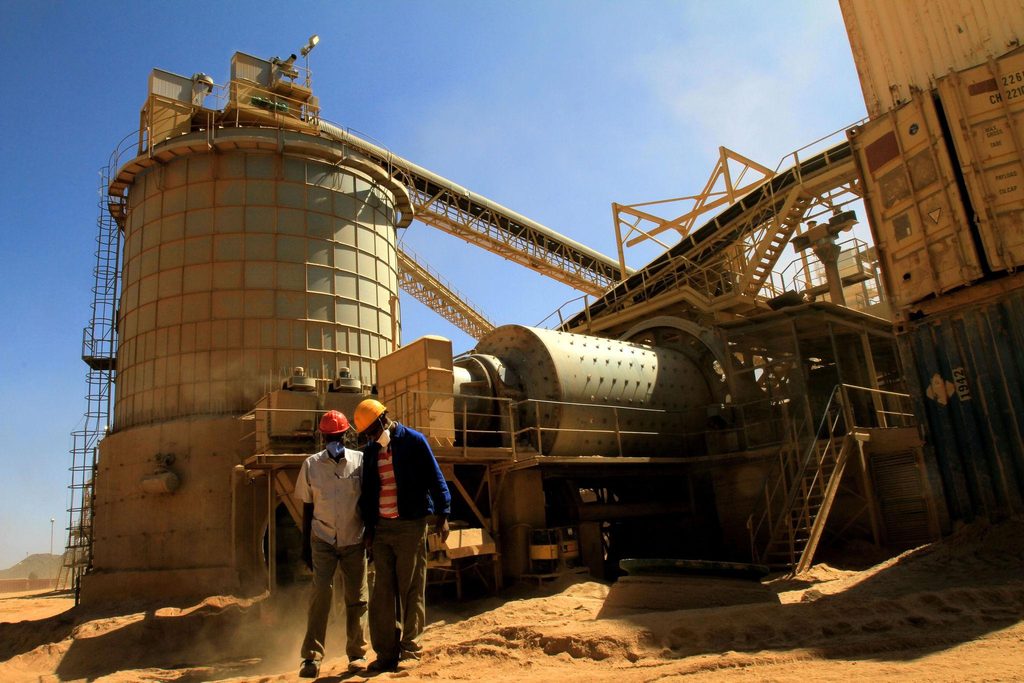
Sudan’s mining companies have threatened to suspend gold production from the beginning of October unless authorities change central bank pricing and purchasing rules that producers say are making operations increasingly unsustainable.
The Sudanese mining companies’ union submitted a memorandum on September 15 to Minerals Minister Nour El-Daim Mohamed Ahmed Taha and the head of the Sudanese Mineral Resources Company after talks with the central bank failed to resolve the dispute.
The companies are demanding the withdrawal of Central Bank circular No. 11, issued on May 13, arguing that official gold purchase prices do not reflect the metal’s real market value or the sharp increase in operating, security and transportation costs caused by inflation and the depreciation of the Sudanese pound.
Producers said mining companies should not be forced to absorb losses created by distortions in the wider currency market or fluctuations in foreign exchange rates.
The union also raised concerns over the central bank’s use of intermediaries to purchase gold, calling for greater transparency over commissions and price differences and warning against arrangements that could leave middlemen earning larger margins than producers.
According to the union, concession companies, small-scale miners and firms processing mining tailings account for roughly 17 percent of Sudan’s total gold production.
Gold remains one of Sudan’s most important sources of foreign currency as the country’s economy continues to struggle under the impact of war, inflation and a severe shortage of hard currency.
The union said member companies would begin shutting down operations on September 30 and completely stop production from October 1 if their demands are not addressed.
It called for an urgent meeting involving the central bank, the minerals ministry and mining companies before the deadline.
The producers also proposed establishing a permanent consultative committee to coordinate gold policies, arguing that closer cooperation is needed to protect state revenues while keeping mining operations financially viable.