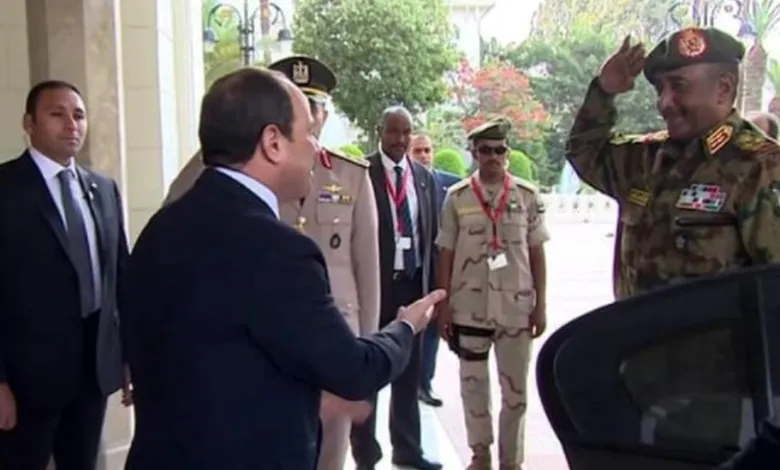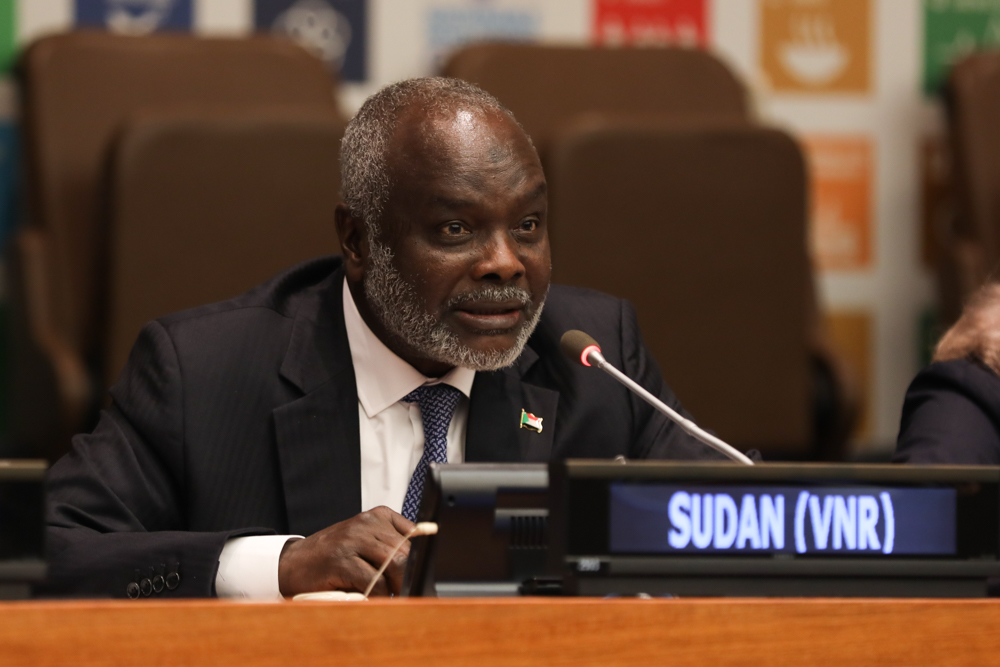
A growing dispute between Sudanese army chief Abdel Fattah al-Burhan and Finance Minister Gibril Ibrahim has exposed widening divisions within the Port Sudan-based authorities, with disagreements over economic management, government posts and control of lucrative mining resources increasingly spilling into the open.
Sudanese sources familiar with the matter told Erem News that tensions surfaced during a meeting involving Burhan, Prime Minister Kamil Idris and Ibrahim, who also heads the Justice and Equality Movement (JEM).
According to the sources, Burhan asked Ibrahim to resign over the worsening economic situation, but the finance minister refused and warned that attempts to remove him could trigger an escalation within the governing alliance.
The reported confrontation comes as Sudan faces a deepening economic crisis, with the national currency losing value, prices soaring and authorities scrambling to contain pressure on the economy.
The sources said the dispute goes beyond economic policy and reflects a broader struggle over political influence, government ministries and access to revenue-generating sectors.
They claimed Burhan is seeking to reduce the influence of armed movements allied with the army, particularly over the finance and minerals ministries and mining areas that have become important sources of revenue and political leverage.
Several armed movements that signed the 2020 Juba Peace Agreement later sided with the Sudanese army in its war against the Rapid Support Forces. Their leaders and representatives retained important government positions as part of power-sharing arrangements.
Ibrahim has remained finance minister, while allied armed groups have also maintained influence over the minerals sector and other government institutions.
Sources cited by Erem News said attempts to alter that balance have fuelled growing friction between Burhan and the armed movements supporting his forces.
One Sudanese political source described as close to the Tasis alliance said the tensions had been building for some time and accused Burhan of repeatedly seeking to sideline his wartime allies.
The source said the armed movements entered the conflict alongside the army in return for political representation and access to ministries and economic sectors, including mining areas.
According to the source, those arrangements have now become a major obstacle to Burhan’s efforts to consolidate control over the executive branch.
The source claimed relations between Burhan, Ibrahim, Idris and other figures within the Port Sudan administration had consequently become increasingly tense, warning that disagreements inside the alliance could eventually develop into an open confrontation.
Erem News also cited sources alleging that figures linked to Sudan’s Muslim Brotherhood had engaged in currency speculation designed to drive up the dollar against the Sudanese pound and weaken Ibrahim and Idris politically.
The allegations were not independently verified.
Sudanese political analyst Awab Azzam al-Bushi said the economic crisis had intensified existing tensions within the Port Sudan camp but was not the underlying cause of the dispute.
He said competition over political and economic influence, ministries and control of resources had existed for some time.
According to al-Bushi, efforts to reduce the armed movements’ role in the Finance Ministry, Minerals Ministry and mining areas in northern Sudan should be viewed as part of a wider struggle over resources and political power.
He argued that attempts to place primary responsibility for Sudan’s economic deterioration on Ibrahim were also connected to that struggle.
Sudan’s economic problems, he said, were far broader than the performance of a single minister and were rooted in the war, declining production and the collapse of large parts of the country’s economic activity.
Removing Ibrahim from the Finance Ministry would therefore significantly weaken the armed movements’ influence over one of the most important institutions in the government, al-Bushi said.
He added that anticipated changes within the Port Sudan administration could be intended partly to absorb public anger over deteriorating economic conditions and place responsibility on individual officials.
But replacing ministers, he said, would do little to address the structural causes of the economic crisis.
The escalating tensions underline the fragile nature of the coalition supporting the Sudanese army, which brings together military commanders, armed movements and political groups whose interests have often diverged despite their shared opposition to the RSF.
Al-Bushi said the alliance was largely built around wartime interests rather than a stable political partnership, leaving disputes over power and resources increasingly difficult to contain.