The United States is pressing Iran on a sweeping set of nuclear, missile and regional-security demands as diplomatic contacts intensify in New York, with Tehran seeking an easing of US military and economic pressure in return for reopening the Strait of Hormuz.
The negotiations unfolded on the sidelines of the UN General Assembly on Tuesday, although accounts differed over whether US and Iranian officials held direct talks throughout the session.
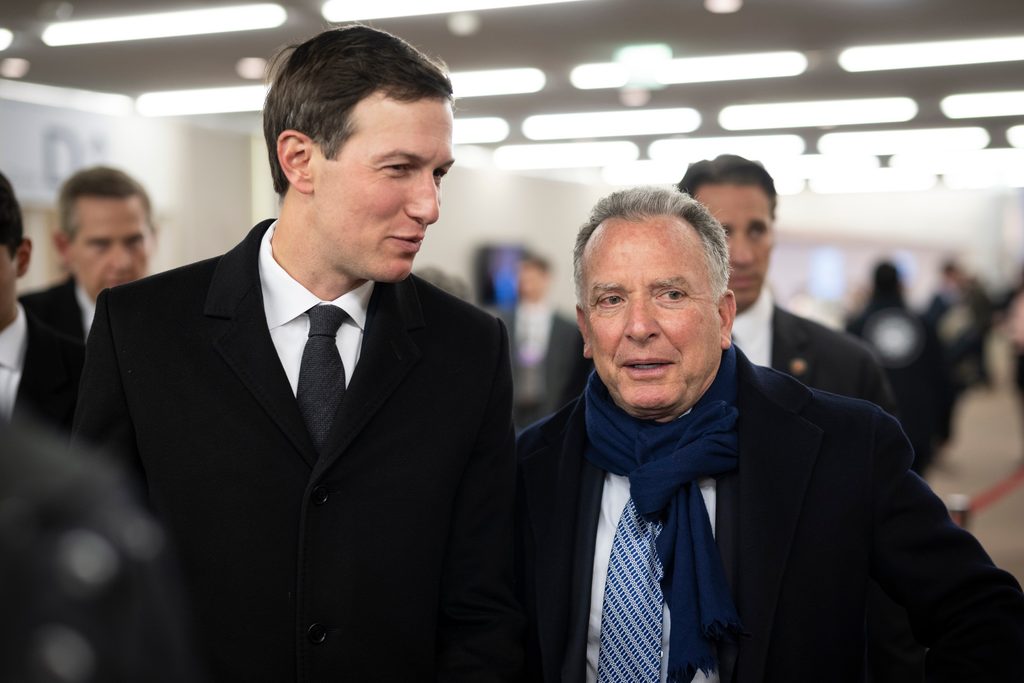
US President Donald Trump initially said his envoys Steve Witkoff and Jared Kushner had held a “very good” three-hour meeting with an Iranian delegation. He later said the pair had met mediators working between Washington and Tehran. Witkoff separately said the discussions were conducted through intermediaries who shuttled between the two sides.
Iranian state media, however, reported that Foreign Minister Abbas Araghchi met Witkoff and conveyed Tehran’s conditions, suggesting at least some direct contact took place during the diplomatic exchanges.
The contacts represent one of the clearest attempts in months to move Washington and Tehran towards an agreement after nearly seven months of conflict.
Erem News, citing unnamed Western sources, reported on Wednesday that Washington had put forward a package of six major commitments covering Iran’s nuclear programme, ballistic missiles and support for allied armed groups across the region.
The reported conditions closely resemble a six-point US negotiating framework first reported in March, suggesting Washington may be reviving its earlier demands as negotiations resume. Earlier reporting said the package included zero uranium enrichment, dismantling key nuclear facilities, strict monitoring of centrifuge production, restrictions on Iran’s missile programme, regional arms limits and an end to financing allied armed groups.
Under the reported framework, Iran would be required to halt uranium enrichment and permanently decommission major facilities at Natanz, Fordow and Isfahan.
Washington would also seek extensive international monitoring of Iran’s centrifuge production and other sensitive nuclear activity.
A second part of the package concerns Iran’s conventional military capabilities. The reported US position calls for a five-year halt to the development of Iran’s missile programme, alongside a regional arms-control arrangement that would impose limits on Tehran’s missile arsenal.
The proposed framework also calls for Iran to end financial and military support for regional groups including Hezbollah in Lebanon, the Houthis in Yemen and Hamas in Gaza.
Those conditions would substantially broaden any agreement beyond the nuclear issue and seek to address several of Washington’s longstanding disputes with Tehran simultaneously.
Iran, meanwhile, is focusing on sanctions, frozen assets and the Strait of Hormuz.
A senior Iranian official told Reuters that Tehran could fully reopen the vital waterway within seven days if Washington eased military pressure and lifted its blockade of Iranian ports. The official said Iran had already sent its latest proposal to the United States through mediators on September 16.
Iranian officials have also sought the release of frozen assets and an easing of financial restrictions as part of any settlement.
The Strait of Hormuz has emerged as one of Tehran’s strongest bargaining chips. Before the conflict, roughly a fifth of global oil and gas shipments passed through the waterway, making its reopening a major priority for Gulf states and global energy markets.
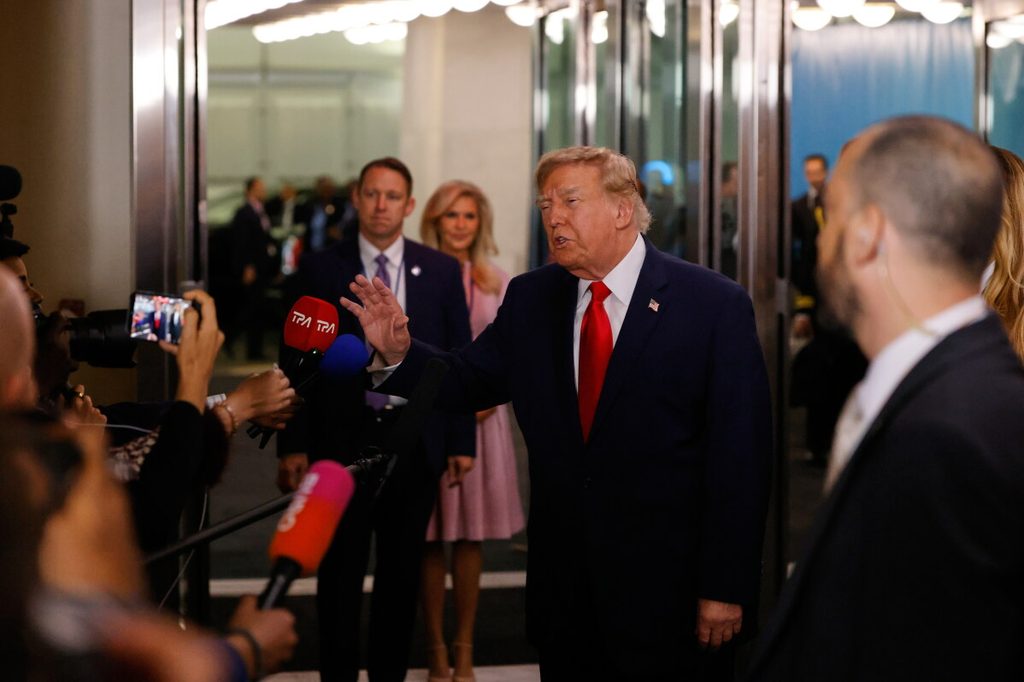
Trump struck a sharply confrontational tone during his UN address even as diplomatic contacts were under way.
“I have a big decision to make,” Trump said, presenting the choice as either reaching an agreement that allows Iran to rebuild or moving to “annihilate the Islamic Republic.” He also urged other countries to increase economic pressure on Tehran.
Despite that rhetoric, Trump later described the diplomatic contacts as productive and said there was momentum towards a settlement.
Regional governments are also heavily involved in the effort. Qatar has been working with Pakistan and other states to facilitate talks, while Qatari Prime Minister Sheikh Mohammed bin Abdulrahman Al Thani met Araghchi in New York. Reuters has also reported that a Qatari proposal for a broader Gulf security framework involving Iran is under consideration.
The immediate negotiations appear increasingly centred on a possible first-stage arrangement involving Hormuz and economic pressure, while the much harder questions surrounding Iran’s nuclear infrastructure, ballistic missiles and regional alliances could require longer negotiations.
For now, the two sides remain far apart on several of those issues. But the exchanges in New York mark a shift from weeks of messages passed almost entirely through third parties towards more sustained bargaining over the terms of a possible settlement.