Sudan’s war is raising fears of a wider regional conflict as renewed fighting in Ethiopia, accusations of cross-border support for armed groups and reported Sudanese airstrikes inside Chad increase tensions across the Horn of Africa and the Sahel.
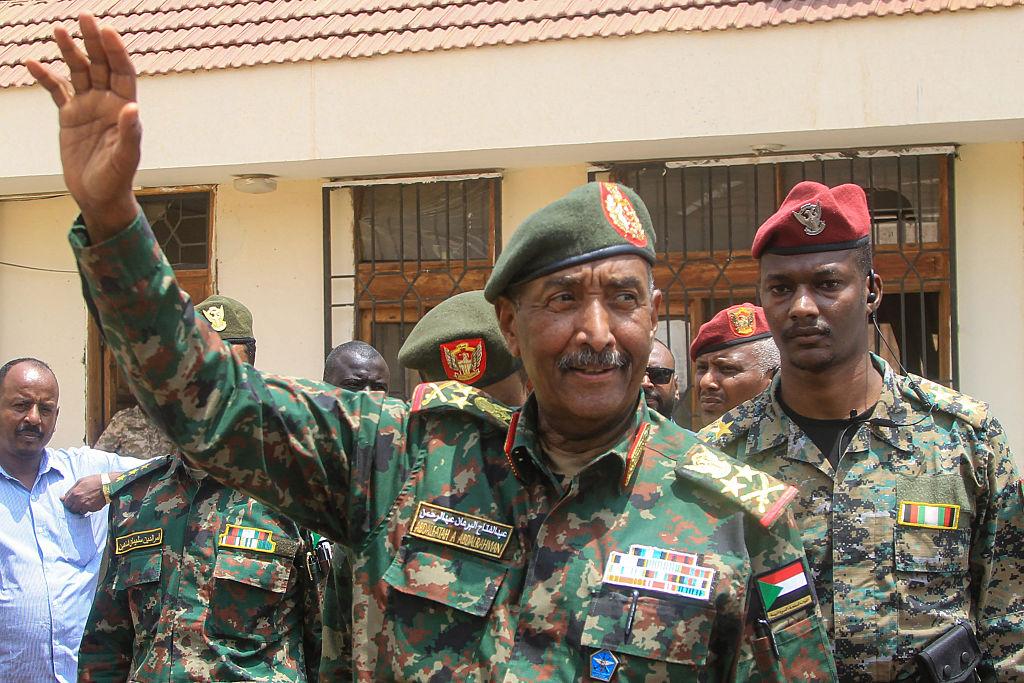
The escalating regional tensions have brought Sudanese army chief Abdel Fattah al-Burhan’s military leadership under renewed scrutiny, with Ethiopia accusing Sudan of supporting armed groups seeking to overthrow Prime Minister Abiy Ahmed’s government.
Sudan’s army has rejected the allegations, while making counterclaims that Ethiopian territory is being used to support the Rapid Support Forces (RSF) in Sudan’s civil war.
The dispute comes as Ethiopian federal forces battle an alliance of armed groups led by the Tigray People’s Liberation Front (TPLF), threatening to unravel the peace agreement that ended Ethiopia’s devastating northern war in November 2022.
Ethiopia accuses Sudan of backing armed opposition
Ethiopian military chief Field Marshal Birhanu Jula accused Sudan, Egypt and other regional actors of supporting armed groups seeking to destabilise Ethiopia, saying the opposition alliance would struggle to sustain its campaign without external assistance.
The accusations followed the formation of the Ethiopian Peoples’ Forces Alliance for Survival, which brings together seven armed movements, including the TPLF, the Amhara Fano National Movement and the Oromo Liberation Army.
The alliance, announced on September 20, has declared its intention to remove Abiy’s government and establish a transitional administration.
Sudan’s army rejected the Ethiopian accusations on Sunday, describing them as baseless and insisting that it respects the sovereignty of neighbouring states.
In a statement, army spokesperson Asim Awad Abdelwahab accused Ethiopia of allowing training, logistical support and drone operations benefiting the RSF from its territory.
Addis Ababa has denied involvement in supporting the RSF, while the competing allegations have added to tensions between the two neighbours.
Renewed fighting threatens Ethiopia’s peace agreement
Fighting intensified in northern Ethiopia on September 23, when Tigrayan forces seized control of three regional airports and launched operations against federal troops.
The clashes subsequently spread into neighbouring Afar and Amhara regions, raising fears of a return to the conflict that killed hundreds of thousands of people between 2020 and 2022.
The new opposition alliance has brought together former enemies, including Tigrayan fighters and Amhara Fano forces, which fought on opposing sides during the previous war.
Despite their competing territorial and political objectives, the groups have united around their opposition to the federal government.
On Monday, September 28, Ethiopian pro-government forces claimed to have recaptured the strategic town of Alamata, south of Tigray’s capital, Mekelle.
The pro-government Tigrai Peace Force released footage purporting to show its fighters entering the town, although Reuters could not independently verify the video.
The escalation has also intensified concerns about the involvement of neighbouring countries, particularly Sudan and Eritrea.
Reports of Tigrayan fighters operating alongside Sudan’s army have previously prompted accusations that Port Sudan is providing military support to Ethiopian armed groups.
Alrakoba reported that footage circulated after Sudanese forces recaptured Wad Madani in January 2025 appeared to show a Sudanese officer praising Ethiopian fighters for their role in the operation.
The footage was subsequently used by the RSF to accuse the army of employing foreign combatants. The extent of any involvement by Ethiopian fighters in Sudan’s war remains independently unverified.
The allegations have become increasingly significant as Ethiopia’s internal conflict intersects with regional disputes involving Sudan, Eritrea and Egypt.
Chad accuses Sudanese army of cross-border strikes
Tensions have also escalated along Sudan’s western frontier following reported airstrikes inside neighbouring Chad.
Chad’s military accused Sudanese forces and allied armed groups of carrying out attacks against a convoy of vehicles in the Ennedi-Est region in August.
According to the Chadian military, the strikes took place more than 100 kilometres inside its territory, prompting N’Djamena to place its forces on high alert.
Chad warned that it reserved the right to defend its sovereignty and territorial integrity. Sudan’s army did not immediately comment on the accusations.
The reported strikes prompted concern from the United States and the African Union.
Massad Boulos, US senior adviser for Arab and African affairs, condemned the strikes in Chadian territory and warned against the expansion of Sudan’s war beyond its borders.
Boulos also called for an immediate humanitarian truce in Sudan and urged international action to restrict external military and financial support for the warring parties.
African Union Commission Chairperson Mahmoud Ali Youssouf expressed concern over reports of the August 20 strikes, calling on all parties to respect national sovereignty and avoid actions that could escalate tensions between neighbouring states.
Fears of a wider regional conflict
Sudan’s strategic position between the Horn of Africa, the Sahel and the Red Sea has heightened concerns about the consequences of its continuing war.
Khalid Omer Yousif, a senior figure in the civilian Somoud alliance, warned in comments to Sky News Arabia that Sudan’s conflict cannot be separated from the security challenges facing neighbouring countries.
He said Sudan’s geographic position and its connections to several unstable regions meant that developments inside the country could have consequences far beyond its borders.
The combination of renewed fighting in Ethiopia, competing accusations of support for armed groups and reported cross-border attacks in Chad has increased pressure on regional and international organisations to prevent further escalation.
The African Union has called for restraint and dialogue over the fighting in Ethiopia, while urging greater cooperation between Sudan and Chad to secure their shared border.
The growing concern is that Sudan’s civil war and Ethiopia’s renewed internal conflict could become increasingly interconnected through armed groups, military alliances and competing regional interests.
With Sudan’s war continuing and Ethiopia’s 2022 peace agreement under severe strain, preventing further cross-border violence has become a central challenge for regional diplomacy.