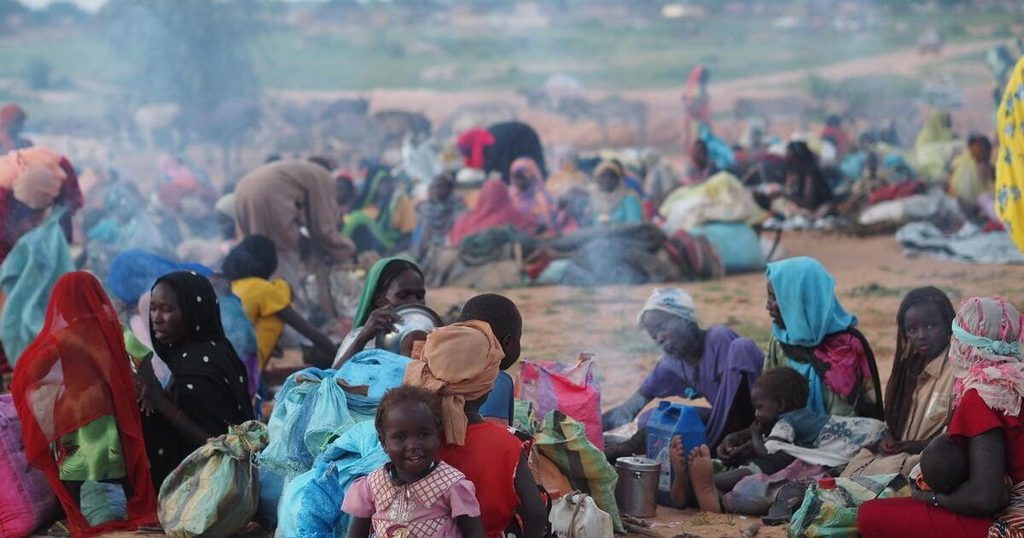
Sudan’s embassy in Chad has begun coordinating with the International Organization for Migration (IOM) to arrange the voluntary return of Sudanese refugees, more than three years after war forced millions to flee their homes.
The programme will initially focus on refugees who have registered in the Chadian capital, N’Djamena, before expanding to other areas, according to local Sudanese media.
An official from the Sudanese Refugees Committee in Abéché told local Sudanese media that thousands of refugees had been registered in N’Djamena, including people who had travelled to the capital from other Chadian cities to participate in the return programme.
The official said returnees would receive financial assistance to help them resettle in Sudan, although the amount of support has yet to be determined.
Refugees in Abéché were initially excluded from the registration process because Sudan’s consulate in the city had suspended operations.
However, following requests from refugees, a joint team involving the embassy and IOM was dispatched to Abéché to register those wishing to return.
The embassy has not yet announced which categories of refugees will receive priority or provided a timetable for the departures.
Under the proposed arrangements, returnees are expected to travel to areas controlled by the Sudanese army through Khartoum and Port Sudan airports.
Sudanese diplomatic missions in other countries have previously prioritised government employees, students and vulnerable refugees when organising voluntary return flights.
Chad has become one of the principal destinations for Sudanese civilians fleeing the war between the Sudanese Armed Forces (SAF) and the Rapid Support Forces (RSF), particularly those escaping violence in neighbouring Darfur.
The country was already hosting Sudanese refugees displaced by earlier conflicts in Darfur before the current war erupted in April 2023.
Despite the new return arrangements, fighting and insecurity continue to pose significant obstacles for displaced Sudanese seeking to rebuild their lives at home.