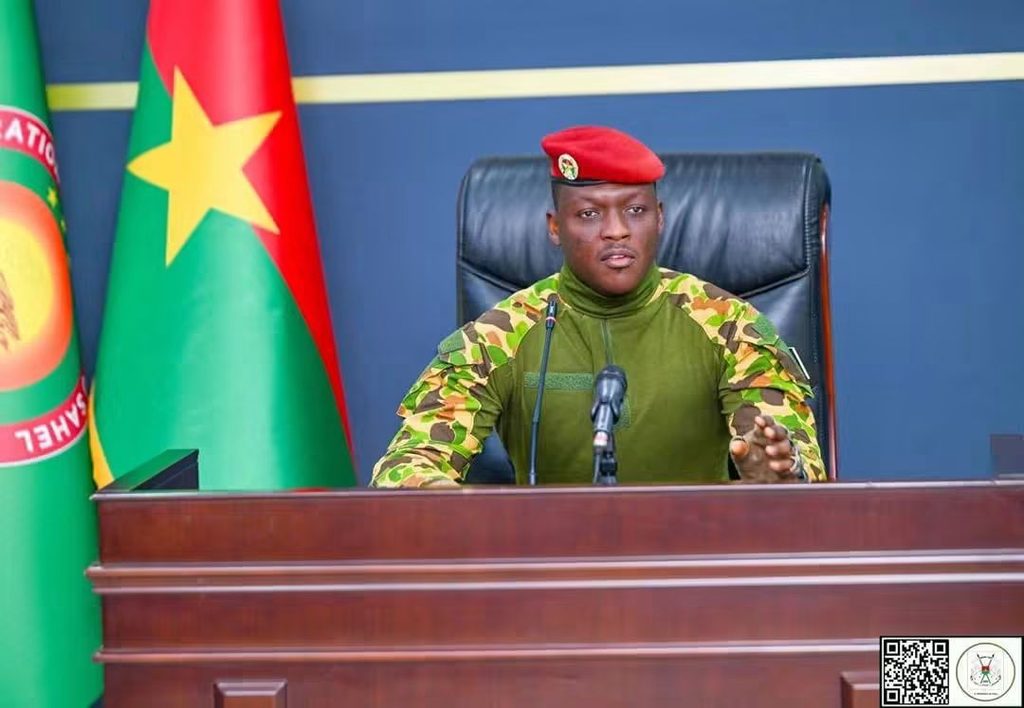
Burkina Faso’s military leader Ibrahim Traore has defended his government’s record on security and the economy while warning that relations with the European Union could deteriorate further, as he approaches four years in power following a military coup.
Speaking to journalists on Sunday, Traore outlined his administration’s achievements and priorities ahead of the September 30 anniversary of the coup that brought him to power in 2022.
The Burkinabe leader addressed the fight against armed groups, rising living costs, relations with France and the EU, and cooperation between the Alliance of Sahel States (AES) and the Economic Community of West African States (ECOWAS).
Security gains and rising living costs
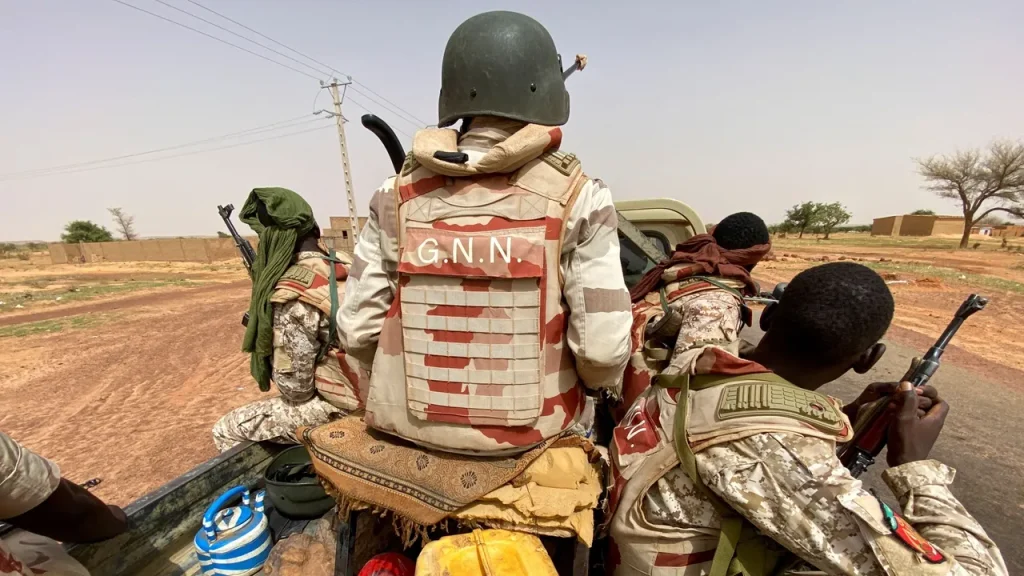
Traore said his government had made significant progress in recovering territory from armed groups during his four years in office, presenting the military campaign as a central achievement of his administration.
Responding to questions from journalists at Burkina Faso’s national broadcaster RTB, he highlighted the army’s efforts to regain control of areas previously lost to armed groups.
The government has made territorial recovery a priority since Traore seized power, although insecurity remains a major challenge in parts of the country.
On the economy, Traore acknowledged public frustration over rising prices for essential goods and pledged tough action against traders engaged in speculation.
He accused some merchants of deliberately withholding products, manipulating prices and disrupting supplies as part of an effort to turn the population against his government.
Traore alleged that these activities were being carried out by opponents working with foreign interests to undermine what his administration calls its revolution.
The allegations were not accompanied by publicly presented evidence identifying the traders involved.
Traore warns EU as France rift deepens
Turning to foreign policy, Traore said Burkina Faso wanted constructive relations between the AES, which brings together Burkina Faso, Mali and Niger, and ECOWAS, despite the political divisions between the two regional blocs.
He said the two organisations should coexist in a way that facilitates the movement of people and goods across West Africa.
However, Traore took a markedly tougher position on relations with European countries, reaffirming his government’s break with France and warning that cooperation with the EU could also be terminated.
He said relations with Brussels were strained following statements by European lawmakers that his government considered unacceptable.
Traore warned that Burkina Faso would be prepared to end cooperation with the bloc if tensions persisted, signalling that his government was willing to extend its confrontational diplomatic approach beyond France.
New constitution to determine political future
Traore also addressed questions about his political future and the possibility of transferring power through presidential elections.
He said a new constitution would be needed to establish the framework for future elections and define presidential terms as part of a broader reorganisation of the country’s political system.
The military leader did not announce a timetable for a presidential vote or specify when the proposed constitutional changes would take effect.
His remarks leave Burkina Faso’s electoral transition unresolved as the country approaches the fourth anniversary of his takeover, with the government continuing to prioritise its security campaign and institutional reforms.