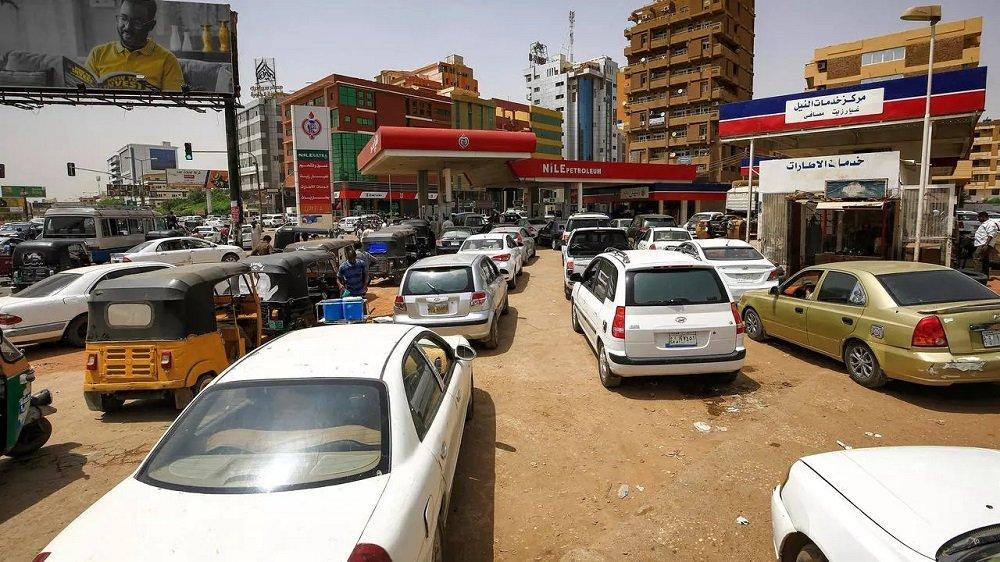
Long queues formed outside fuel stations across Khartoum and several Sudanese states on Tuesday as a worsening supply crisis coincided with renewed pressure on the country’s currency.
The Sudanese pound weakened beyond 8,000 to the US dollar on the parallel market, reversing recent gains and adding to rising transport costs and household expenses.
Motorists reported spending hours searching for petrol and diesel, while shortages disrupted public transport and commercial deliveries.
According to local traders, petrol was selling for approximately 37,000 Sudanese pounds per gallon at filling stations, compared with as much as 60,000 pounds on the black market.
Diesel prices reached around 45,000 pounds at official outlets, while informal market prices ranged between 56,000 and 70,000 pounds, depending on availability.
A taxi driver in Khartoum told Sudan Tribune that he had spent more than eight hours waiting for petrol, leaving him unable to work regularly.
The shortages have placed additional pressure on businesses and households already struggling with rising prices, disrupted imports and declining purchasing power.
Cabinet discusses currency crisis
Prime Minister Kamil Idris chaired a cabinet meeting on Tuesday to discuss the deteriorating economic situation and measures intended to stabilise the Sudanese pound.
Culture and Information Minister Khalid al-Aisir said ministers reviewed steps presented by Justice Minister Abdallah Mohamed Daraf to regulate prices, monitor foreign exchange movements and limit further currency depreciation.
The discussions came as Sudan’s war-damaged economy continued to struggle with shortages of foreign currency, disrupted trade and rising import costs.
The Energy and Oil Ministry had previously maintained that fuel supplies and distribution were functioning normally, attributing congestion at filling stations partly to disruptions in digital banking services.
However, motorists continue to report lengthy queues and difficulties obtaining fuel, raising further concerns about the economic pressure facing Sudanese households.