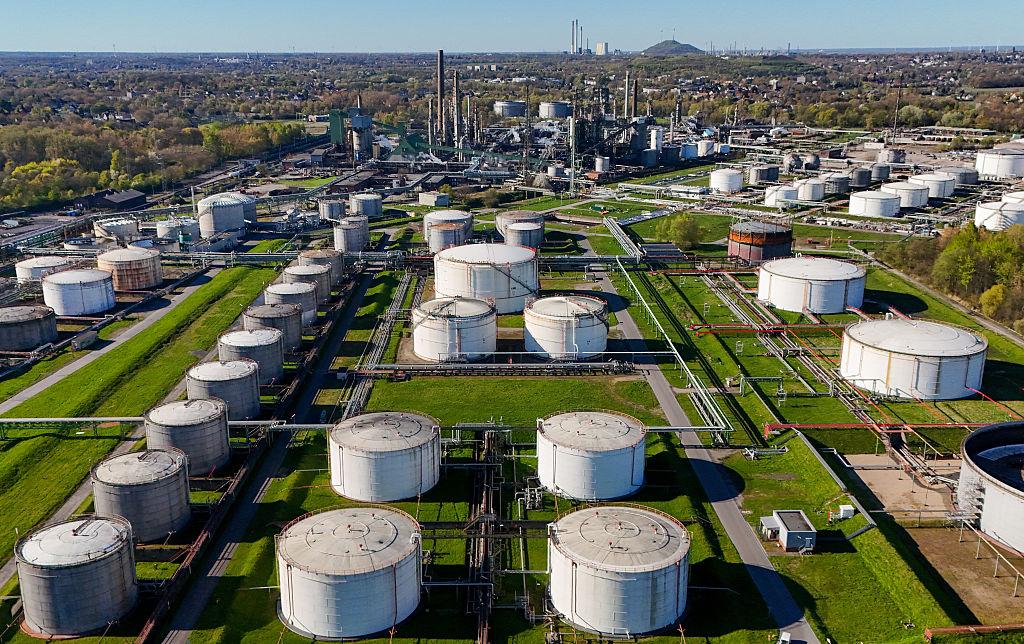
Group of Seven countries agreed on Friday to release 100 million barrels of crude oil and diesel from emergency reserves, while pledging not to impose restrictions on energy exports among themselves following pressure from US President Donald Trump.
The agreement comes after Washington pressed European governments to draw down emergency diesel stocks, warning that the United States could otherwise restrict diesel exports to Europe.
Such a move could have significantly tightened European supplies, as the continent has become increasingly dependent on US diesel following disruptions to shipments from Gulf producers caused by the Iran war.
“Taking into account commitments that have already been fulfilled, we will implement our commitments with a coordinated release through the IEA of 100 million barrels,” the G7 said in a joint statement.
The release will begin immediately and continue for four months, with a substantial volume of diesel expected to be made available within 20 days by G7 members and partner countries.
The statement did not specify how much of the release would consist of crude oil, diesel or other petroleum products, nor did it provide a country-by-country breakdown.
The G7 said members would meet through the International Energy Agency in the coming days to consider further diesel releases if necessary.
Trump welcomed the agreement, saying European countries had agreed to release a large volume of diesel from their reserves.
“Europe has just agreed to release a massive amount of their heavily stocked Diesel Oil. The process will begin immediately,” he wrote on Truth Social.
The latest move follows a record 400-million-barrel emergency release coordinated by the IEA in March after the Iran war disrupted global energy markets.
IEA Executive Director Fatih Birol said this week that member countries had so far released about two-thirds of the amount agreed in March, leaving uncertainty over how much of Friday’s 100-million-barrel commitment represents new supplies.
Trump has made lowering fuel costs a major domestic priority ahead of November’s US midterm elections, as high diesel and gasoline prices continue to weigh on households, transport operators and farmers.
A Reuters/Ipsos poll conducted from September 17 to 20 put Trump’s approval rating at 32%, with only 17% of respondents approving of his handling of the cost of living.
The White House is also preparing an executive order aimed at reducing record-high US diesel prices, according to two people familiar with the discussions.
Measures under consideration include expanding the use of tax-exempt red-dyed diesel and introducing other tax changes designed to cut fuel costs, although the proposals have not yet been finalised.
The G7 also pledged to refrain from imposing energy export restrictions on one another, reducing the likelihood that Washington will follow through on its threat to restrict US diesel exports.
Energy Aspects analysts described the agreement as largely political, saying the headline figure appeared designed in part to persuade Trump not to impose an export ban.
European Union governments had earlier discussed a French proposal calling for European countries to release 50 million barrels of diesel, alongside a separate 50-million-barrel crude oil release by IEA members, according to sources familiar with the talks.
A 50-million-barrel diesel release would represent roughly 17% of the European Union’s emergency diesel and gasoil stocks and around 3% of the bloc’s annual consumption, according to Eurostat data.
Energy markets fell following reports of the planned releases. US diesel futures dropped 3.25% to $4.49 a gallon, while benchmark European diesel futures fell about 5.75%, or roughly $83 per metric ton.