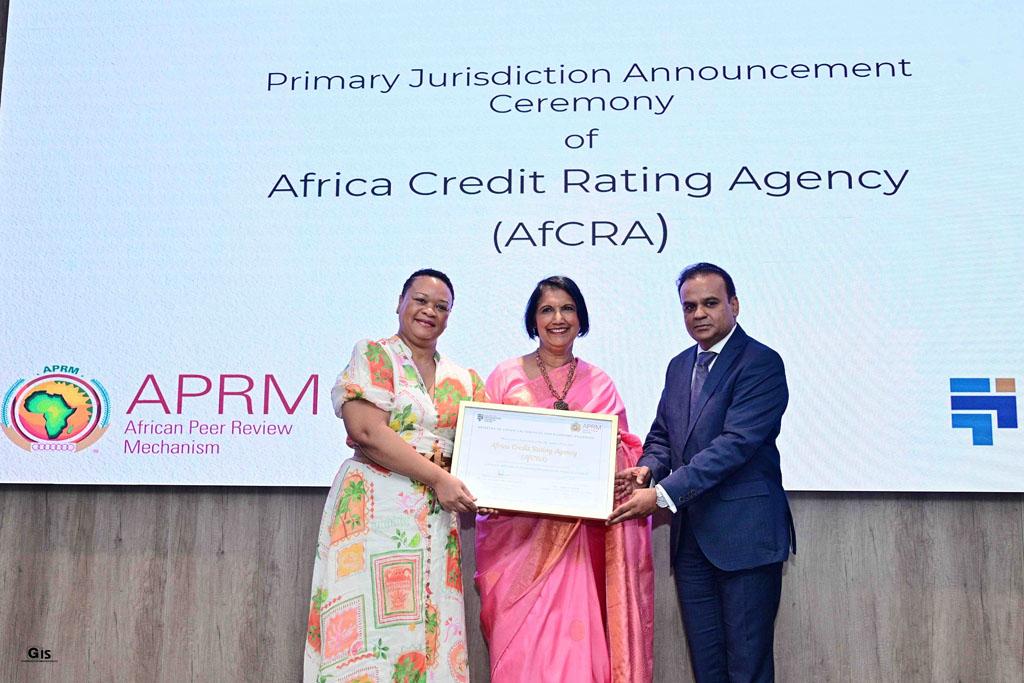
The African Union is launching Africa’s first credit rating agency, aiming to provide an alternative assessment of sovereign and corporate risk as rising debt burdens increase pressure on governments across the continent.
The Africa Credit Rating Agency, or AfCRA, is being launched on Wednesday in Port Louis, Mauritius, where it will be headquartered. African leaders first endorsed plans for the agency in 2018.
The AU said AfCRA would complement major international agencies by providing ratings based more closely on African economic data, expertise and local conditions.
“AfCRA complements existing global credit rating agencies by offering a perspective rooted in African data, expertise and realities,” the AU said.
African governments have repeatedly criticised the world’s three dominant ratings agencies — S&P Global Ratings, Moody’s and Fitch — arguing that African economies are sometimes assessed too harshly and downgraded too quickly during conflicts, pandemics and other crises.
The agencies have rejected accusations of bias, saying they apply consistent methodologies worldwide. A 2024 Reuters investigation into Africa’s debt crisis found no evidence of systemic bias in sovereign ratings issued by the three major agencies.
Credibility will be key
Analysts say AfCRA’s biggest challenge will be establishing credibility with international investors, particularly when its assessments are politically or economically uncomfortable.
“A new rating agency begins with a promise while investors ultimately require a track record,” said Dennis Shen, a finance lecturer at the International School of Management in Berlin and former sovereign analyst at Scope Ratings.
Shen said the agency’s credibility would be tested most sharply during periods of market stress, when independent assessments could clash with the interests of governments or investors.
Former Nigerian Vice President Yemi Osinbajo said AfCRA could provide an important counterweight to established agencies but warned it must operate according to internationally accepted standards.
“It can’t just be a chauvinistic or nationalistic agency,” Osinbajo said.
AfCRA will rate governments, financial institutions and private companies and is expected to operate independently, financed through shareholder capital and revenue from its operations. The AU has not disclosed details about its shareholders.
Borrowing costs under pressure
The AU says the new agency could improve African countries’ access to international capital markets by providing investors with broader and more locally informed assessments.
African economies currently carry average ratings of between B and B-minus, compared with around BB for other emerging-market regions, according to the AU.
Officials argue that the gap can restrict investment from institutions subject to minimum credit-rating requirements and contribute to higher borrowing costs.
The issue has become increasingly urgent as years of heavier government borrowing have pushed several African countries into debt distress or forced them to restructure their obligations.
Africa’s annual external debt-service bill reached $163 billion in 2024, up from $61 billion in 2010, according to the AU.
In several countries, interest payments now exceed annual government spending on major social sectors including health and education.
The AU also hopes AfCRA will expand ratings coverage across the continent. Twenty-three African economies currently have no rating from any of the three major international agencies, it said.
The new agency’s long-term influence will depend largely on whether global investors view its ratings as independent, transparent and reliable enough to be incorporated into lending and investment decisions.