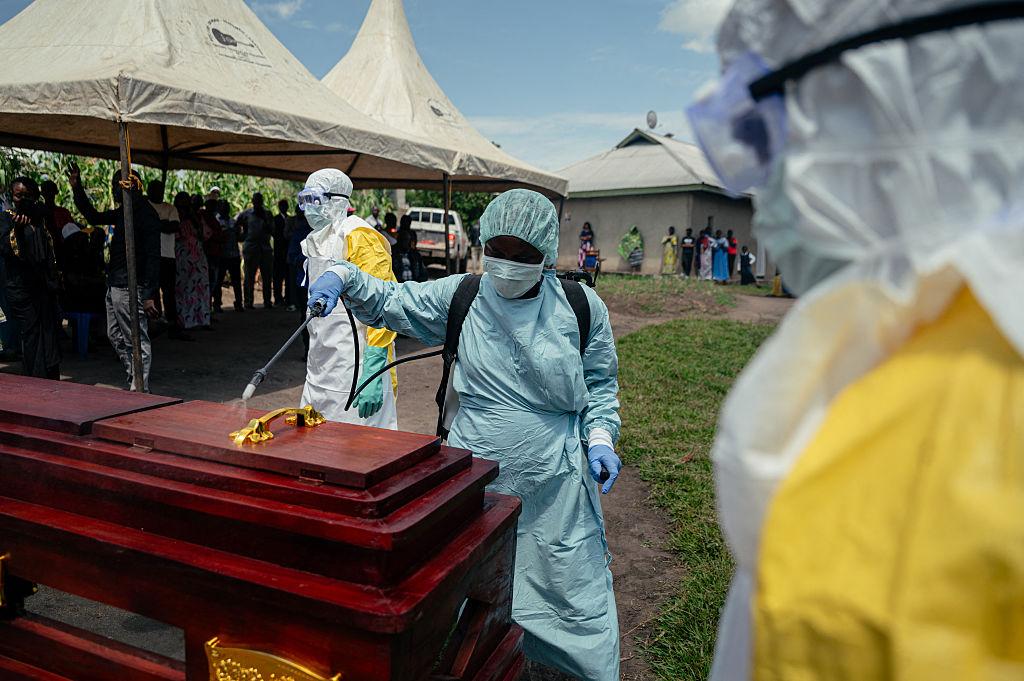
Kenyan health authorities have buried the country’s first confirmed Ebola patient under strict safety protocols, as the number of identified contacts rose to 57 amid intensified efforts to prevent further infections.
The burial took place on Wednesday at Lang’ata Cemetery in Nairobi, following the death of a Kenyan national who contracted the virus in the Democratic Republic of Congo (DRC).
Health Cabinet Secretary Aden Duale said on Thursday that Kenya was not experiencing an Ebola outbreak, emphasising that the country’s only confirmed case had been imported.
Authorities have increased the number of identified contacts from 55 to 57, with 10 people placed in quarantine at the National Police Service Hospital in Nairobi.
The individuals are undergoing daily monitoring for symptoms, while health teams continue efforts to trace and assess others who may have been exposed.
Duale said approximately 17 additional contacts had been located as tracing operations intensified, although their monitoring status was not immediately clear.
The deceased had been living in the DRC, where he reportedly became ill before travelling overland through Uganda and arriving in Nairobi by air on October 3.
He was subsequently admitted to Nairobi Hospital and isolated after laboratory tests confirmed infection with the Bundibugyo ebolavirus, a rare strain capable of causing severe haemorrhagic fever.
His death prompted Kenyan authorities to strengthen disease surveillance, contact tracing and preventive measures at health facilities and border crossings.
According to the Health Ministry, more than 652,000 travellers have been screened, 267 suspected samples tested and nearly 5,000 healthcare workers trained in Ebola prevention and case management.
Ebola is transmitted through direct contact with infected bodily fluids or contaminated materials. Health officials have urged vigilance while maintaining that no additional infections have been confirmed.
Kenya’s response comes amid continuing concerns over the potential spread of Ebola across East Africa, particularly through cross-border travel from affected areas of the DRC.