Morocco’s King Mohammed VI said on Friday that the country’s existing migration cooperation arrangements with Spain had reached their limits, calling for a revised approach following a mass border crossing into the Spanish enclave of Ceuta earlier this year.
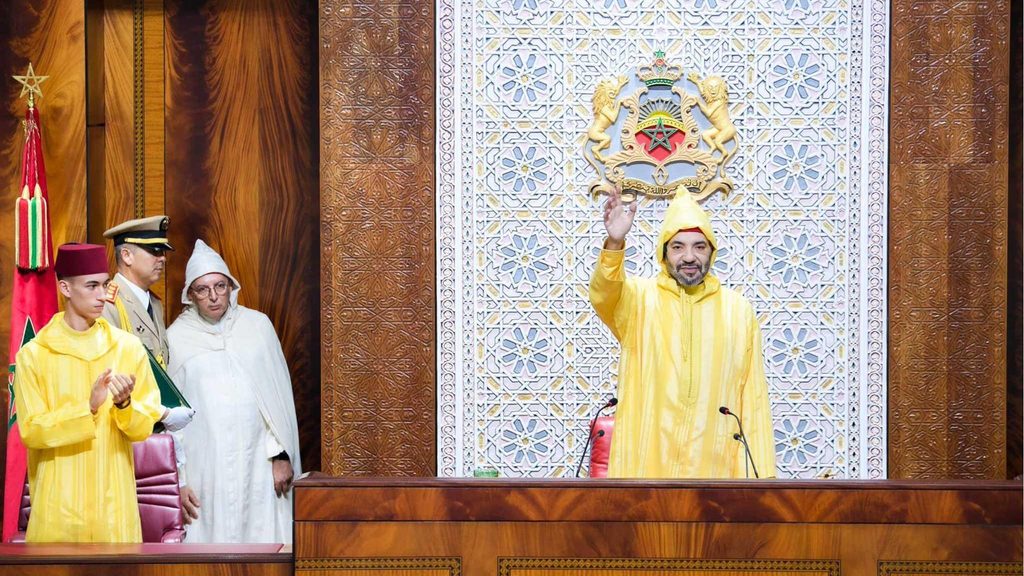
Addressing parliament at the opening of its new session, the monarch said Morocco’s efforts to combat irregular migration had delivered tangible results but warned that legal obstacles and recurring diplomatic tensions were undermining cooperation between Rabat and Madrid.
His remarks followed a major migration crisis in July, when at least 70,000 people crossed from Morocco into Ceuta, overwhelming Spanish border authorities and triggering a political dispute over border security and responsibility for the arrivals.
Although most of those who crossed have since returned, thousands remain in the Spanish territory, including unaccompanied minors.
Mohammed VI criticised what he described as outdated and unrealistic rulings by Spanish courts, arguing that they had complicated the return of minors and individuals he characterised as fraudulent asylum applicants.
He said the legal restrictions were obstructing repatriation procedures while creating opportunities for criminal networks involved in human smuggling.
The king maintained that Morocco had demonstrated its commitment to controlling irregular migration but suggested the existing framework could no longer adequately address the challenges facing both countries.
Ceuta crisis strains relations
The July crossings reignited political controversy in Spain, where opposition parties accused Prime Minister Pedro Sanchez’s government of failing to maintain effective border controls.
Some opposition figures also alleged that Moroccan authorities had facilitated the crossings, raising questions about Rabat’s role in managing migration flows towards Spanish territory.
Morocco rejected those allegations, attributing the sudden influx to social media activity and interpretations of a Spanish court decision that appeared to create a legal opening for migrants arriving by sea.
The dispute placed renewed pressure on relations between the two governments, despite diplomatic improvements in recent years.
Madrid and Rabat strengthened ties after Spain endorsed Morocco’s autonomy proposal for Western Sahara in 2022, marking a major shift in Spanish policy towards the disputed territory.
Migration management has remained a central component of their partnership, with Morocco playing an important role in restricting irregular crossings towards Spain and the wider European Union.
Morocco rejects political pressure
Mohammed VI stressed that cooperation with Spain remained a sovereign decision and would not be dictated by external demands.
The partnership, he said, would not be subject to pressure, threats or blackmail.
He also announced plans to present Morocco’s international partners with a broader cooperation framework focused on economic development, competitiveness and regional stability.
The proposed approach signals Rabat’s intention to move beyond arrangements centred primarily on border enforcement and migration control.
New government and youth priorities
The monarch’s address also came amid a political transition in Morocco following parliamentary elections held on September 23.
He appointed Fatima Ezzahra El Mansouri as the country’s first female prime minister after her party emerged as the largest force in the election.
Mohammed VI urged lawmakers to prioritise young people in public policy, placing youth opportunities and economic development at the centre of the government’s agenda.
The speech underscored Morocco’s effort to redefine its relationship with Spain while maintaining cooperation on border security, economic ties and regional stability.
The latest reporting also confirms that the king’s remarks came ahead of a planned visit by Spain’s King Felipe VI to Ceuta and Melilla, adding diplomatic significance to the migration dispute.