Ethiopian forces have moved tanks and heavy weaponry toward the Eritrean border following a series of military advances in northern Tigray, raising concerns that renewed fighting could trigger a broader conflict between the two countries.
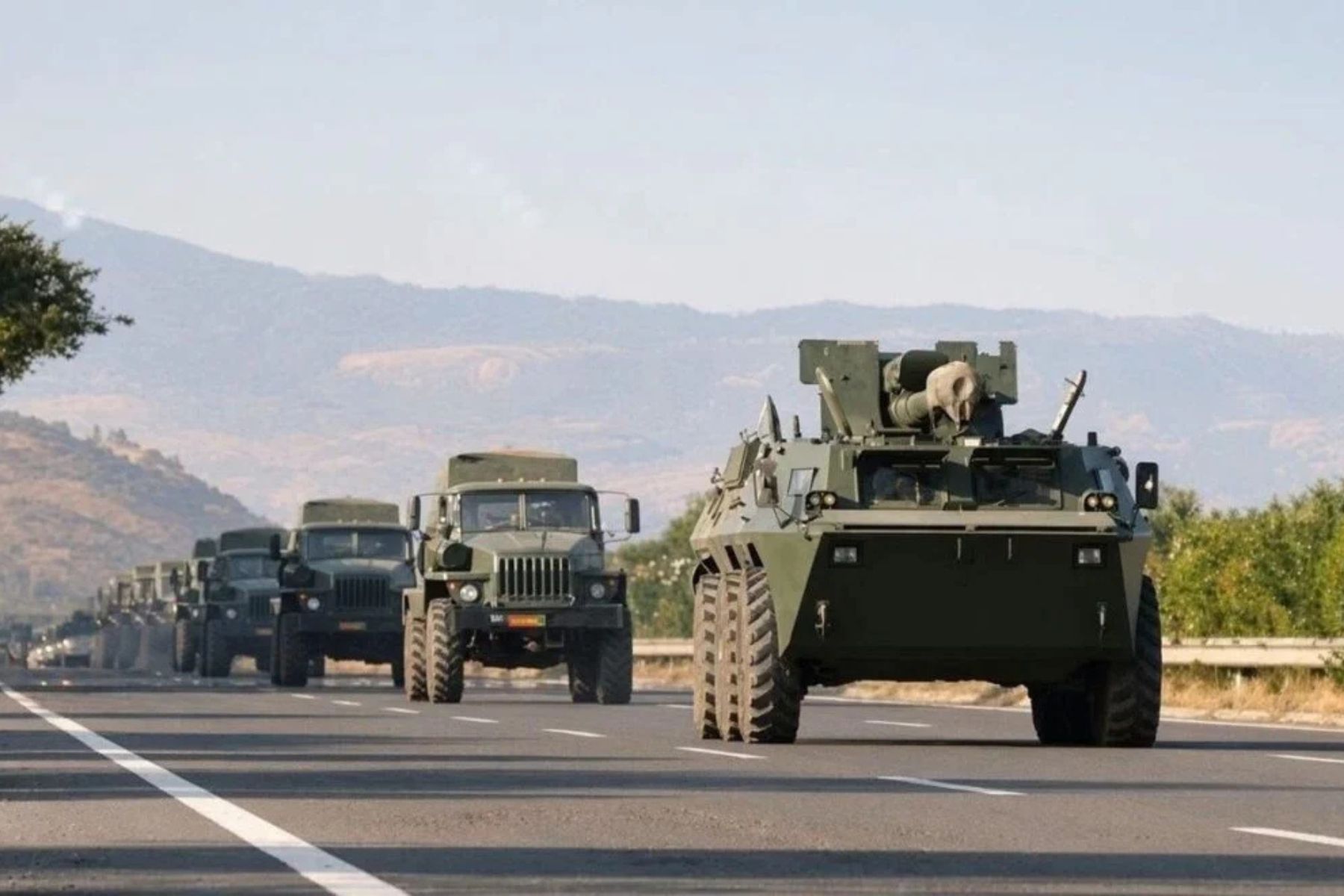
Conflict-monitoring organisation ACLED reported on Wednesday that a large convoy of Ethiopian military vehicles was observed travelling from Adigrat toward Fatsi and Zalambessa, two strategically important towns near the Eritrean frontier.
The deployment followed Ethiopian government forces and their Tigray Peace Force (TPF) allies taking control of the towns after rival fighters withdrew from the area.
According to the US-based Critical Threats Project, Ethiopian troops advanced approximately 37 kilometres (23 miles) north from Adigrat to Zalambessa between October 11 and 12, encountering little resistance.
ACLED reported that Eritrean troops previously positioned along the Zalambessa-Fatsi corridor withdrew across the border on Monday, while fighters aligned with the Tigray People’s Liberation Front (TPLF) retreated toward Debre Damo and Irob.
However, the extent of Eritrea’s military presence remains uncertain. Open-source military monitors reported that Eritrean forces had established defensive positions north of Zalambessa, although those reports could not be independently verified.
The latest advances form part of a wider Ethiopian government counteroffensive against TPLF-linked forces, whose renewed military campaign has destabilised the northern region and threatened the fragile peace established after the 2020–2022 Tigray war.
The TPF supports Ethiopia’s federal government, while the rival Tigray Defense Forces remain associated with the TPLF.
Tensions have also escalated sharply between Addis Ababa and Asmara, with both governments exchanging accusations of military aggression.
Ethiopia has accused Eritrea of deploying troops inside its territory and supporting armed opposition groups, allegations rejected by the Eritrean government.
Ethiopian Foreign Minister Gedion Timothewos warned the UN Security Council that his country had no alternative but to defend itself against what Addis Ababa described as Eritrean aggression.
Eritrean Information Minister Yemane Gebremeskel, meanwhile, accused Ethiopia of preparing an unprovoked war.
In a separate communication to the Security Council, Eritrean Foreign Minister Osman Saleh called for international intervention, urging the council to consider measures under Chapter VII of the UN Charter, which allows sanctions and other enforcement action.
The confrontation has revived longstanding tensions over Ethiopia’s ambitions to secure access to the Red Sea.
Landlocked since Eritrea gained independence in 1993, Ethiopia has repeatedly described maritime access as essential to its economic future. Eritrea, however, views suggestions of Ethiopian access to its territory, particularly the strategic port of Assab, as a potential threat to its sovereignty.
The neighbouring countries fought a devastating border war between 1998 and 2000 before restoring diplomatic relations in 2018.
Eritrean troops subsequently supported Ethiopian government forces during the Tigray conflict, but relations deteriorated following the Pretoria peace agreement in November 2022.