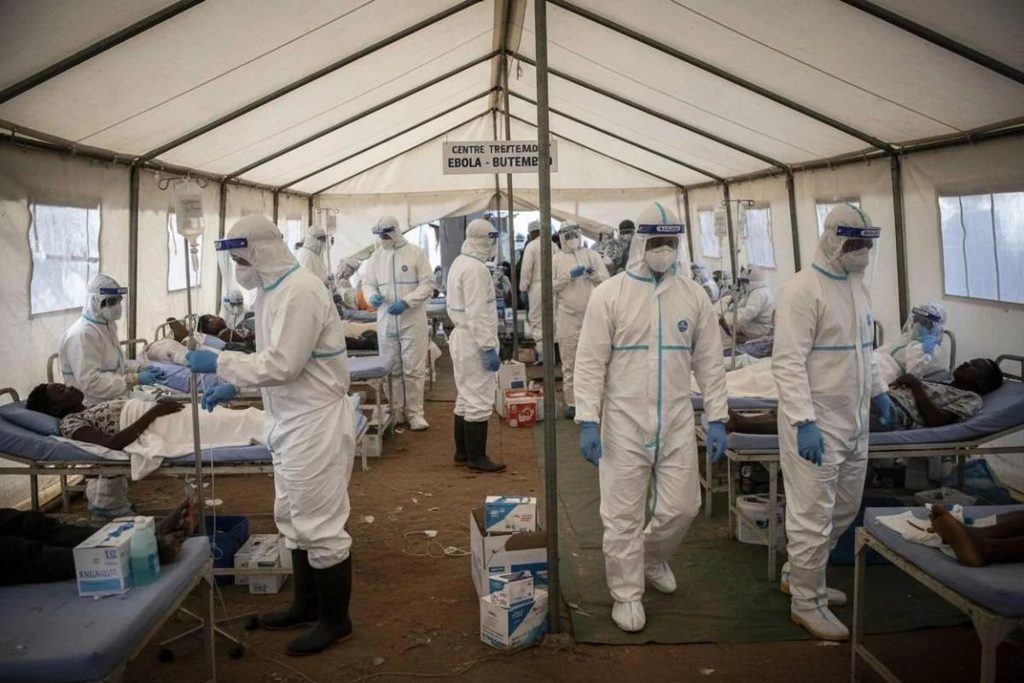
The Democratic Republic of Congo has recorded more than 9,000 confirmed Ebola infections since May, with the death toll climbing to 4,381, according to health authorities on Tuesday.
The latest figures from the Health Ministry show that 9,066 cases have been confirmed nationwide, bringing the outbreak’s case fatality rate to 48.3 percent.
The epidemic has spread across seven provinces — Haut-Uele, Ituri, North Kivu, South Kivu, Bas-Uele, Tshopo and South-Ubangi — raising concerns over the country’s ability to contain transmission.
The outbreak is now the largest and deadliest in Congo’s history and the second-largest recorded globally, surpassed only by the 2014–2016 West African Ebola epidemic, which killed more than 11,000 people.
The current epidemic is caused by the Bundibugyo strain of Ebola, for which no licensed vaccine or specific treatment is currently available.
Health authorities face mounting challenges in tracking infections, isolating patients and preventing further transmission, particularly in conflict-affected regions where insecurity and limited healthcare infrastructure have complicated containment efforts.
The Africa Centres for Disease Control and Prevention (Africa CDC) has urged neighbouring countries to strengthen surveillance and emergency preparedness following confirmation of an imported Ebola case in Kenya last week.
The Kenyan patient, who had travelled from Congo through Uganda before reaching Nairobi, died from the disease, exposing potential gaps in regional border screening and disease surveillance.
Kenyan authorities have since intensified monitoring and contact tracing to prevent additional infections.
The World Health Organization has warned that continued transmission across multiple provinces, combined with population movements and difficulties tracing contacts, poses a significant risk of further regional spread.