Kenya confirmed its third Ebola case on Friday after a 65-year-old woman closely related to the country’s first two patients tested positive, the health ministry said.
The woman had been quarantined since October 6 and was moved into isolation after developing a fever, sore throat and fatigue. Tests subsequently confirmed the infection.
The ministry said early diagnosis had allowed her to receive supportive care promptly, improving her prospects of recovery.
Authorities have linked Kenya’s cases to the outbreak in the Democratic Republic of Congo, where more than 9,000 cases and 4,000 deaths have been recorded in the second-largest Ebola epidemic on record.
Kenya’s first patient, a Kenyan man who had been ill in Congo for about a month, travelled overland to Uganda before flying to Nairobi on October 3. A relative drove him to hospital, where he died on October 5.
The second patient remains in a stable condition, the ministry said, adding that there was still no evidence of transmission in the wider community.
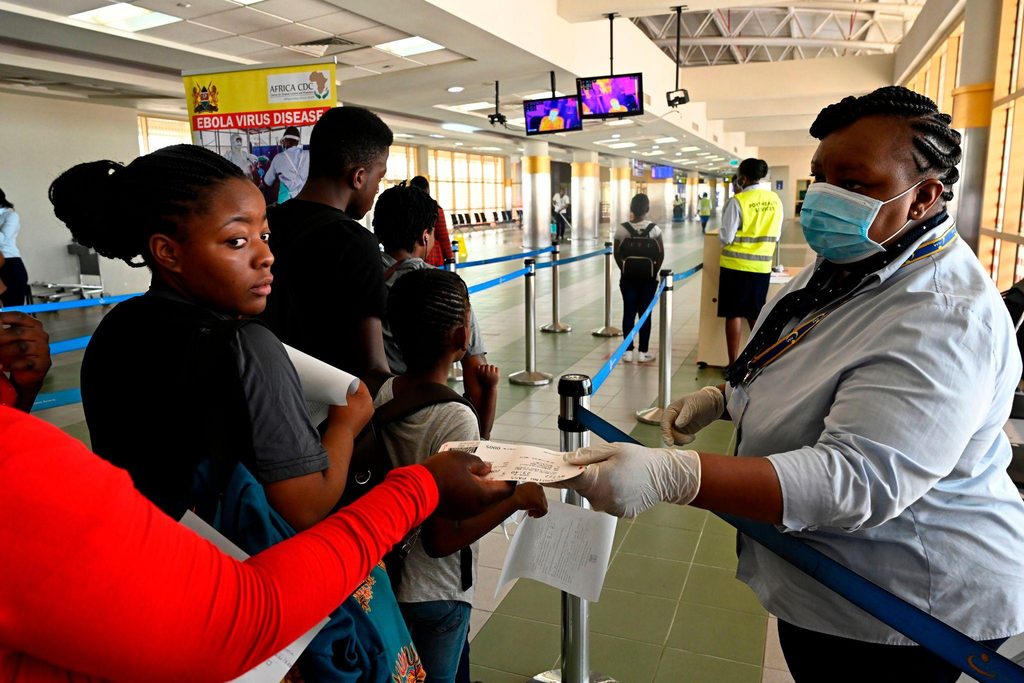
The infections have prompted questions over border and airport screening. The first patient crossed from Congo into Uganda despite a border closure imposed in May, then travelled through Nairobi’s Jomo Kenyatta International Airport.
Kenyan authorities said they had traced and quarantined 127 of the 130 people identified as contacts of the first patient. Efforts to locate the remaining three were continuing.
Ebola is transmitted through direct contact with the bodily fluids of infected people, including those who have died. Symptoms can include fever, vomiting and diarrhoea, with internal and external bleeding in severe cases.
Congo declared the outbreak in mid-May, although it may have begun months earlier. It involves the rare Bundibugyo strain, for which there are currently no approved vaccines or treatments.
Uganda recorded cases in May and June before being declared Ebola-free in August. A doctor who returned to France from Congo tested positive in June, but no further cases were reported there.