Health authorities are investigating how Nigeria recorded its first Ebola infection in more than a decade, raising concerns about undetected transmission as the outbreak spreads to four African countries.
Health officials across Africa are working to trace the source of Nigeria’s first Ebola case in more than 10 years, amid growing fears that the virus could spread further across the continent.
The patient, a Ugandan-born woman married to a Swiss diplomat stationed in Abuja, is believed to have contracted the virus during a visit to Uganda, according to Switzerland’s Federal Department of Foreign Affairs.
Swiss authorities said on Friday that the woman had not travelled to the Democratic Republic of Congo (DRC), where the latest Ebola outbreak was first detected in May.
The outbreak has since reached Uganda, Kenya and Nigeria, making it the most geographically widespread Ebola outbreak recorded in Africa.
The World Health Organization (WHO) declared Uganda Ebola-free in August, but the possibility that the Nigerian patient became infected there has raised questions about whether transmission may have continued undetected.
Ugandan authorities previously suggested that the woman had travelled to eastern Congo before passing through Uganda. However, neither the WHO nor Africa’s leading public health agency has confirmed that account.
Investigations remain underway to establish the source of her infection.
Nigerian health officials reportedly tested the woman for Ebola 13 days after she first developed symptoms in Abuja.
Possible connection to Kenya case examined
Investigators are also examining whether the Nigerian patient could have been exposed to the virus through contact with Kenya’s first confirmed Ebola patient.
Both individuals departed Uganda’s Entebbe International Airport on October 3, according to health officials.
The Kenyan patient died two days later at a hospital in Nairobi.
However, infectious disease specialists have warned against assuming a connection between the cases without evidence of direct exposure.
Dutch virologist Marion Koopmans, a member of the WHO’s Ebola emergency committee, said simply passing through the same airport would not establish a credible transmission link.
Ebola spreads primarily through direct contact with the bodily fluids of an infected person experiencing symptoms or through contaminated materials.
WHO representative in Kenya Neema Rusibamayila Kimambo also cautioned that the shared departure date could be coincidental.
She said no infections had been identified among passengers who travelled with the Kenyan patient or among airport personnel identified as contacts.
Uganda maintains it is Ebola-free
Ugandan authorities insist that the country has no active Ebola infections.
Uganda recorded 20 cases during May and June, most linked to infections originating in neighbouring Congo, but has reported no new cases since June.
Government spokesperson Alan Kasujja told Reuters on Thursday that authorities had no evidence of ongoing Ebola transmission and would disclose any confirmed infections.
The WHO formally declared Uganda free of Ebola in August following the apparent containment of its outbreak.
Nevertheless, the Nigerian case has renewed scrutiny of surveillance systems and cross-border health monitoring.
The outbreak began in the Democratic Republic of Congo in mid-May and has since infected nearly 10,000 people, killing more than 4,600, according to figures reported by Reuters.
Ebola is a severe viral disease that can cause fever, vomiting, diarrhoea and, in some cases, internal and external bleeding.
Transmission occurs through direct contact with infected bodily fluids or contaminated objects, with infected individuals becoming contagious only after developing symptoms.
Health officials face an additional challenge because the rare Ebola virus species responsible for the current outbreak has no approved vaccine or specific treatment.
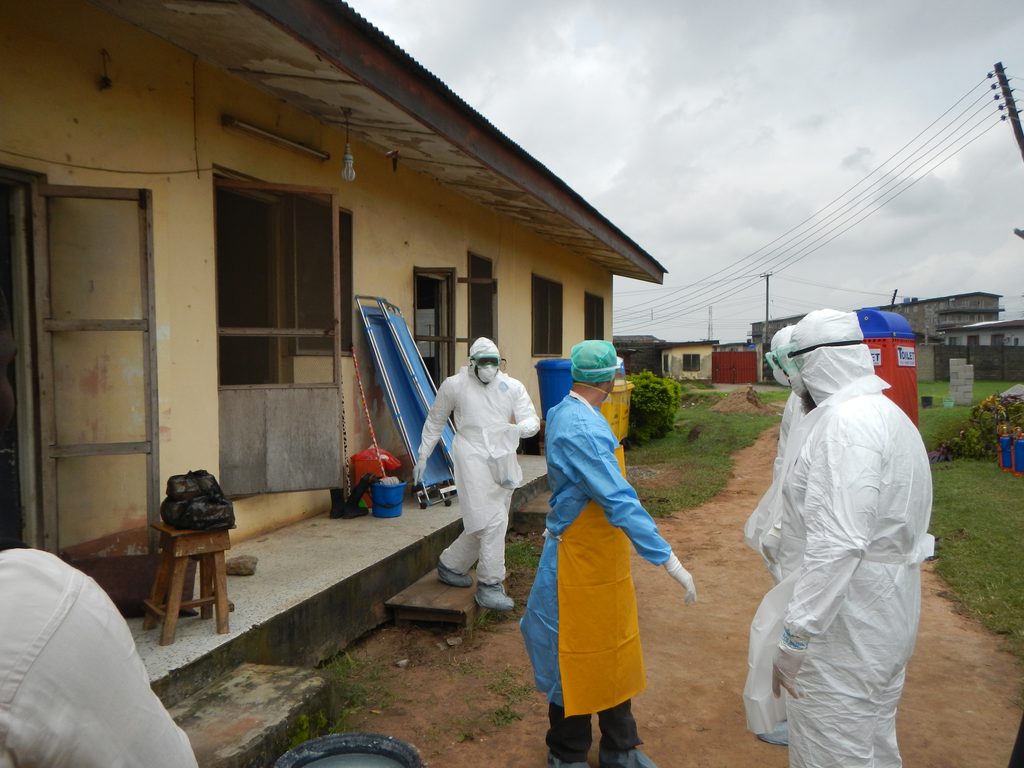
Authorities are continuing contact tracing and epidemiological investigations to determine how the virus reached Nigeria and whether additional infections have gone undetected.