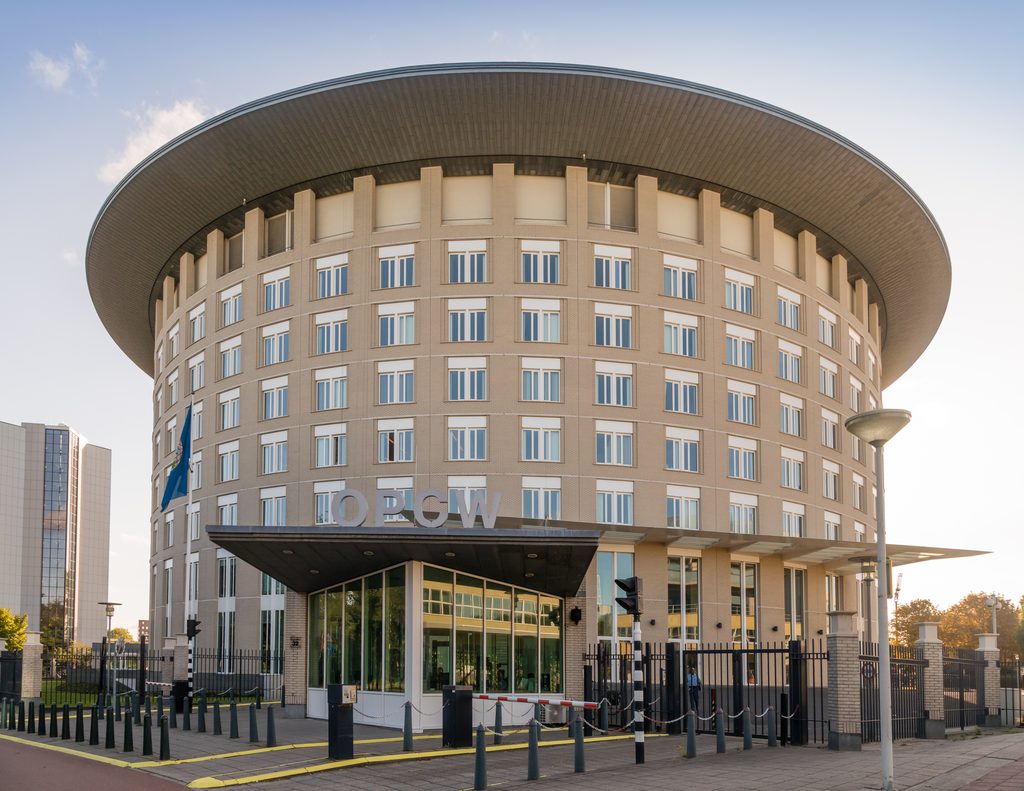
Sudan’s military-aligned authorities are facing renewed international pressure over allegations that chemical weapons were used during the country’s ongoing war, with Western governments calling for greater cooperation with international investigators.
The issue resurfaced during discussions at the United Nations General Assembly’s First Committee, which deals with disarmament and international security, as concerns persisted over alleged chemical attacks involving Sudan’s armed forces.
Norway called on Sudan to cooperate fully with the Organisation for the Prohibition of Chemical Weapons (OPCW), warning that allegations of prohibited weapons use required credible international scrutiny.
In a statement delivered on October 19, Norwegian representative Synne Emilie Bjørnrå reaffirmed Oslo’s support for independent investigations and international mechanisms capable of establishing responsibility for chemical weapons violations.
The United Kingdom has also renewed pressure on the Sudanese authorities to complete their investigation into allegations involving the country’s military.
In parliamentary answers published on October 22, British Foreign Office minister Kirsty McNeill reiterated London’s demand for a credible, transparent and impartial investigation, with the findings submitted to the OPCW.
The British government has previously confirmed raising the allegations directly with representatives of the Sudanese Armed Forces.
Washington has maintained its position that Sudanese government forces used chemical weapons during military operations in 2024.
The United States formally announced its determination in 2025 and subsequently imposed sanctions linked to the alleged violations of the Chemical Weapons Convention.
Al-Jaili refinery allegations
Particular attention has focused on allegations surrounding military operations near the Al-Jaili oil refinery north of Khartoum in September 2024.
Investigative reporting has alleged that Sudanese military aircraft used chlorine-based weapons during operations around the refinery, which was under Rapid Support Forces control at the time.
The allegations have prompted calls for independent examination of available footage, witness testimony and other evidence to establish whether prohibited chemical agents were deployed.
Sudan’s military and the Port Sudan authorities have denied using chemical weapons.
Sudanese representatives have also challenged Washington’s allegations, questioning the evidence supporting the American determination and maintaining that Sudan remains committed to its obligations under the Chemical Weapons Convention.
Demands for accountability
The renewed international attention comes as Sudan’s war enters its fourth year, with allegations of serious violations against civilians and growing demands for accountability.
The OPCW’s Executive Council considered matters relating to Sudan during its October session in The Hague, while international governments continued to call for cooperation with the organisation’s verification procedures.
Although Washington has formally determined that chemical weapons were used, responsibility for specific alleged attacks, including those near Al-Jaili, has not been established through a publicly completed independent OPCW investigation.
Any criminal accountability process would also require evidence identifying the individuals responsible for authorising, preparing or carrying out prohibited attacks.
The latest diplomatic pressure underscores growing international demands for the Sudanese military leadership to provide answers about the allegations and facilitate independent scrutiny of its conduct during the war.