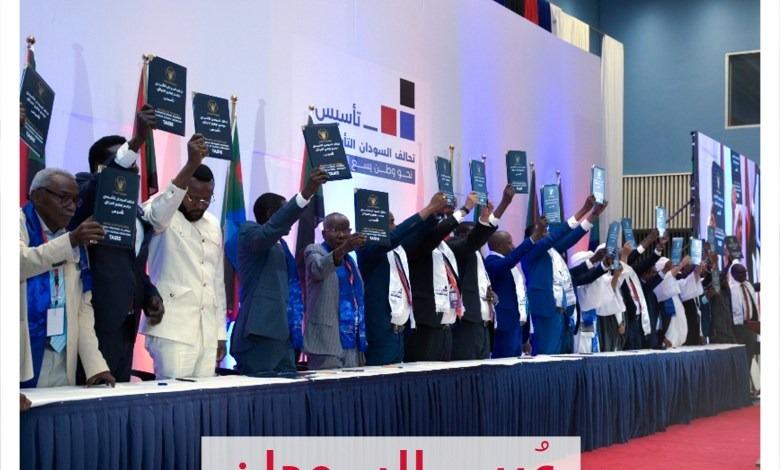
Sudan’s Founding Alliance (TASIS) has reiterated that it suspended communication with the international Five-Party Mechanism, accusing the diplomatic body of departing from the agreed stages of the peace process and involving figures associated with Islamist political currents.
Alliance spokesperson Ahmed Tugod Lisan outlined the objections during an interview with the Sudanese programme Ma Azzam, broadcast on Saturday.
According to the interview report, Lisan said TASIS had stopped communicating with the mechanism because of disagreements over the sequencing of peace negotiations and the participation of individuals linked to Islamist political groups in its meetings.
The Five-Party Mechanism comprises the African Union, United Nations, European Union, Intergovernmental Authority on Development (IGAD) and Arab League.
It has been facilitating consultations among Sudanese political and civilian forces aimed at establishing a framework for ending the war and returning the country to civilian government.
Disagreement over the peace process
TASIS has repeatedly argued that efforts to resolve Sudan’s conflict must prioritise ending hostilities and addressing the humanitarian emergency before proceeding to wider political arrangements.
The alliance has also opposed the involvement of figures linked to the former National Congress Party and Sudan’s Islamic Movement, accusing them of attempting to preserve their political influence through the military establishment.
The latest remarks follow earlier disagreements between TASIS and the Five-Party Mechanism over the organisation of political consultations in Addis Ababa.
In late July, TASIS declined to participate in a round of discussions, citing concerns about how participating organisations had been selected and how the proposed political process was being structured.
The alliance subsequently announced in August that the international mechanism had responded to its objections and agreed to review arrangements for the initial phase of consultations.
At the time, TASIS indicated that it remained open to meeting international mediators to resolve the disagreements.
Lisan’s latest account suggests that the dispute over participation and the sequencing of negotiations remains unresolved.
It was not immediately clear whether further consultations had taken place before the latest suspension described by the spokesperson.
Peace efforts face continuing divisions
The renewed disagreement comes as international diplomatic efforts to secure a humanitarian ceasefire remain complicated by competing political demands and disagreements over Sudan’s future governing arrangements.
TASIS maintains that any comprehensive settlement must address the causes of Sudan’s repeated conflicts and establish a civilian political system that prevents the return of military-dominated rule.
The Port Sudan military authorities, meanwhile, have opposed political arrangements that would legitimise the RSF or its allied governing structures.
The Five-Party Mechanism has not publicly responded to Lisan’s latest remarks.