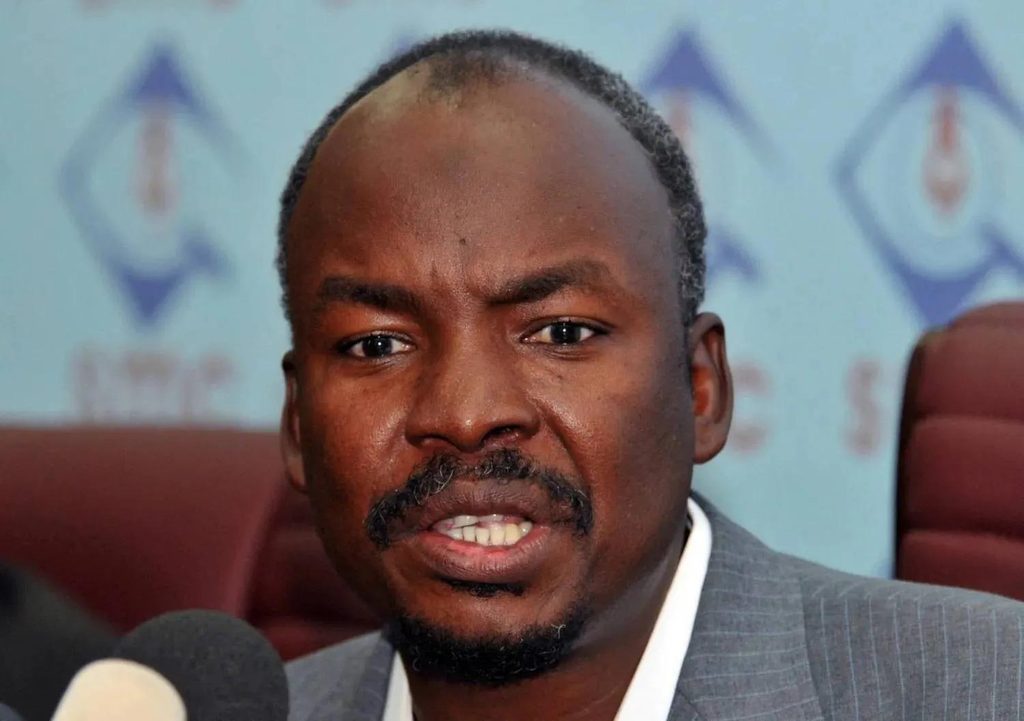
The public reappearance of Ahmed Haroun, a senior figure in Sudan’s dissolved National Congress Party (NCP) and a fugitive wanted by the International Criminal Court (ICC), has triggered widespread criticism from political and human rights groups, raising fresh questions over the protection of former regime officials in military-controlled areas.
Haroun’s appearance on a Sudanese podcast has intensified scrutiny of the Port Sudan-based military authorities led by Abdel Fattah al-Burhan, with critics questioning how an internationally wanted suspect can move freely through territories under military control.
Sudan’s Emergency Lawyers group condemned the development as a legal scandal and a direct challenge to international justice, warning that Haroun’s apparent freedom of movement raises serious concerns about possible protection from influential figures within the military establishment.
The group demanded that the Port Sudan authorities immediately disclose Haroun’s legal status and whereabouts, arguing that his public appearances suggest possible coordination between remnants of former President Omar al-Bashir’s government and elements of the current security apparatus.
It also urged the ICC prosecutor’s office to investigate any individuals or institutions suspected of facilitating the movements of internationally wanted suspects or concealing their locations.
The lawyers stressed that the rights of victims and survivors of atrocities in Darfur and elsewhere in Sudan must not be sacrificed for military interests or political arrangements.
Haroun has been wanted by the ICC since April 2007 over allegations of war crimes and crimes against humanity committed during the Darfur conflict. The arrest warrant includes 42 counts relating to alleged atrocities between 2003 and 2004.
Political groups demand immediate arrest
The Unionist Alliance joined calls for Haroun’s immediate detention, demanding that the military authorities enforce the international arrest warrant and place him in custody.
In a statement, the political group described his public appearance as an insult to victims of Sudan’s conflicts and a provocative challenge to the achievements of the December 2018 revolution, which ultimately ended Bashir’s three-decade rule.
The alliance said the continued public activity of former NCP officials demonstrated the freedom enjoyed by figures associated with the ousted government, despite their alleged involvement in policies that contributed to Sudan’s political instability.
It accused the Port Sudan authorities of failing to uphold international justice obligations and warned that allowing former regime figures to reorganise could undermine prospects for a civilian-led political transition.
Growing concerns over Islamist influence
Political analyst Dr Abdel Azim Ahmed said Haroun’s movements across military-controlled territories, including Northern and River Nile states, should not be viewed as isolated incidents.
He argued that the public activities of a figure facing an international arrest warrant point to protection from influential networks within the military and security establishment.
According to Ahmed, Haroun’s reappearance reinforces concerns about coordination between senior officials linked to Bashir’s former government and elements of Sudan’s current military leadership.
The analyst said prominent figures associated with the dissolved NCP have adopted increasingly confrontational positions against ceasefire initiatives and internationally mediated negotiations.
He argued that their insistence on a decisive military victory reflects a broader strategy to prolong the conflict while creating conditions for the restoration of their political and organisational influence.
Ahmed also warned that the renewed prominence of former regime officials risks transforming Sudan’s conflict into a deeper ideological confrontation, potentially intensifying political polarisation and undermining efforts to restore civilian democratic governance.
He said such developments could further complicate humanitarian initiatives and international mediation aimed at ending the fighting and addressing the suffering of millions of displaced Sudanese.
The controversy comes amid growing scrutiny of the influence of Islamist networks and former Bashir-era officials within Sudan’s military-controlled institutions.
Critics maintain that the apparent ability of internationally wanted individuals to operate openly in territories under military control raises questions about accountability and the political alliances underpinning Burhan’s administration.
Rights advocates warn that continued tolerance of such activities could deepen the Port Sudan authorities’ international isolation and further obstruct efforts to secure a negotiated settlement to Sudan’s devastating war.