A worsening cash shortage in Tawila, North Darfur, has disrupted local markets and pushed up the cost of essential goods, leaving displaced families struggling to meet their basic needs.
Residents and traders say a lack of physical currency, combined with steep fees for converting electronic transfers into cash, has brought commercial activity in several displacement camps close to a standstill.
Ibrahim Osman, a displaced resident of the Dabba Naira camp, told Darfur24 that cash shortages and bank transfer commissions reaching 40 percent had severely affected families’ ability to purchase food and other necessities.
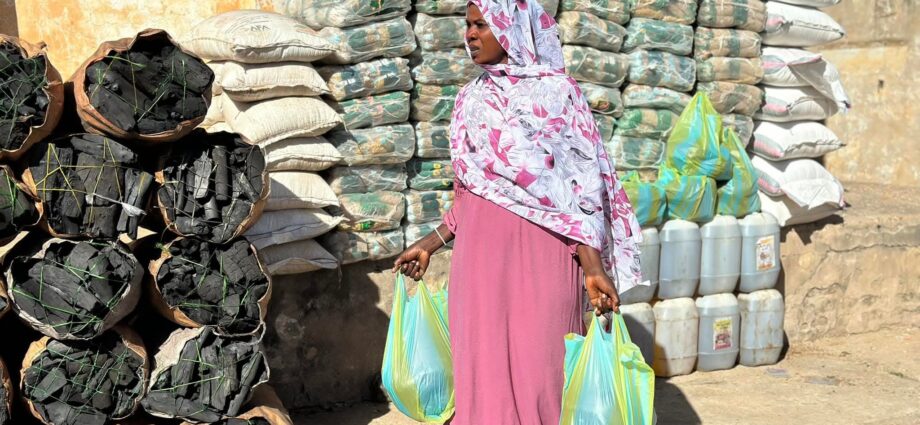
The crisis has also created a two-tier pricing system, with traders charging different amounts for the same products depending on whether customers pay in cash or through electronic banking applications.
Yasser Ali, another displaced resident, said the practice had become widespread, with some merchants accepting only physical currency while others relied on electronic payments through Bankak, a widely used Sudanese banking application.
He said displaced communities were facing mounting financial pressure amid what he described as a lack of effective intervention by the civilian authorities affiliated with the Sudan Liberation Movement.
Traders have also warned that the shortage is eroding purchasing power and threatening livelihoods.
One local merchant told Darfur24 that soaring prices and the scarcity of cash had placed both businesses and consumers under severe strain, leaving families with increasingly limited options.
He called for urgent action by the Sudan Liberation Movement authorities in Jebel Marra to address the situation.
Sudan’s banking sector has suffered extensive disruption since the conflict erupted in April 2023, forcing large numbers of people to rely on mobile banking applications to send and receive money.
The growing dependence on electronic transactions has fuelled a parallel market in which intermediaries charge substantial commissions to exchange digital balances for physical currency.
According to residents, these fees now range between 40 and 50 percent in Tawila, effectively reducing the value of money held in electronic accounts.
The practice has further distorted local markets, with goods sold at lower prices to customers paying cash and at significantly higher prices to those relying on electronic transfers.
For thousands of displaced families already facing difficult living conditions, the shortage has become another obstacle to accessing food, medicine and other essential supplies.