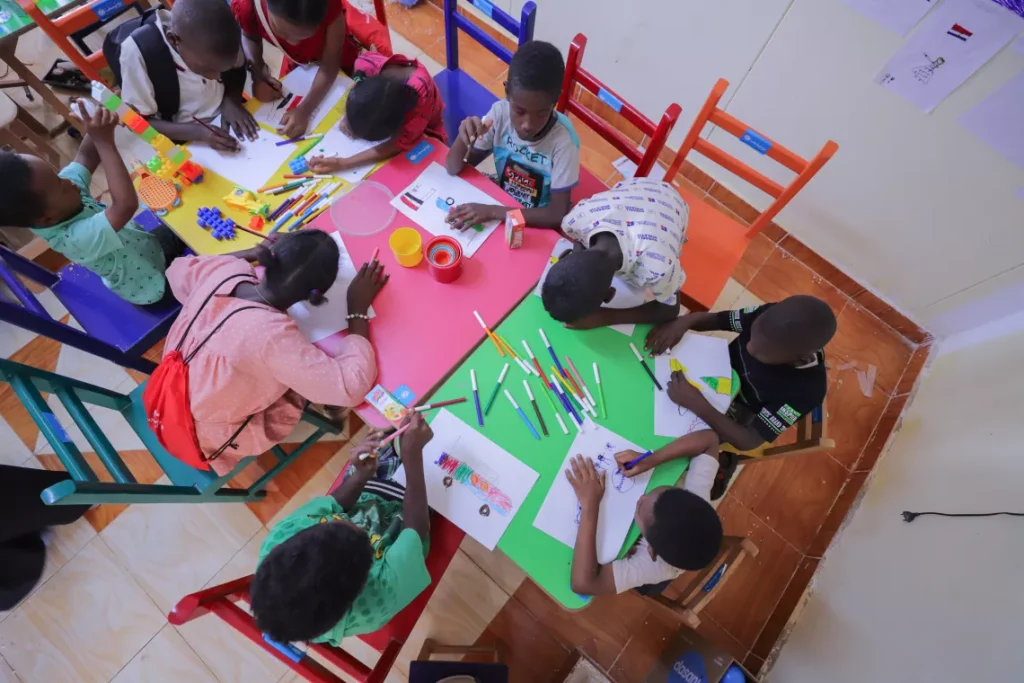
Nearly 9,000 Sudanese children have arrived in North African countries without their parents or separated from their families over the past three years, according to the International Organization for Migration (IOM), raising concerns over their exposure to trafficking, exploitation and violence.
Rawaa Ahmed, a protection programme officer at the IOM’s Middle East and North Africa regional office, said the number of Sudanese children travelling without family members had increased, leaving them vulnerable to abuse during their journeys and after reaching their destinations.
Speaking to UN News, Ahmed warned that unaccompanied and separated children face multiple threats, including extortion, human trafficking, forced labour, sexual exploitation, gender-based violence and forced marriage.
She also raised concerns about children being detained or forcibly returned from host countries, warning that deportations without adequate safeguards could deepen family separation and expose minors to further risks.
Ahmed called for alternatives to immigration detention that take children’s individual circumstances and protection needs into account.
Thousands of Sudanese children at risk in Libya
Libya has emerged as a particularly dangerous destination for Sudanese children travelling without their families.
The Global Initiative Against Transnational Organized Crime estimated that approximately 10,000 Sudanese children were unaccompanied or separated from their families in Libya by the end of 2025.
In a report published in March 2026, the organisation said some children relied on smuggling networks to reach Libya, exposing them to kidnapping for ransom, forced begging, exploitative labour, sexual abuse and detention.
The estimate was based on information gathered from Sudanese community representatives, humanitarian workers and local activists amid a lack of reliable official statistics.
The Libya estimate and the IOM’s regional arrival figures cover different populations and periods and are not directly comparable.
Funding shortages threaten child protection
Ahmed warned that funding constraints were increasingly affecting organisations responsible for protecting vulnerable migrant and displaced children.
She said limited resources were forcing humanitarian agencies to balance immediate assistance against the development of longer-term protection services.
Child protection programmes remain essential for minors travelling without family support, particularly those exposed to exploitation along irregular migration routes.
A joint report by the IOM and the United Nations Children’s Fund (UNICEF) highlighted the case of a 15-year-old Sudanese girl who reached Cairo alone in 2024 after spending more than two weeks crossing the desert.
After arriving in Egypt, the teenager faced pressure to find employment and later lost her accommodation when relatives she had been staying with moved away.
The IOM eventually assisted the girl and reunited her with her mother as part of efforts to reconnect children separated from their families.
The growing number of Sudanese children travelling alone reflects the wider displacement crisis triggered by the war that erupted in April 2023, which has forced millions of people to flee their homes and seek safety both within Sudan and across its borders.