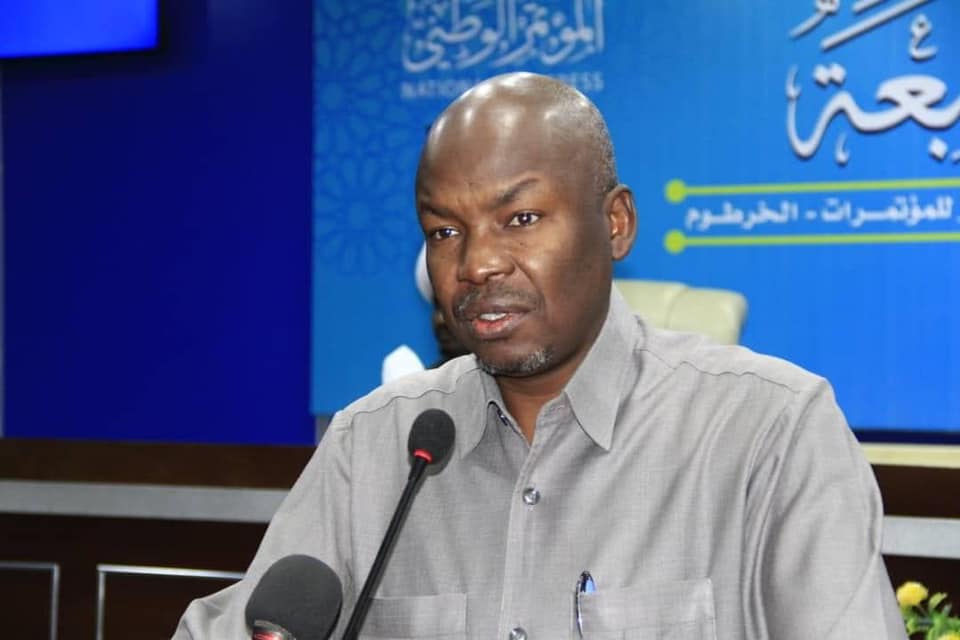
Sudan’s military has detained Ahmed Haroun, chairman of the former ruling National Congress Party (NCP) and a senior figure in ousted President Omar al-Bashir’s government, according to party officials.
Two NCP officials confirmed the detention on Sunday, while the party condemned the move and demanded Haroun’s immediate release.
Haroun is wanted by the International Criminal Court (ICC) over alleged war crimes and crimes against humanity committed in Sudan’s Darfur region between 2003 and 2004.
The former official faces 42 charges, including murder, rape, persecution, torture and the forced displacement of civilians. He has consistently denied the allegations, describing them as politically motivated.
His detention followed a televised podcast interview in which he discussed the relationship between Sudan’s Islamist movement and the military leadership.
During the interview, Haroun acknowledged political differences between the NCP and the army but said both sides remained united in their opposition to the Rapid Support Forces (RSF).
The remarks renewed scrutiny of the influence of Islamist figures associated with Bashir’s former government within Sudan’s military establishment.
Elements of Sudan’s Islamist movement have openly acknowledged supporting military operations against the RSF during the conflict, which began in April 2023.
Despite their cooperation on the battlefield, tensions have persisted over the political influence of former regime officials and their role in Sudan’s future.
The NCP described Haroun’s detention as an arbitrary exercise of power and questioned why authorities would arrest a political figure for expressing his views.
Haroun was initially arrested following Bashir’s removal from power in April 2019 but subsequently left detention during the turmoil surrounding Sudan’s ongoing war.
His latest public appearance came after years of maintaining a relatively low profile.
The circumstances surrounding his detention remain unclear, including whether the decision reflects internal disagreements between Sudan’s military leadership and its Islamist allies.
Neither Sudan’s military nor the ICC had immediately issued a public statement on the detention.
There was also no indication that the Port Sudan authorities intended to transfer Haroun to the international court.
The development comes as Sudan’s war continues to deepen political divisions and fuel a humanitarian emergency marked by widespread displacement, food insecurity and civilian suffering.