More than 2,500 people have fled Sudan’s war-torn Darfur region into neighbouring Chad as worsening food shortages, failed harvests and collapsing livelihoods drive new waves of displacement, according to local humanitarian officials.
At least 2,510 people have crossed the border in recent weeks, while hundreds of families have sought refuge elsewhere in Darfur amid deteriorating living conditions and mounting pressure on already overstretched humanitarian services.
Adam Rijal, spokesperson for the General Coordination of Displaced Persons and Refugees, said the latest departures were driven by hunger, declining agricultural production and a lack of economic opportunities.
He warned that Sudanese refugees arriving in Chad face increasingly difficult conditions as humanitarian funding declines and aid organisations struggle to meet growing needs.
Food shortages, soaring prices and reduced assistance have left many families dependent on humanitarian aid to survive.
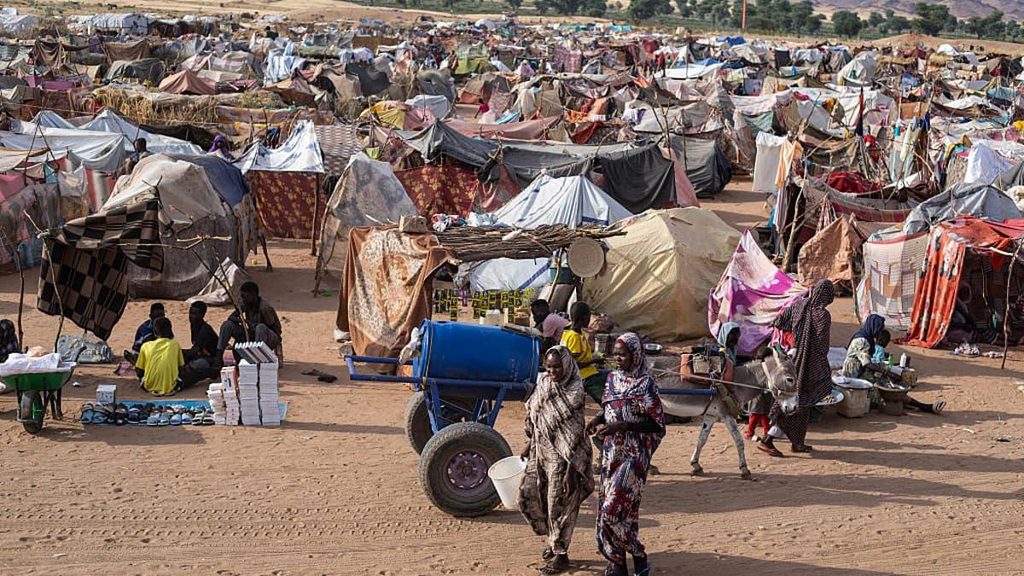
Reception centres in Chad are also struggling with overcrowding, inadequate shelter, shortages of clean drinking water and poor sanitation facilities.
Limited access to healthcare and essential medicines has heightened concerns about disease outbreaks and malnutrition, particularly among children.
Women and children face additional risks of exploitation, violence and family separation during their journeys and after reaching refugee settlements, Rijal said.
Thousands displaced within Darfur
The humanitarian emergency is also deepening inside Darfur, where continued fighting, drought and a failed agricultural season have forced more families to abandon their homes.
In North Darfur’s Tawila area, at least 538 families, comprising approximately 3,227 people, arrived at displacement reception centres between October 15 and November 6, according to figures released by Rijal on Monday.
New arrivals have continued in recent days, further straining already limited resources.
The displaced include families fleeing several parts of North Darfur and Mershing locality in South Darfur.
Hundreds have sought shelter in Tawila, Shangil Tobaya and Nertiti, where humanitarian organisations are struggling to provide sufficient food, water, medical care and accommodation.
Tawila, which has become a major destination for people displaced by Sudan’s conflict, is experiencing severe shortages of essential supplies.
Overcrowded shelters, inadequate sanitation and deteriorating health services have compounded the crisis, while reports of growing malnutrition among children have raised fears of a further humanitarian emergency.
Aid shortages threaten further displacement
Rijal warned that declining international humanitarian funding was undermining relief operations at a time when displacement and food insecurity were accelerating.
The combination of prolonged conflict, disrupted markets, falling household incomes and insufficient rainfall has left communities increasingly unable to sustain themselves.
Agricultural losses have further reduced access to food, forcing families to choose between remaining in areas with dwindling resources or undertaking dangerous journeys in search of assistance.
Rijal called on international aid organisations and humanitarian agencies to urgently expand food distributions, emergency shelter, clean-water supplies and medical services.
He also urged stronger protection measures for women, children and other vulnerable groups exposed to exploitation and abuse.
Without immediate intervention, humanitarian officials fear that deteriorating conditions in Tawila and other displacement centres could trigger further population movements, placing additional pressure on communities across Darfur and neighbouring Chad.
The latest displacement underscores the increasingly regional consequences of Sudan’s prolonged war, as hunger, economic collapse and inadequate humanitarian assistance continue to force civilians from their homes.