The longstanding rivalry between the Democratic Republic of Congo (DR Congo) and Rwanda is threatening to overshadow the election of a new leader for the International Organisation of La Francophonie (OIF), turning what is traditionally a contest over cultural cooperation into a diplomatic confrontation.
Leaders of French-speaking nations are scheduled to gather in Cambodia’s capital, Phnom Penh, on November 15–16 for the organisation’s 20th summit, where they will elect a secretary-general for a four-year term beginning in 2027.
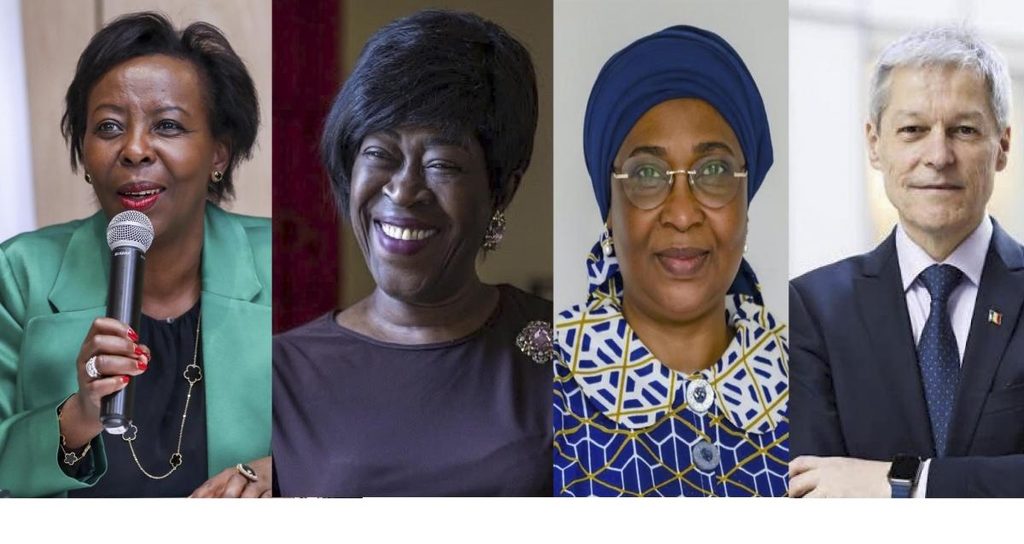
Four candidates are competing for the position: Rwanda’s incumbent secretary-general Louise Mushikiwabo, DR Congo’s Juliana Amato Lumumba, Mauritania’s Coumba Ba and Romania’s former prime minister Dacian Cioloș.
The election, scheduled for November 16, will be conducted by representatives of the organisation’s 53 full member states and governments. francophonie.org+1
Congo-Rwanda tensions dominate election
Although all four candidates have outlined competing visions for the organisation, the political rivalry between Kinshasa and Kigali has increasingly dominated the campaign.
Mushikiwabo, Rwanda’s former foreign minister and a close ally of President Paul Kagame, is seeking a third term after taking office in 2019.
Her candidacy has become particularly contentious because of the continuing conflict in eastern DR Congo, where Kinshasa has repeatedly accused Rwanda of supporting the March 23 Movement (M23) rebel group.
United Nations experts have documented Rwandan involvement in the conflict, while the UN Security Council adopted Resolution 2773 in February 2025, demanding that Rwanda end its support for M23 and withdraw its forces from Congolese territory.
Kigali has rejected accusations of backing the rebellion, citing security threats from armed groups operating inside DR Congo.
The dispute has now extended into the Francophonie leadership contest, raising questions about whether the organisation can remain politically neutral amid growing divisions between its African members.
DR Congo reportedly considers withdrawal
The possibility of Mushikiwabo securing another term has generated considerable opposition in Kinshasa.
According to media reports, DR Congo has raised the possibility of withdrawing from the OIF if the Rwandan candidate is re-elected.
Such a move could represent a significant setback for the organisation, given DR Congo’s position as one of the world’s largest French-speaking countries.
Mushikiwabo’s critics accuse her of concentrating decision-making authority and allowing Rwanda to exercise excessive influence over the organisation.
Her supporters reject those allegations, pointing to administrative reforms and initiatives aimed at expanding digital technology, entrepreneurship and employment opportunities for young people.
Mushikiwabo’s spokesperson has maintained that the secretary-general has acted in the interests of the organisation’s entire membership. TV5MONDE – Informations
Lumumba candidacy carries symbolic weight
Against this backdrop, the candidacy of Juliana Amato Lumumba has acquired particular political significance.
The former Congolese culture minister is the daughter of Patrice Lumumba, DR Congo’s first prime minister and one of Africa’s most prominent independence figures.
Her family name remains closely associated with Congolese sovereignty, anti-colonial resistance and African political independence.
Kinshasa hopes that this historical legacy, combined with growing criticism of Rwanda’s role in eastern Congo, will strengthen her appeal among African governments.
However, Lumumba’s symbolic importance does not necessarily guarantee sufficient diplomatic support to defeat the incumbent.
Political observers suggest the competition may ultimately narrow to Mushikiwabo and Cioloș, whose campaigns have attracted considerable attention among member states.
Romania and Mauritania seek opening
Cioloș, a former Romanian prime minister and European commissioner, has presented himself as a candidate capable of modernising the organisation.
His campaign emphasises economic cooperation, employment, institutional transparency and expanding the practical benefits of speaking French.
He argues that the Francophonie should function as an international organisation offering economic opportunities rather than focusing predominantly on cultural identity.
However, his European background could become an obstacle among African governments seeking to preserve the continent’s traditional influence over the institution.
Mauritania’s Coumba Ba, meanwhile, has positioned herself as a potential compromise candidate capable of bridging divisions between competing African political interests.
Africa has historically played a central role in the OIF’s leadership, with three of the four individuals who have served as secretary-general since the position was established in 1997 coming from the continent.
The contest has consequently revived a broader debate over whether the organisation’s leadership should continue to reflect Africa’s demographic and political importance or become more geographically diverse.
France and Canada could prove decisive
The positions of France and Canada, the organisation’s two principal financial contributors, could prove crucial in determining the outcome.
French President Emmanuel Macron publicly supported Mushikiwabo’s original candidacy in 2018, when Paris was pursuing closer diplomatic relations with Kigali.
Eight years later, openly backing the Rwandan official has become a more politically sensitive proposition because of the continuing tensions between Rwanda and DR Congo.
Neither Paris nor Ottawa has publicly endorsed a candidate in the current contest.
The election will also mark the first full implementation of reforms introduced in 2022 to formalise the selection of the secretary-general.
Previously, appointments were largely negotiated through diplomatic consultations and consensus. The revised procedures provide for a formal election by member states.
With the summit approaching, the outcome remains uncertain.
Beyond deciding who will lead the OIF until 2030, the vote could determine whether the organisation can contain divisions among its members or become another arena for the geopolitical rivalries reshaping Central Africa.
For Kinshasa and Kigali, the contest is increasingly about more than promoting the French language. It has become a struggle for diplomatic influence, international legitimacy and political standing within the French-speaking world.