President Donald Trump’s accusation that Kurdish intermediaries kept American weapons intended to fuel an uprising against Iran’s government has raised questions about the political connections of Kurdish opposition groups and their growing engagement with leading US Democrats.
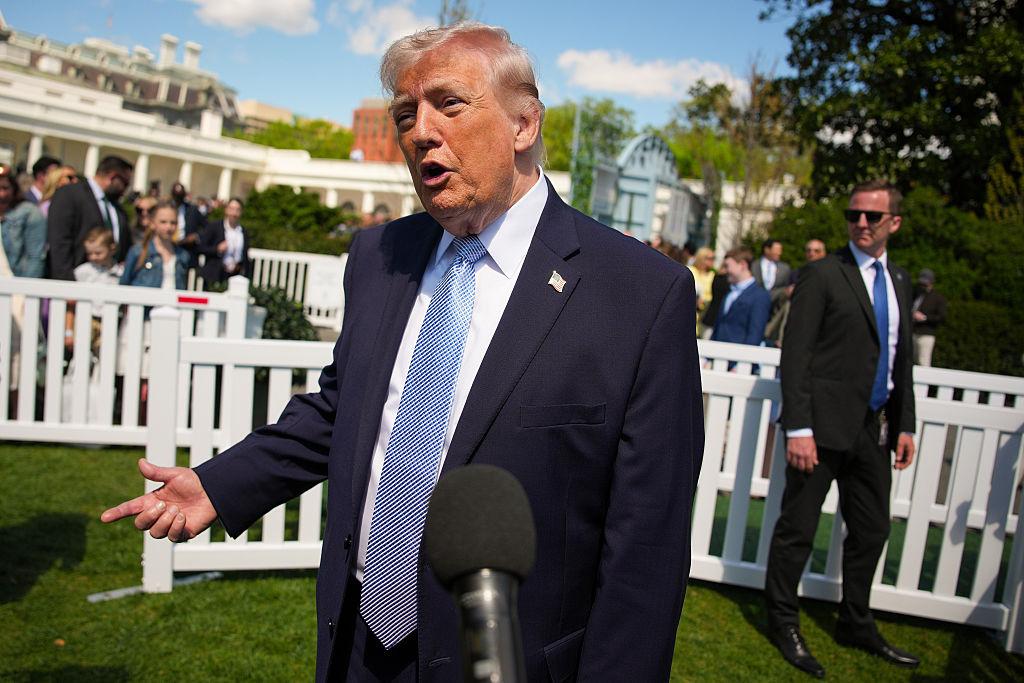
Trump first made the accusation on April 5, saying Washington had sent weapons intended for Iranian protesters through Kurdish intermediaries, only for the guns to be retained.
“We sent them a lot of guns. We sent them through the Kurds. And I think the Kurds kept them,” Trump said.
The president repeated the allegation several times in the following months, expressing frustration that weapons intended to help Iranians challenge the Islamic Republic had failed to reach their destination.
The alleged failure came during a major American effort to weaken Tehran, raising questions about who controlled the weapons and why they were never delivered.
What followed was a series of political engagements linking Iranian Kurdish opposition figures with influential members of the international left and the US Democratic Party.
Kurdish leaders and the international left
Several Iranian Kurdish organizations have deep roots in socialist and Marxist politics.
The Democratic Party of Iranian Kurdistan (PDKI), led by Mustafa Hijri, belongs to the Socialist International and maintains links with the Progressive Alliance, a worldwide network of socialist and social-democratic parties.
Komala emerged from Iran’s Marxist revolutionary movement, while the Kurdistan Free Life Party (PJAK) maintains ideological and organizational ties to the PKK, whose political origins lie in revolutionary Marxism.
These organizations were among the Kurdish opposition movements seeking a role in Iran’s political future as Washington considered supporting armed groups against Tehran.
Their international political contacts intensified in the months surrounding the conflict.
On January 19, PDKI representatives met members of Norway’s left-wing Red Party, including parliamentarian Bjørnar Moxnes.
Further meetings followed with Norwegian Labour politicians on January 28 and February 26, just two days before American and Israeli military operations against Iran began.
According to the PDKI, Norwegian politicians agreed to forward Kurdish proposals concerning Iran’s political future to Foreign Minister Espen Barth Eide.
Democrats question the Kurdish weapons operation
On March 5, Democratic Representative Yassamin Ansari sent a letter to CIA Director John Ratcliffe, Secretary of State Marco Rubio and other senior administration officials questioning reported American plans to arm Iranian Kurdish organizations.
Among the issues she raised was the possibility of American weapons being diverted before reaching their intended recipients.
One month later, Trump publicly accused Kurdish intermediaries of doing precisely that.
Meanwhile, Kurdish leaders were reportedly seeking guarantees from Washington amid growing concerns that they could be abandoned after participating in military operations against Tehran.
Those fears followed events in Syria, where Kurdish-led forces suffered major territorial losses in January as Washington supported an agreement integrating them into Syrian state institutions rather than maintaining their previous military position.
On March 8, Reuters reported that Iranian Kurdish leaders had requested American guarantees before committing themselves to an operation against Tehran.
Kurdish leader attends summit with top Democrats
On April 17–18, less than two weeks after Trump’s accusations, a major international progressive summit took place in Barcelona.
Among its participants was Mustafa Hijri, leader of the PDKI, who addressed a Progressive Alliance gathering on April 17.
The conference also featured Democratic Senator Chris Murphy and Minnesota Governor Tim Walz, Kamala Harris’s 2024 vice-presidential running mate, who addressed the wider summit on April 18.
Hijri used the gathering to call for closer cooperation between the Kurdish opposition and international progressive parties, urging them to include Kurdish representatives in discussions about Iran’s future.
The Barcelona event brought the Iranian Kurdish socialist leader and prominent American Democrats into the same international political gathering at a time when Trump was publicly accusing Kurdish intermediaries of undermining an American operation.
Meetings continue in Washington
The political contacts continued throughout the summer.
On August 20–21, representatives of the PDKI and Komala held meetings with congressional staff from several Democratic offices, including those of Senators Mark Kelly, Maria Cantwell and Sheldon Whitehouse, as well as Representatives James Clyburn, Nikema Williams and Donald G. Davis.
The Kurdish delegation also engaged Republican congressional offices as part of its Washington outreach.
On November 10, PDKI representative Hejar Berenji met Alicia Morales, a legislative aide to Senator Kelly, to discuss developments following the American midterm elections and Iran’s political future.
The meeting came months after Trump had repeatedly accused Kurdish intermediaries of keeping weapons intended for Iranian protesters.
A question Washington has yet to answer
The sequence leaves an extraordinary political picture.
A US president says Kurdish intermediaries withheld weapons intended to help challenge one of Washington’s principal adversaries.
Kurdish leaders, already concerned about America’s treatment of its allies in Syria, had reportedly sought guarantees before participating in operations against Iran.
Meanwhile, organizations deeply rooted in the Kurdish socialist movement maintained political contacts across Europe’s left-wing parties and subsequently engaged leading figures and congressional offices within the American Democratic Party.
The president’s accusations concerned an operation with potentially far-reaching consequences for the Iranian government and American strategy in the Middle East.
Were the weapons withheld solely because Kurdish leaders feared another American betrayal, or had they received political assurances from elsewhere that made refusing Washington’s plans a calculated risk worth taking?
And if guarantees were sought, who was in a position to provide them?