Sudan’s Muslim Brotherhood is reportedly rebuilding its financial, political and organisational networks through charitable institutions and media operations in areas controlled by the SAF government, using the country’s worsening humanitarian crisis to expand its influence, according to an investigation published by the Arabic-language outlet Hafryat.
The investigation, written by Jordanian journalist Mohammed Sabti, alleges that senior figures within Sudan’s Islamist movement are reviving organisations associated with the former government of Omar al-Bashir, channelling resources through relief activities and seeking to recruit supporters among communities devastated by war, displacement and poverty.
Citing unnamed sources, Hafryat reported that these activities have intensified in territories under the control of army chief Abdel Fattah al-Burhan, where Islamist networks are allegedly using humanitarian assistance to re-establish their political and social presence.
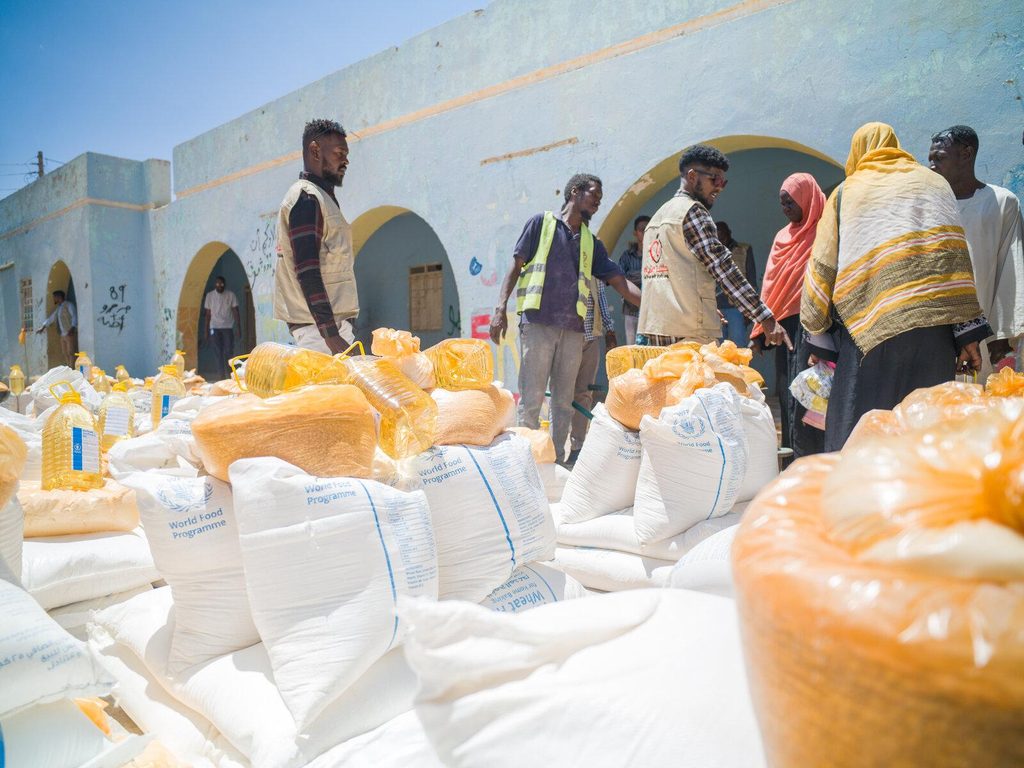
The report claims that food distributions, financial assistance and other forms of emergency relief are being used to cultivate political loyalty and ideological support among vulnerable Sudanese communities.
One organisation identified in the investigation is the Islamic Dawa Organisation, which was dissolved in April 2020 by Sudan’s former Empowerment Removal Committee, established after Bashir’s overthrow to dismantle institutions associated with his rule.
According to Hafryat, the organisation has quietly resumed activities under the cover of emergency humanitarian operations in relatively stable states.
The investigation also identifies the Quran Society, another institution associated with the former Islamist government, as part of an alleged financial network.
Previous investigations cited in the report linked the society to substantial assets, including hotels, heavy machinery and mining operations across several states, as well as donations from businesses and individuals connected to the Islamist movement.
Hafryat further alleged that the Al-Ithar charitable organisation and dozens of other groups, some operating without formal registration, are distributing assistance and mobilising financial resources to rebuild the movement’s support base.
The claims concerning the organisations’ current operations and funding could not be independently verified.
Allegations of Islamist control over SAF government media
The investigation also alleges that Sudan’s Islamist movement has established extensive influence over media operations associated with the SAF government and the military.
According to Hafryat, Islamist-linked figures oversee online campaigns, newly established news websites and social media networks promoting Burhan and senior military officers with connections to the former ruling establishment.
The report claims these operations produce videos and other material intended to portray Burhan as enjoying widespread public support, while promoting a narrative that blames Sudan’s political and economic collapse on the overthrow of Bashir’s government in 2019.
It further alleges that Islamist financiers are supporting news platforms that amplify military battlefield claims and portray the SAF government as the country’s legitimate political authority.
These claims have not been independently substantiated.
The allegations come amid continuing controversy over Burhan’s proposed national dialogue initiative, which opposition figures have described as an attempt to consolidate military rule and restore elements of the former Islamist establishment.
Bakri al-Jak, spokesperson for the Civil Democratic Alliance for Revolutionary Forces, known as Somoud, previously told Eram News that the proposed dialogue would effectively legitimise Burhan’s position rather than deliver a negotiated end to the conflict.
Somoud leader Khalid Omer Yousif also criticised developments surrounding former Bashir-era official Ahmed Haroun, who is wanted by the International Criminal Court, alleging that reports of his renewed detention were intended to contain public anger.
US terrorist designation increases pressure
The allegations emerge against the backdrop of US sanctions and terrorist designations targeting Sudanese Islamist organisations.
Washington formally designated the Sudanese Muslim Brotherhood, including the Sudanese Islamic Movement and the Al-Baraa Bin Malik Brigade, as a Foreign Terrorist Organisation on March 16, 2026.
The US State Department accused the movement of violence against civilians and said some of its fighters had received training and support from Iran’s Islamic Revolutionary Guard Corps.
Meanwhile, Popular Congress Party secretary-general Ali al-Haj has accused figures associated with Bashir’s former National Congress Party and the Muslim Brotherhood of exploiting the conflict to preserve their political influence.
In remarks reported by Radio Dabanga and cited by Hafryat, al-Haj warned that the influence of Islamist organisations over military decision-making risked deepening Sudan’s divisions and threatening the country’s unity.
The Hafryat investigation raises broader questions about whether humanitarian assistance and institutions associated with Bashir’s former political system are being used to rebuild Islamist networks while millions of Sudanese remain dependent on emergency relief.