Ethiopia has accused Eritrea of coordinating a military campaign involving Egypt and several armed groups to destabilise the country, as mounting tensions between the former allies threaten to trigger a wider conflict across the Horn of Africa.
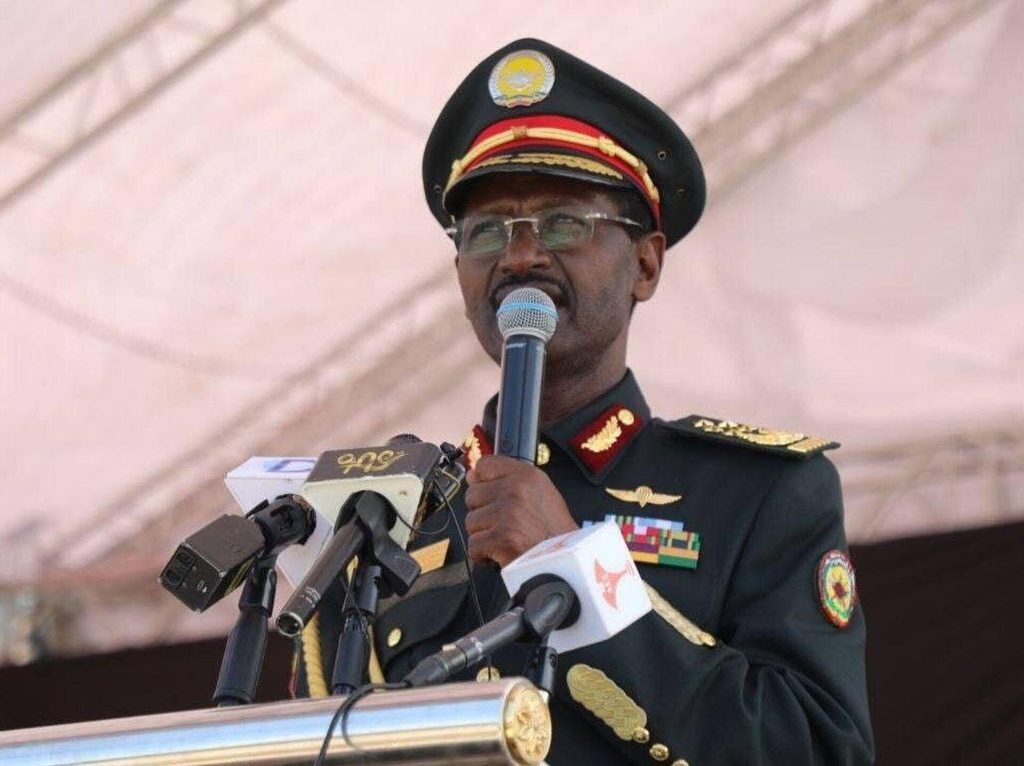
Ethiopian army chief Field Marshal Birhanu Jula said Eritrea had directed a renewed offensive against federal forces in northern Ethiopia, with Egypt allegedly providing weapons, military supplies and logistical assistance.
Speaking during engagements in the Tigray regional capital of Mekelle last week, Jula accused Asmara of attempting to unite multiple armed movements and regional powers against the government of Prime Minister Abiy Ahmed.
He alleged that the campaign involved the Tigray People’s Liberation Front (TPLF), Amhara-based Fano fighters, Oromo insurgents, Egypt and the Sudanese army.
“The ultimate objective was to unite these forces to destroy Ethiopia and overthrow its government,” Jula said.
The military chief said Ethiopian forces had repelled a fourth wave of attacks targeting federal military positions across the Amhara and Afar regions.
He claimed that commanders behind the offensive subsequently fled to Eritrea, taking refuge in Adi Keyh, Mendefera and the capital, Asmara.
Jula also accused Eritrea of seeking to turn northern Ethiopia into a battlefield, exploiting internal divisions while shielding its own territory from military confrontation.
The allegations could not be independently verified.
Ethiopia raises security concerns internationally
Addis Ababa has intensified diplomatic efforts to draw international attention to what it describes as Eritrean interference in its internal affairs.
During a November 5 meeting with European Union representatives, Ethiopian State Minister for Foreign Affairs Hadera Abera accused Eritrean forces of continuing to infiltrate Ethiopian territory and supplying weapons to armed groups operating inside the country.
The Ethiopian Foreign Ministry described these activities as serious threats to its sovereignty, territorial integrity and national security.
On October 9, Ethiopia formally notified the UN Security Council that it was exercising its right to self-defence under Article 51 of the UN Charter in response to alleged Eritrean military aggression.
Independent reporting by The Associated Press in October also cited conflict monitors and military sources reporting the presence of Eritrean troops inside northern Ethiopia.
Asmara rejects accusations
Eritrean Information Minister Yemane Meskel on Tuesday rejected Ethiopia’s allegations, insisting that Eritrean troops remained within the country’s internationally recognised borders.
He accused Jula of making territorial claims over Eritrea after the Ethiopian commander referred to Dogali, Gundet and Adulis during discussions concerning Tigray’s historical significance.
Meskel alleged that Ethiopia’s ruling Prosperity Party was attempting to mobilise support for military aggression against Eritrea.
Eritrea and Egypt have previously denied Ethiopian accusations of supporting armed groups seeking to destabilise the country.
Growing regional confrontation
Relations between Ethiopia and Eritrea have deteriorated dramatically since the two countries fought alongside each other during the 2020–2022 Tigray war.
Renewed fighting in northern Ethiopia in September has further undermined the Pretoria peace agreement, raising fears of direct military confrontation between Addis Ababa and Asmara.
Tensions have also been compounded by Ethiopia’s pursuit of Red Sea access, its longstanding dispute with Egypt over Nile waters and escalating friction with Sudan’s SAF government.
Ethiopia maintains that maritime access is essential to its economic development, while Eritrea accuses its landlocked neighbour of seeking control of the strategic port of Assab by force.
The overlapping disputes have heightened concerns that Ethiopia’s internal conflicts could become part of a broader regional confrontation stretching from the Red Sea to Sudan.