Russian Africa Corps forces have deployed a new type of attack drone in Mali as Moscow-backed troops intensify military operations against Islamist militants and separatist rebels following a major insurgent offensive in April.
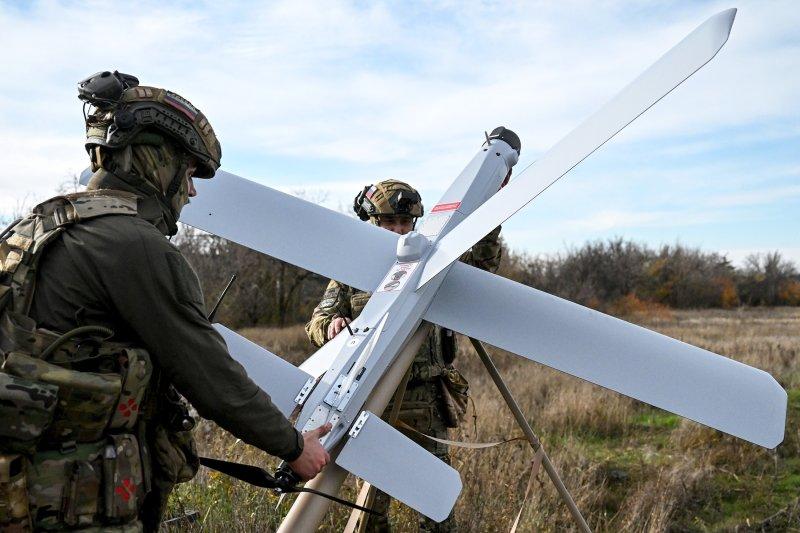
An analysis by the US-based Conflict Insights Group (CIG), shared with Reuters, found that Russian forces were increasingly deploying ZALA Lancet one-way attack drones, while the frequency of air and drone strikes across Mali had more than doubled since April.
Deaths resulting from the strikes have increased by nearly 150% over the same period.
Africa Corps, which operates under Russia’s Defence Ministry, has approximately 2,500 personnel fighting alongside Mali’s military government against separatist groups and militants affiliated with al-Qaeda and Islamic State (IS).
In April, Tuareg separatists and al-Qaeda-linked fighters launched coordinated attacks across Mali, capturing several towns and killing the country’s defence minister at his residence near the capital, Bamako.
Russian and Malian forces have since regained some territory, but researchers warned that mounting civilian casualties could ultimately strengthen insurgent groups by driving recruitment.
Neither the Russian nor the Malian government responded to requests for comment.
Russia shifts battlefield tactics
Mali turned to Moscow for military assistance following successive coups in 2020 and 2021, moving away from its traditional Western security partners.
Russia initially deployed Wagner Group fighters before Africa Corps assumed responsibility for operations in the country in 2025.
Despite Russian military assistance, the Tuareg-led Azawad Liberation Front and al-Qaeda-affiliated Jama’at Nusrat al-Islam wal-Muslimin (JNIM) continue to control substantial areas of Mali.
Following battlefield setbacks in April, Russian forces expanded their reliance on attack drones and intensified aerial bombardments, CIG said.
Russian troops have deployed several drone systems, including the Iranian-designed Shahed and its Russian-manufactured variants, the Garpiya-A1 and Geran-2.
However, researchers identified the introduction of the Lancet, manufactured by Russia’s ZALA Aero, as a particularly significant development.
The weapon operates alongside a reconnaissance drone used to identify and track potential targets.
CIG documented at least 10 strikes since April involving the two systems operating together, including one incident in which researchers assessed that a Lancet had almost certainly targeted a vehicle carrying civilians.
Air strike deaths climb
Citing figures from conflict monitoring organisation ACLED, researchers said recorded air strikes across Mali had increased from fewer than seven per week to nearly 16 following the April offensive.
Weekly deaths attributed to those strikes rose from fewer than 25 to more than 60.
The findings raise questions about the long-term effectiveness of Russia’s military strategy in Mali, with researchers warning that civilian casualties could undermine counterinsurgency efforts.
“Russia’s Africa Corps has turned Mali into a sales pitch for suicide drones — civilians are dying in the demonstration,” said Justin Lynch, managing director of CIG.