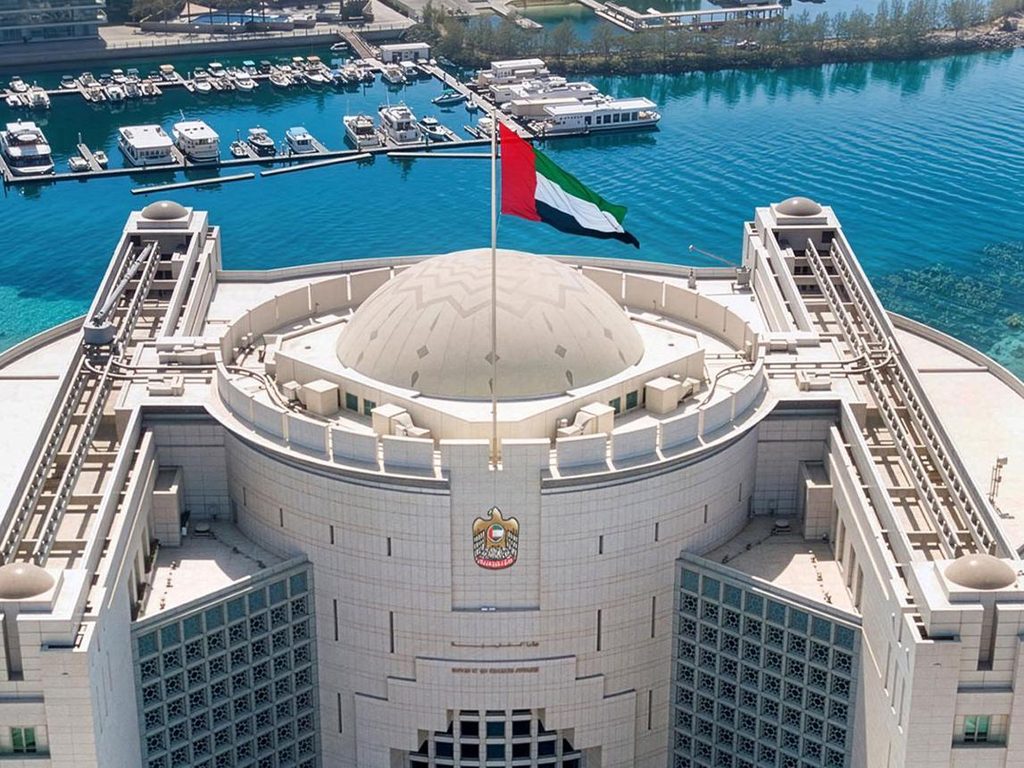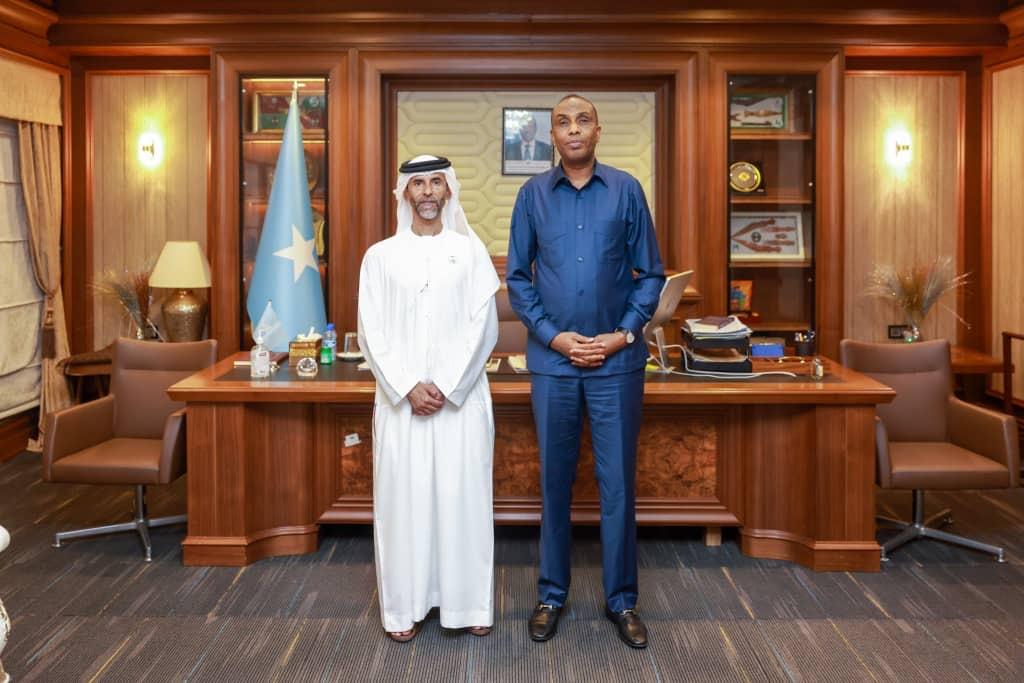
Somalia’s federal government on Thursday ordered the United Arab Emirates ambassador to leave the country within 72 hours and recalled its own envoy from Abu Dhabi, escalating a diplomatic confrontation that threatens years of Emirati security, economic and humanitarian cooperation.
The decision was taken during a cabinet meeting chaired by Prime Minister Hamza Abdi Barre, following a review of alleged Emirati interference in Somalia’s internal affairs.
Information Minister Abdifatah Kasim Mohamud accused the UAE of violating Somalia’s sovereignty, describing its actions as an “open invasion”, without specifying what immediately prompted the expulsion.
The move marks a further deterioration in relations between Mogadishu and Abu Dhabi, amid mounting domestic political pressure on Somali President Hassan Sheikh Mohamud.
UAE rejects Mogadishu’s accusations
The diplomatic escalation follows a televised address by Mohamud on Tuesday in which he accused Abu Dhabi of establishing military facilities, supporting armed forces outside federal government control and providing financial and political assistance to regional administrations opposed to Mogadishu.
Anwar Gargash, diplomatic adviser to the UAE president, dismissed the Somali leader’s accusations on Wednesday, questioning the consistency of his policies and whether personal political calculations were being placed above Somalia’s national interests.
Gargash stressed that the Emirates had supported Somalia through some of its most difficult periods, warning that internal struggles for power should not be allowed to drag the country into regional confrontations.
He also reaffirmed the UAE’s commitment to its longstanding relationship with the Somali people, despite disagreements with the country’s political leadership.
Expulsion amid a deepening constitutional crisis
The confrontation comes as Mohamud faces mounting questions over the legitimacy of his presidency following a landmark Supreme Court ruling earlier this month.
On November 5, Somalia’s highest court ruled that Mohamud’s presidential mandate had expired on May 15, rejecting his administration’s attempts to extend its tenure through constitutional amendments.
The court ordered elections within 90 days and restricted the federal government to caretaker functions pending the vote.
Mohamud’s administration subsequently rejected the ruling, maintaining that the president could remain in office until May 2027.
The decision to expel the Emirati ambassador comes against this backdrop of political uncertainty, institutional confrontation and growing divisions between Mogadishu and regional administrations.
Turning against a longstanding security partner
Mogadishu’s latest diplomatic measures threaten a security partnership that has played a significant role in strengthening Somalia’s military capabilities against the Al-Shabaab insurgency.
The UAE trained hundreds of Somali soldiers between 2014 and 2018 and continues to fund salaries and logistical operations for approximately 3,400 Somali military police and special forces personnel in and around Mogadishu, according to Somali sources cited by Reuters.
Emirati personnel have also lost their lives while helping rebuild Somalia’s armed forces.
In February 2024, four Emirati military personnel and a Bahraini officer were killed in an attack claimed by Al-Shabaab at a military training facility in Mogadishu.
Regional administrations reject Mogadishu’s approach
Relations between the two countries deteriorated sharply in January when Somalia’s federal government announced the cancellation of agreements with Abu Dhabi covering defence, security and port operations.
However, Somaliland, Puntland and Jubaland rejected Mogadishu’s decision, maintaining their respective relationships with the Emirates.
The dispute exposed the widening divisions between Somalia’s central government and regional administrations over political authority, constitutional reforms and international partnerships.
Among the UAE’s most significant economic commitments in the Horn of Africa is Dubai-based DP World’s investment of up to $442 million in developing and expanding Somaliland’s Berbera port.
The project aims to transform Berbera into a major regional commercial gateway, attracting foreign investment, generating employment and improving trade connectivity across East Africa.
Humanitarian cooperation at risk
The Emirates has also been a longstanding provider of humanitarian assistance to Somalia, supporting communities affected by natural disasters, displacement and food insecurity.
In January 2025, Abu Dhabi delivered 700 tonnes of emergency food assistance to Somalia, with the relief programme expected to benefit approximately 150,000 people.
The latest diplomatic escalation risks placing such cooperation under additional strain at a time when Somalia continues to face armed insurgency, economic hardship and humanitarian emergencies.
For Mogadishu, the confrontation could carry significant military, economic and diplomatic costs, particularly as its government struggles to resolve domestic political disputes and maintain cooperation with regional administrations.
The UAE Foreign Ministry had not immediately responded to Thursday’s expulsion order.