The United States is strengthening its military defences across the Middle East and tightening security around senior Trump administration officials amid intelligence reports of potential Iranian attacks involving radioactive and chemical materials.
A media source close to the White House told Erem News that Washington was examining intelligence suggesting Tehran could be considering attacks against senior US officials using a so-called dirty bomb or chemical weapons.
The reported threats have prompted heightened security measures, including the relocation of senior officials to fortified locations and an accelerated military build-up across the Middle East.
Recent documents reportedly show that the Pentagon is seeking to construct 17 reinforced concrete bunkers across five locations in the region within 45 days.
The shelters will feature steel doors, concrete barriers and reinforced sandbag protection designed to withstand missile and drone attacks against US military personnel.
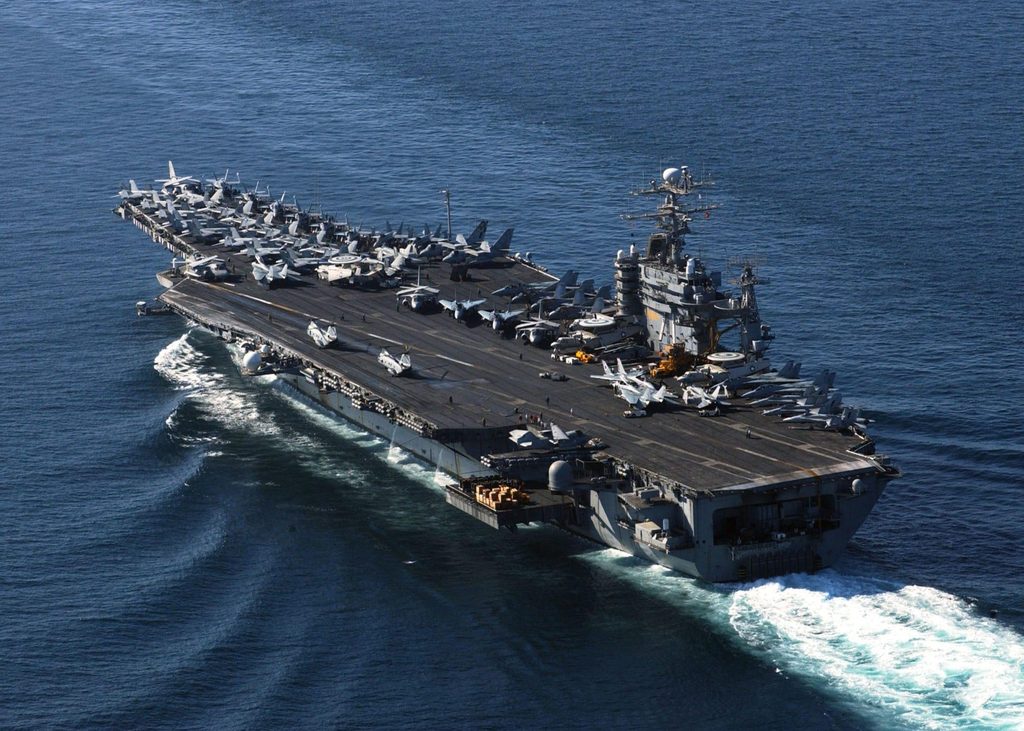
Washington has also expanded its naval presence in the Arabian Sea, with the USS Theodore Roosevelt reportedly joining the USS George Washington and USS George H.W. Bush as the United States intensifies its maritime and economic blockade of Iran.
Washington assesses potential threats
The source said the Trump administration regarded the intelligence reports as an indication of mounting pressure on Tehran following US military strikes and economic restrictions.
Washington has reportedly been coordinating with its allies to assess the threats as diplomatic efforts have stalled over Iran’s uranium enrichment programme.
While US intelligence assessments suggest Tehran may be developing retaliatory options, the reported preparations do not necessarily indicate an imminent attack.
However, intercepted communications allegedly referring to materials stored inside the United States and potential targets prompted additional precautions by the Secret Service.
Treasury Secretary Scott Bessent was reportedly relocated to a military residence as part of those measures.
Washington is also pursuing efforts to restore foreign intelligence surveillance authorities to strengthen its ability to monitor potential threats.
Preparing for a broader confrontation
American political researcher Andrew Leber told Erem News that Tehran could use threats involving unconventional weapons or sleeper cells as a means of psychological and political deterrence.
However, he cautioned that developing theoretical attack plans was significantly different from possessing the operational capabilities needed to penetrate heightened US security measures.
American military installations in the Middle East remain considerably more vulnerable to Iranian missile and drone attacks because of their geographical proximity, he added.
International affairs analyst Ahmed al-Anani said the reported threats reflected the strategic pressure facing Tehran following military setbacks, economic restrictions and the weakening of its regional influence.
He said the relocation of US officials and construction of fortified military shelters demonstrated the extent of Washington’s preparations for potential Iranian retaliation.
The Trump administration continues to balance economic and military pressure on Tehran with preparations for a potentially extensive military response.
Analysts warned that any unconventional attack conclusively linked to Iran could trigger a broader US offensive targeting the country’s critical infrastructure, military assets and Islamic Revolutionary Guard Corps command centres.