Egypt has expanded its intelligence and logistical support for Sudan’s army in the north and east of the country, the Sudanese outlet Al-Rakoba reported on Monday. Sudanese analysts cited by the outlet say that support is helping army chief Abdel Fattah al-Burhan hold territory while giving Cairo greater influence over his wartime decisions.
The report identifies Port Sudan, the Red Sea coast and areas near Sudan’s borders with Egypt and Eritrea as the main centres of Egyptian activity. For President Abdel Fattah el-Sisi, the analysts say, eastern Sudan serves two purposes. It is where Egypt can help sustain Burhan’s forces and where Cairo can work more closely with Eritrea as both countries confront disputes with Ethiopia.
Retired Sudanese Lieutenant Colonel Mohamed Abdallah told Al-Rakoba that Egypt’s role extends beyond securing its southern border. In his assessment, Cairo provides technical assistance, intelligence and logistical support to help the Sudanese Armed Forces (SAF) retain control of state institutions in the north and east and keep them out of the hands of the Rapid Support Forces (RSF).
Sudanese civilian figures and political analysts cited by the outlet said Burhan’s command had come to depend heavily on Cairo for both military assistance and diplomatic backing. Critics of Egypt’s policy argue that the more confidently Burhan can count on that support, the less pressure he faces to negotiate a settlement. Al-Rakoba did not quantify the assistance or provide independent confirmation of the scale of Egypt’s intelligence presence.
Why eastern Sudan matters to Cairo
Abdallah said eastern Sudan gives Egypt a direct route for military and intelligence coordination with Eritrea. For Cairo, closer ties with Asmara would extend its influence along the western shore of the Red Sea. For Sudan, the risk is that decisions about its eastern border become entangled in two disputes with Ethiopia — one over the waters of the Nile and the other over Ethiopia’s pursuit of access to the sea.
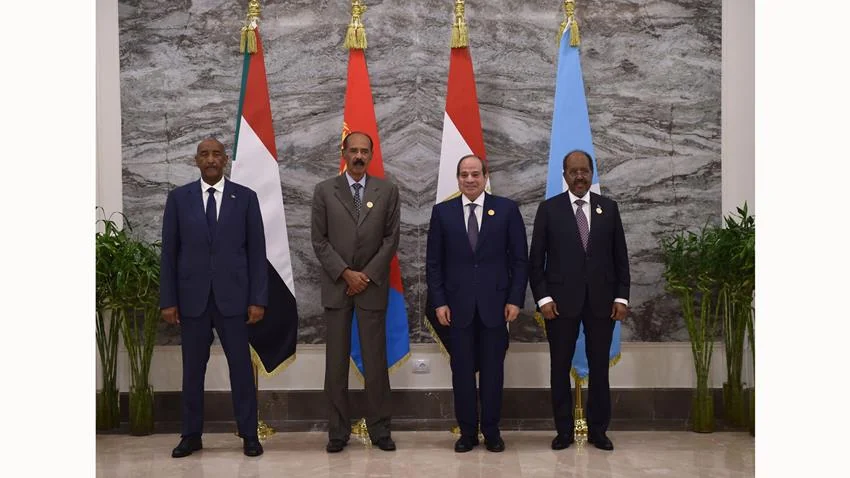
Those interests came together publicly on October 4, when Sisi hosted Burhan, Eritrean President Isaias Afwerki and Somali President Hassan Sheikh Mohamud in New Alamein. In their joint declaration, the four leaders backed freedom of navigation but said responsibility for governing the Red Sea belonged exclusively to the countries on its shores. They also opposed unilateral steps on the Nile that could harm water use in downstream Egypt and Sudan.
Al-Rakoba reported that further consultations took place in Aswan and Cairo. Egypt and its partners have presented their cooperation as a way to protect state institutions in Sudan and Somalia and preserve regional security. Critics see an effort to put pressure on landlocked Ethiopia over its maritime ambitions and the Grand Ethiopian Renaissance Dam.