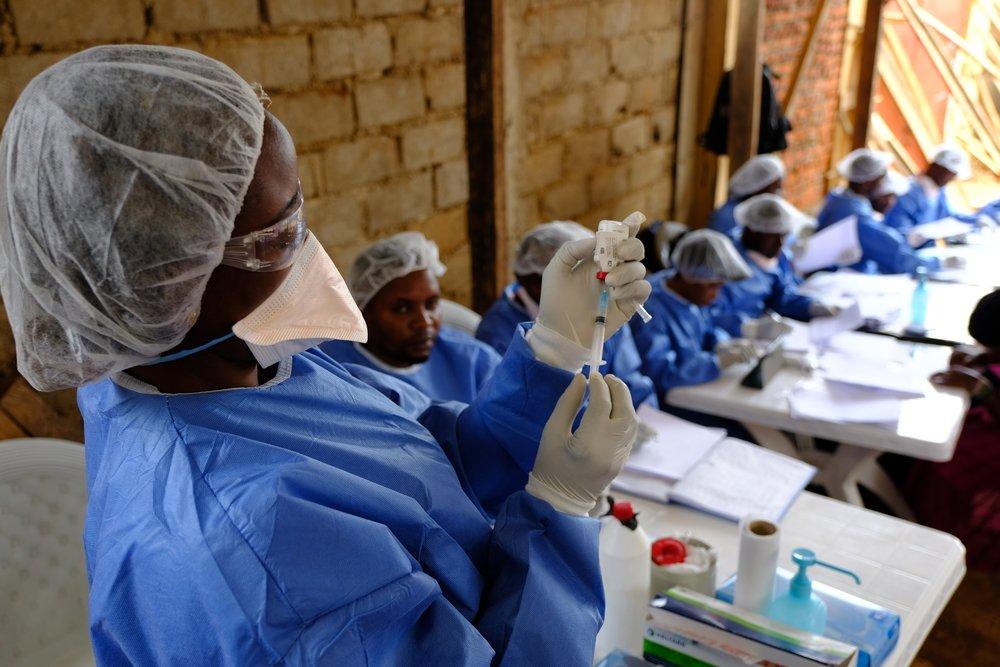
Doctors Without Borders (MSF) has launched a major Ebola vaccination study in the Democratic Republic of Congo to assess whether the Ervebo vaccine can provide protection against the Bundibugyo virus during the country’s ongoing outbreak.
The study will follow around 20,000 health and frontline workers in the eastern provinces of Ituri and North Kivu, MSF said on Saturday.
Congo began vaccinating frontline and health workers last month after receiving an allocation of 70,000 Ervebo doses from the global Ebola vaccine stockpile for a Phase 3 clinical trial.
MSF said the study, launched at a World Health Organization training centre in Bunia, the capital of Ituri province, will run for nine to 12 months.
Vaccinations will take place during the first three months, followed by at least six months of monitoring.
“The study will generate real-world data on the use of the ERVEBO vaccine and its potential effectiveness in the current outbreak context,” MSF said.
There is currently no approved vaccine or specific treatment for the Bundibugyo virus.
Ervebo is licensed for protection against Ebola virus disease caused by Zaire ebolavirus, but researchers believe it could provide some protection against the Bundibugyo strain.
“Although ERVEBO was not originally developed to protect against Bundibugyo, preliminary data suggest that it may offer some degree of protection against the virus,” said Guyguy Manangama, an epidemiologist and MSF deputy director of operations.
“In a race against time such as the one the DRC is currently facing, we must use every tool available to us.”
According to the latest Congolese Health Ministry figures cited in the announcement, the outbreak has resulted in 7,541 confirmed infections and 3,639 related deaths.
Cases have been reported across 62 health zones in seven provinces: Haut-Uele, Ituri, North Kivu, South Kivu, Bas-Uele, Tshopo and South-Ubangi.
MSF warned that efforts to contain the outbreak remain difficult despite signs that transmission may be slowing in some areas.
The organisation said new cases were continuing to appear in previously unaffected and poorly prepared locations, while basic outbreak-control measures remain inadequate in some of the original hotspots.