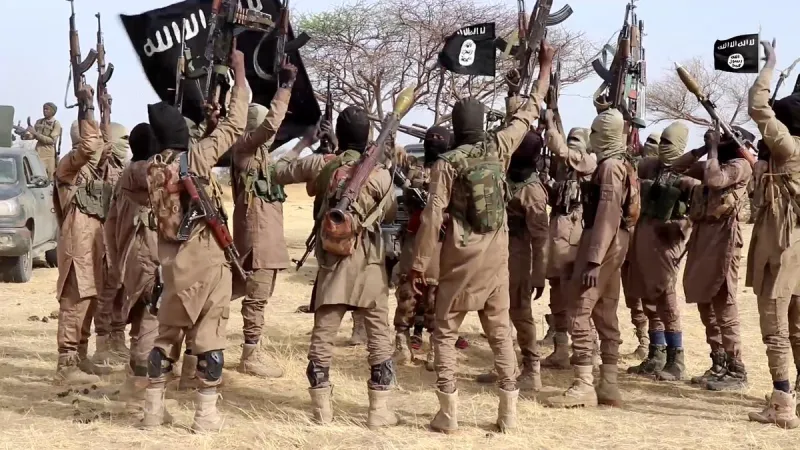
Al-Qaeda-linked terrorists have tightened pressure on Mali’s capital, establishing checkpoints on key routes into Bamako while urging citizens to rise up and overthrow the military government.
The escalation follows coordinated nationwide attacks launched on April 25 by the Al-Qaeda affiliate Jama’at Nusrat al-Islam wal-Muslimin (JNIM), in apparent coordination with the Tuareg-led Azawad Liberation Front (FLA).
Security sources said terrorist fighters had set up positions along major roads leading into Bamako, including the RN24 to the northwest, the RN7 to the south and the RN6 to the east, with additional presence reported on the RN5 southwest corridor.
While the extent of their control remains unclear, early disruptions are emerging. A local businessman said goods were already being blocked from entering the capital, raising fears of a tightening siege on the city.
In a rare French-language statement, JNIM called on Malians across political, military and religious lines to unite against what it described as a “terrorist junta.”
“We call upon all sincere patriots, without exception, to rise up and unite,” the group said, urging the overthrow of the authorities and the establishment of governance based on Sharia law.
The statement also warned against a power vacuum, calling for what it described as a “peaceful, responsible, and inclusive transition” — rhetoric seen as an attempt to broaden its appeal.
The developments come days after one of the most significant waves of attacks in Mali in recent years, which targeted military positions across the country and killed the defence minister. Northern strongholds, including Kidal, were seized in the aftermath.
Separately, the FLA advanced further in the north on Friday, capturing the strategic town of Tessalit, according to multiple sources. Video footage verified by Reuters showed fighters entering the town and raising the group’s flag.
Mali’s military leadership, which seized power in coups in 2020 and 2021, has insisted the situation is under control. Transitional leader Assimi Goita said earlier this week that authorities would “neutralise” the armed groups.
However, the spread of terrorist checkpoints around Bamako and continued territorial gains in the north point to a widening conflict and growing pressure on the junta.