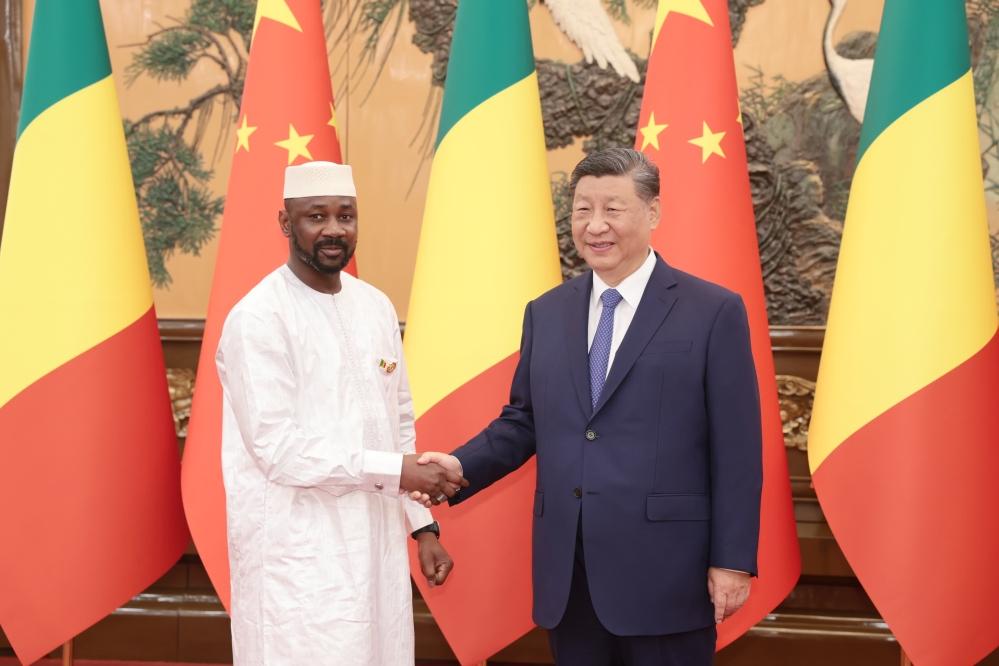
China’s expanding economic and security presence in Africa’s Sahel is complicating European Union efforts to rebuild ties with the region, where Russia has already emerged as a major strategic partner following the withdrawal of Western forces.
The decision by Sahel countries to diversify their international partnerships has pushed the region down the EU’s foreign policy agenda, forcing Brussels to reconsider its approach amid growing competition from Beijing and Moscow.
EU Special Representative for the Sahel Birgitte Nygaard Markussen, whose initial mandate runs until August 31, 2027, faces an increasingly crowded geopolitical landscape as Europe seeks to restore its influence.
China expands its footprint
China’s involvement in the Sahel largely reflects its broader African strategy, centred on economic cooperation, infrastructure development and access to natural resources.
A French political source told Erem News that the European Parliament had prepared a report identifying Brussels’ principal competitors in the Sahel and West Africa, which would help shape a new strategy for developing balanced partnerships with regional governments.
China’s growing involvement in oil, mining and security cooperation has attracted particular attention in Brussels.
France’s military withdrawal and declining Russian arms exports following the outbreak of the Ukraine war in 2022 have created new opportunities for Chinese defence manufacturers.
According to the report, China accounts for approximately 26% of weapons imports in West Africa, surpassing several traditional suppliers, including France, Russia and Turkey.
Mali and Burkina Faso have increasingly relied on Chinese-made armoured personnel carriers in counterinsurgency operations against armed groups.
Unlike Russia, however, China’s engagement remains predominantly commercial, driven largely by state-owned enterprises rather than direct military intervention.
Investment challenges in Niger
Niger has become a major destination for Chinese energy investment, with a state-owned Chinese petroleum company developing the Agadem oilfield and leading construction of a nearly 2,000-kilometre pipeline connecting Niger to neighbouring Benin.
The project, valued at approximately $6 billion, ranks among Africa’s largest oil infrastructure investments.
However, political instability following Niger’s military coup, border closures and mounting disputes with Chinese companies have exposed vulnerabilities in Beijing’s investments.
The expulsion of Chinese oil executives and the revocation of the Soluxe Hotel’s operating licence reflect broader efforts by Niger’s military-led government to renegotiate agreements and assert greater control over foreign investors.
Mining tensions in Mali
Chinese economic activities have also faced increased scrutiny in Mali, where Chinese nationals operate in largely unregulated artisanal mining alongside larger international companies.
Gold mine collapses in early 2025 that killed more than 50 people prompted Malian authorities to intensify oversight of mining operations.
Authorities subsequently demanded an immediate halt to illegal mining involving Chinese nationals and summoned Beijing’s ambassador to discuss environmental concerns, including the use of mercury.
However, the involvement of independent Chinese miners rather than government-backed enterprises is considered unlikely to significantly damage bilateral relations.
Europe’s declining influence
The EU’s standing across the Sahel has deteriorated following a series of military coups that saw new governments terminate longstanding security arrangements with France.
European positions on international crises, including the Ukraine war and conflicts in the Middle East, have further damaged Brussels’ credibility among sections of the region’s population.
Accusations of Western double standards have gained traction in regional political discourse, helping Russia emerge as a preferred security partner for several Sahel governments since 2022.
With Moscow consolidating its security relationships and Beijing expanding its economic and defence ties, Europe faces an increasingly difficult challenge in rebuilding its influence across the strategically important region.