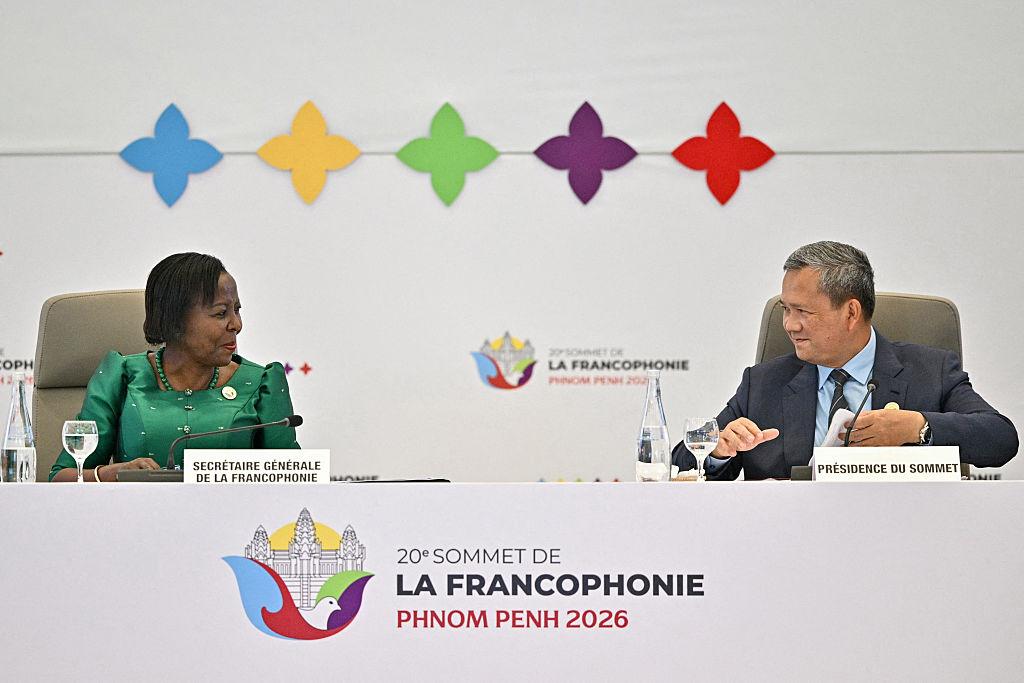
The Democratic Republic of Congo has dealt Rwanda a diplomatic setback after members of the International Organisation of La Francophonie (OIF) blocked Secretary-General Louise Mushikiwabo from seeking a third term amid tensions over the war in eastern Congo.
Delegations attending the organisation’s 20th summit in Phnom Penh, Cambodia, from November 14 to 16 failed to agree on a successor, postponing the election for one year.
Under a compromise reached by member states, Mushikiwabo will remain in office until the next election on condition that she does not seek another term.
The agreement represents a diplomatic victory for Kinshasa, which had opposed the Rwandan candidate’s reappointment over Kigali’s backing of M23 rebels fighting Congolese forces in the country’s eastern provinces.
Senegal, Togo and Benin reportedly proposed the compromise following extensive consultations with other African delegations.
France and the Democratic Republic of Congo welcomed the agreement, while Mushikiwabo complained of intense pressure to withdraw her candidacy. Rwanda did not immediately comment.
Kinshasa had threatened to withdraw from the organisation if Mushikiwabo secured another term, potentially further weakening the bloc following the departure of Burkina Faso, Mali and Niger.
Congo nominated Juliana Lumumba, daughter of independence leader Patrice Lumumba, to challenge Mushikiwabo, although her candidacy struggled to secure sufficient support.
French President Emmanuel Macron reportedly urged Rwandan President Paul Kagame before the summit to withdraw Mushikiwabo’s candidacy as part of efforts to secure a consensus around former Romanian Prime Minister Dacian Cioloș.
Kagame rejected the initiative, accusing Paris of pursuing its own political agenda and national interests within the organisation.
The leadership dispute has exposed growing divisions within the Francophonie, which has increasingly sought a diplomatic and political role beyond its traditional focus on cultural and linguistic cooperation.
It has also highlighted Africa’s growing influence within the French-speaking world and mounting resistance to France’s historical dominance over the organisation.
According to demographic projections cited in a parliamentary report, Africa could account for up to 85 percent of the world’s French speakers by 2050.