A deadly gold mine collapse along the border between the Central African Republic and Cameroon has triggered growing political anger over illegal mining, weak oversight and the conditions facing artisanal workers in the region.
The landslide struck the Zamboye gold mining site in the Central African Republic near the Cameroonian border on Tuesday, August 18, killing dozens of people and leaving many others missing beneath the rubble, according to preliminary reports.
Authorities have continued searching for victims as opposition figures in both countries accuse governments of failing to properly regulate dangerous mining operations.
Investigation launched in Central African Republic
The public prosecutor in Baboua has opened an investigation into the disaster to determine its causes and establish responsibility.
A senior government delegation led by Central African Republic Mines Minister Rufin Benam-Beltoungou also travelled to the site to assess the situation and coordinate the official response.
Martin Ziguélé, leader of the Movement for the Liberation of the Central African People, criticised what he described as a lack of effective state supervision and called for a parliamentary investigation.
Ziguélé questioned how hundreds of miners had been allowed to work in an area vulnerable to landslides and collapses, arguing that repeated fatal accidents demonstrated serious failures in the management of the country’s gold sector.
Cameroon faces questions over illegal mining
Cameroonian authorities said at least four of their citizens were among those killed, while others were injured.
Cameroon’s Ministry of Mines said it was closely following developments across the border and announced measures aimed at tightening control over mining sites, including compliance with environmental and tax requirements.
Roger Justin Noah, secretary-general of the Cameroon Renaissance Movement, said tackling illegal mining should become a national priority.
He accused networks involved in the gold trade of exploiting weak governance and said illicit mining activities were costing Cameroon more than 4 trillion CFA francs in lost revenue.
Noah argued that the money being lost through poorly regulated mining could otherwise be used to finance hundreds of health facilities and other public services.
Hundreds were working at site
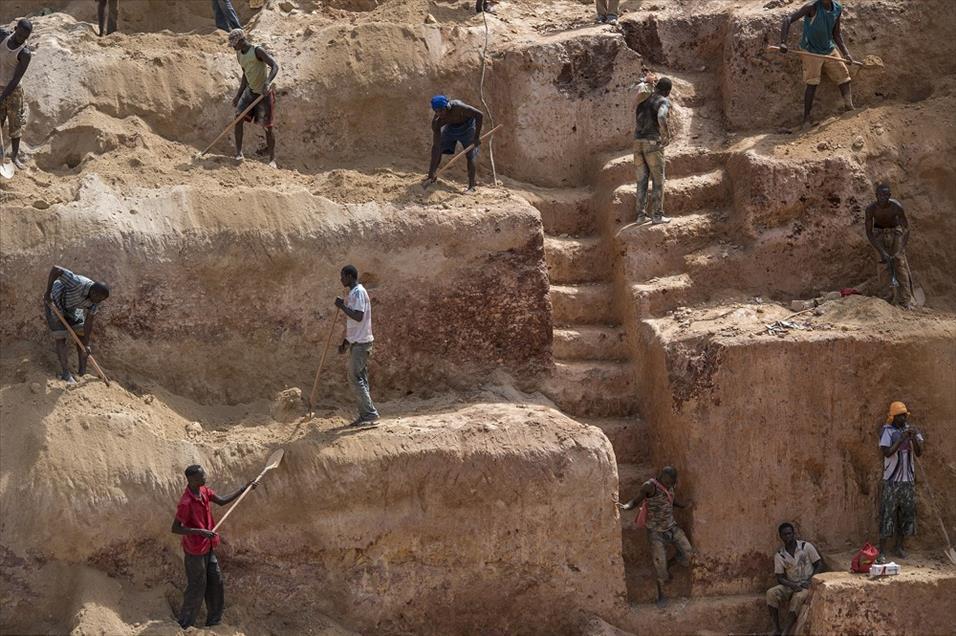
The collapse reportedly occurred during heavy rain when part of the wall of an open mining trench gave way.
Around 500 people were believed to have been working at the site, which had already been considered extremely dangerous.
Large quantities of earth buried miners, many of them young men, as the side of the excavation collapsed.
With specialised rescue teams initially unavailable, miners and residents launched their own search efforts, digging through the debris with shovels, picks and their bare hands.
Dozens of injured people were taken to Baboua regional hospital, while families gathered in the area awaiting information about relatives who remained missing.
Cross-border rescue effort
Although the disaster occurred inside Central African Republic territory, communities on both sides of the border joined the rescue operation.
Residents from the Cameroonian town of Garoua-Boulaï reportedly crossed into the area to assist local communities in searching for survivors and recovering bodies.
The Zamboye disaster has also renewed concerns about the dangers posed by artisanal gold mining during the rainy season, when unstable soil and poorly reinforced excavations are particularly vulnerable to collapse.
A similar mining accident was reported in the Bé-Mbari gold-producing area near the border in June, killing dozens of workers.
The latest tragedy has intensified calls in both Cameroon and the Central African Republic for stronger regulation of artisanal mining, greater government oversight and action against criminal networks accused of profiting from the largely informal gold trade.