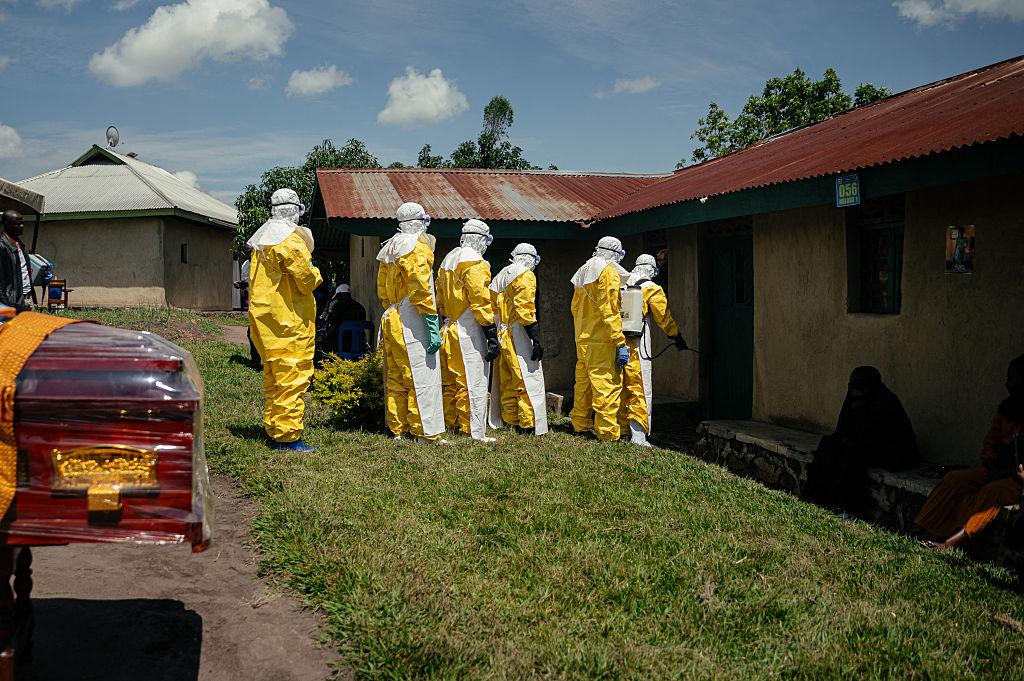
More than 2,500 people have died in the Democratic Republic of Congo’s worsening Ebola outbreak, which is spreading rapidly across a vast area of the country, a senior United Nations official said on Friday.
Julien Harneis, the UN’s senior Ebola coordinator, said the epidemic was expanding faster than response teams could contain it and warned that available funding could run out within weeks.
Speaking by video from Bunia in northeastern Congo, Harneis said the outbreak now covers an area larger than France and is unfolding in communities already weakened by decades of conflict and humanitarian crises.
“The Ebola outbreak is growing exponentially,” Harneis said, adding that the disease was spreading “faster and wider than the Ebola response.”
Congo’s 17th recorded Ebola epidemic became the country’s largest ever by case numbers in late July, surpassing the 2018-2020 outbreak.
The current epidemic is caused by the Bundibugyo strain of Ebola, for which there are currently no approved vaccines or treatments.
Health workers have been particularly badly affected. Harneis said around 160 healthcare workers had contracted the virus and 43 had died.
Frontline teams are also facing growing hostility from frightened communities. Ambulances have been attacked, healthcare facilities targeted and aid workers assaulted as fear and misinformation surrounding the disease spread.
Harneis said more than 260 attacks on health workers had been recorded over the past six months, with eight healthcare workers killed.
“People are already risking their lives to deal with Ebola,” he said, describing the violence as an additional threat to teams working to control the epidemic.
Some humanitarian workers have reported that conspiracy theories portraying Ebola as a hoax have fuelled distrust. Restrictions on traditional burial practices have also triggered anger in some communities, particularly when families are prevented from personally burying relatives who have died from the disease.
Harneis said years of cuts to international aid had weakened the capacity of humanitarian organisations to respond effectively to the crisis.
Financing the response has become another major challenge. Tens of thousands of people are involved in efforts to contain the outbreak, but disruptions to banking services have complicated salary payments and the movement of cash.
Commercial flights were suspended by the government as part of measures linked to the outbreak, disrupting the delivery of cash to banks in affected regions.
Harneis warned that without additional international support, existing funding for the Ebola response could be exhausted within weeks, further undermining efforts to contain an epidemic that continues to expand across northeastern Congo.