A former television news presenter has been crowned king of Uganda’s Tooro Kingdom following a disputed succession that divided the royal family after the death of one of the world’s youngest monarchs.
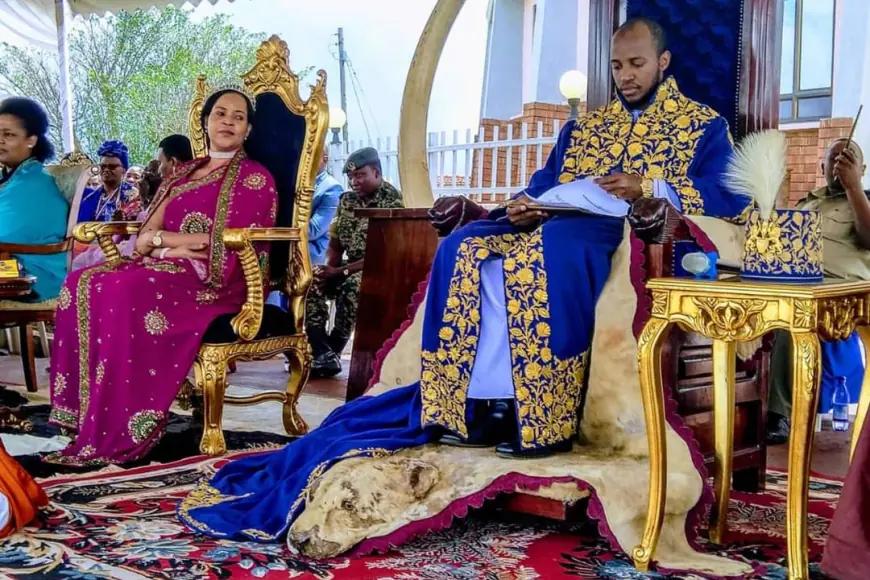
Edward Rukidi Kijanangoma, 56, formally assumed the throne on Tuesday under the royal name Edward Rukidi Nyabongo I, becoming the new monarch of the Batooro people during an elaborate ceremony in the western city of Fort Portal.
His coronation followed weeks of controversy over the succession to King Oyo Nyimba Kabamba Iguru Rukidi IV, who died of cancer in the United States on August 27 at the age of 34.
The late king’s mother and sister have challenged Kijanangoma’s appointment, claiming Oyo left behind a previously undisclosed son who should inherit the throne.
Despite their objections, a 21-member committee from the royal Babiito clan selected Kijanangoma, a cousin of the late monarch, to succeed him.
The decision cleared the way for Tuesday’s coronation, although questions surrounding the alleged heir remain unresolved.
Ancient rituals mark new king’s coronation
The ceremony at Karuziika Palace brought together royal relatives, traditional leaders and residents celebrating the beginning of a new reign.
Kijanangoma underwent a series of traditional rituals, including the sacrifice of a bull and the sprinkling of a hen’s blood.
He also took part in a symbolic battle for the crown after making his way to the palace between midnight and 3 a.m.
In the days leading up to the ceremony, relatives gathered at the royal residence as traditional drummers and dancers performed in ceremonial clothing, including orange bark-cloth shawls.
Residents prepared traditional attire and rehearsed praise songs to welcome the new king.
Kijanangoma previously worked as a news anchor and editor at Uganda’s state broadcaster, UBC, where former colleagues described him as a humble and approachable journalist.
Royal family challenges succession
The coronation proceeded despite objections from the late king’s mother, Best Kemigisa, and his sister, Princess Ruth Komuntale.
They maintain that Oyo left behind a young son and a will identifying the child as his rightful successor.
Oyo was unmarried and had not publicly acknowledged any children during his lifetime.
The kingdom’s prime minister first referred to the existence of a child in a statement announcing the monarch’s death.
However, Charles Kayondo Kamurasi, head of the Babiito royal clan and the traditional authority responsible for selecting the king, said the clan had no knowledge of the alleged heir.
Kamurasi maintained that the succession committee had followed the kingdom’s established customs in choosing Kijanangoma.
The dispute has also drawn attention to the role of Uganda’s central government in the succession process.
Reuters reported, citing a source familiar with the matter, that the government had pushed through the committee’s decision despite objections from the late king’s mother.
From toddler king to a disputed succession
Oyo became an international figure in 1995 when he inherited the throne at just three years old following the death of his father.
Images of the young monarch wearing royal robes and a crown attracted worldwide attention, making him one of the most recognisable traditional rulers in Africa.
He died while receiving treatment for angiosarcoma, an aggressive form of cancer, and was buried at the Karambi Royal Tombs in Fort Portal on September 12.
Uganda is a constitutional republic, but several pre-colonial kingdoms retain considerable cultural importance.
Although their monarchs have no formal political authority, the kingdoms remain influential institutions in preserving traditional customs, languages and community identity.
For Tooro, Tuesday’s coronation marks the beginning of a new reign, even as the royal family’s disagreement over the succession remains unresolved.