Ghana said support is growing among Western countries for a campaign seeking reparations for the trans-Atlantic slave trade, with the initial focus on returning cultural artifacts taken from Africa.
Ghanaian Foreign Minister Samuel Okudzeto Ablakwa said restitution would be the first stage of a broader reparatory justice effort that could later include formal apologies, debt relief and financial compensation.
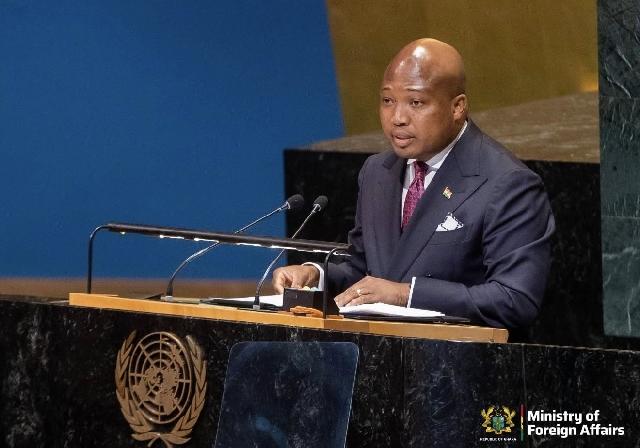
Speaking at an event co-hosted by Ghana, Germany and France on the sidelines of the UN General Assembly, Ablakwa said several European countries had shown greater willingness to engage with the initiative.
The campaign is based on a 19-point plan adopted in June by the African Union and the Caribbean Community’s reparations commission at a conference in Ghana.
In March, the UN General Assembly passed a resolution describing trans-Atlantic slavery as “the gravest crime against humanity.” The measure received 123 votes in favour, while the United States, Israel and Argentina voted against it. Fifty-two countries, including several European Union members and the United Kingdom, abstained.
Ablakwa said many of those governments had since approached Ghana about participating in the reparations process.
He said Britain and Portugal had expressed support, while the United States had also indicated a willingness to engage with the Ghana-led initiative.
France, Germany and the Netherlands have also signalled that they are prepared to return cultural artifacts, according to the minister.
Ablakwa said the restitution of objects removed from Africa was an important part of the process, arguing that they should ultimately be returned to the continent.
Around 12.5 million Africans were forcibly transported across the Atlantic between the 16th and 19th centuries, according to the Trans-Atlantic Slave Trade Database.
Millions were taken to the Americas and the Caribbean and forced to work on plantations and in mines, generating immense wealth for European colonial powers and their economies while causing long-term social and economic damage across Africa.
Portugal and Britain together accounted for more than 70% of the Africans transported across the Atlantic during the slave trade, according to the database.