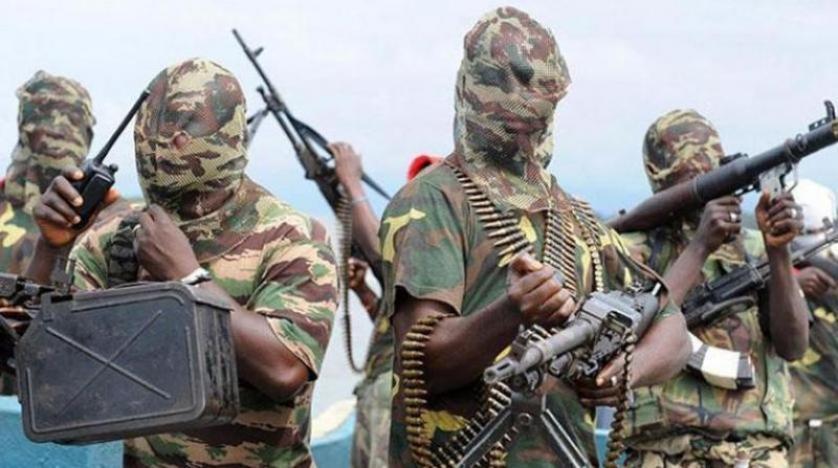
The Islamic State’s West Africa Province (ISWAP) is facing mounting internal divisions, leadership losses and growing pressure from rival armed groups, raising questions about its ability to maintain influence across the region.
Reports of disputes within the organisation have intensified following the killing of several senior commanders, including Abu-Bilal al-Minuki, who was killed in a joint US-Nigerian military operation in May.
The leadership turmoil comes as West Africa and the Sahel experience continued attacks by armed organisations, including the al-Qaeda-affiliated Jama’at Nusrat al-Islam wal-Muslimin (JNIM), the Azawad Liberation Front and rival Boko Haram factions.
In September, internal fighting reportedly resulted in the death of senior ISWAP commander Yaku Buduma, further exposing tensions within the group’s leadership.
The Armed Conflict Location & Event Data Project (ACLED) said Buduma’s death could weaken the organisation, particularly if fighters loyal to him defect. However, it cautioned that internal divisions had not significantly reduced ISWAP’s wider operational capabilities.
Leadership losses deepen divisions
In May, US President Donald Trump announced that American and Nigerian forces had killed al-Minuki, whom Washington identified as a senior Islamic State figure involved in directing operations across its international network.
Nigerian President Bola Tinubu subsequently confirmed the operation, saying al-Minuki and several associates were killed during a strike on a compound in the Lake Chad Basin.
Military analyst Amr Diallo told Erem News that the reported divisions could accelerate the organisation’s decline, particularly as it faces competition from al-Qaeda affiliates and other insurgent movements.
Diallo argued that the group’s internal problems reflected a broader struggle to preserve its influence despite continued propaganda efforts through Islamic State media channels.
He also warned that the withdrawal of Western military forces from parts of the Sahel had complicated regional security, creating opportunities for competing armed groups.
Military governments in Mali, Niger and Burkina Faso have increasingly turned to Russian security assistance following the departure of Western forces, while struggling to contain insurgencies across their territories.
Rival groups challenge Islamic State
JNIM has expanded its activities across Mali and neighbouring countries, while the Azawad Liberation Front has emerged as another significant force in northern Mali.
The two organisations launched coordinated operations against Malian government positions in April 2026, highlighting the increasingly complicated alliances and rivalries shaping the conflict.
Their growing cooperation has added pressure to an already fragmented regional security environment.
Islamic State operates through separate regional affiliates, with ISWAP concentrated largely around northeastern Nigeria and the Lake Chad Basin, while Islamic State Sahel Province operates primarily across parts of Mali, Niger and Burkina Faso.
Both organisations remain active despite sustained military campaigns and competition with other insurgent groups.
Internal purges raise fears of further fragmentation
Reports of internal executions and arrests have added to concerns about ISWAP’s command structure.
Nigerian security news outlet Zagazola Makama reported in September that ISWAP leader Ba Shuwa had allegedly ordered the execution of a senior council member and the detention of several commanders suspected of considering defection or surrender.
The reported crackdown reflected mounting distrust between senior leaders and fighters operating around Lake Chad.
Political analyst Mohamed Idris told Erem News that the organisation was experiencing an unusually difficult period, with reported confrontations between its own members threatening cohesion.
He suggested that government forces could exploit the divisions to strengthen their positions and potentially recover territory.
However, conflict-monitoring data suggests the organisation remains a significant threat.
According to ACLED, violence involving ISWAP increased sharply during 2026, with incidents involving the group rising by more than 50 percent compared with the entirety of 2025.
Internal clashes accounted for only around one percent of recorded violence involving ISWAP, while confrontations with Nigerian military forces represented more than 95 percent.
The figures suggest that although leadership disputes and defections could undermine the organisation over time, its operational threat remains substantial.